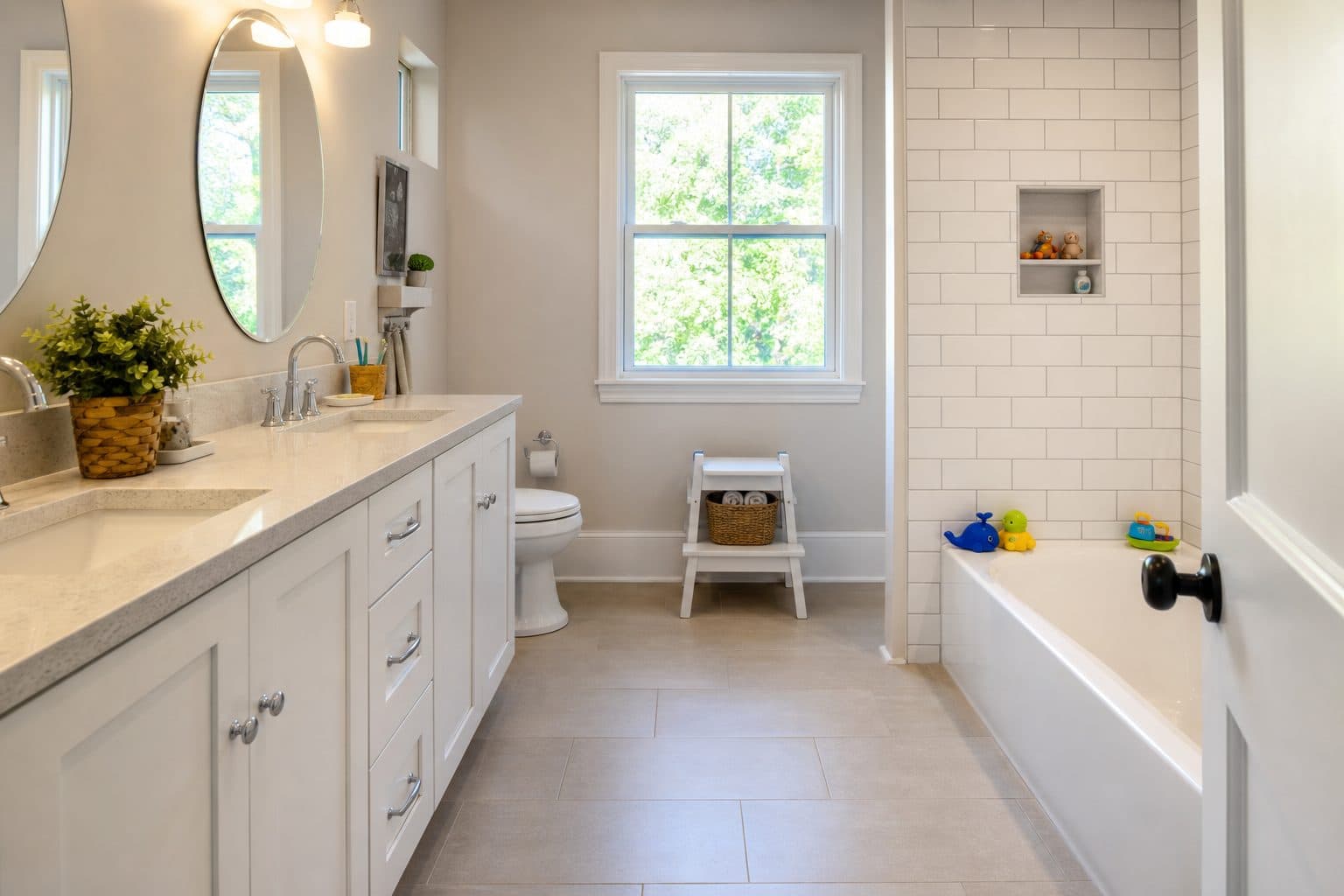
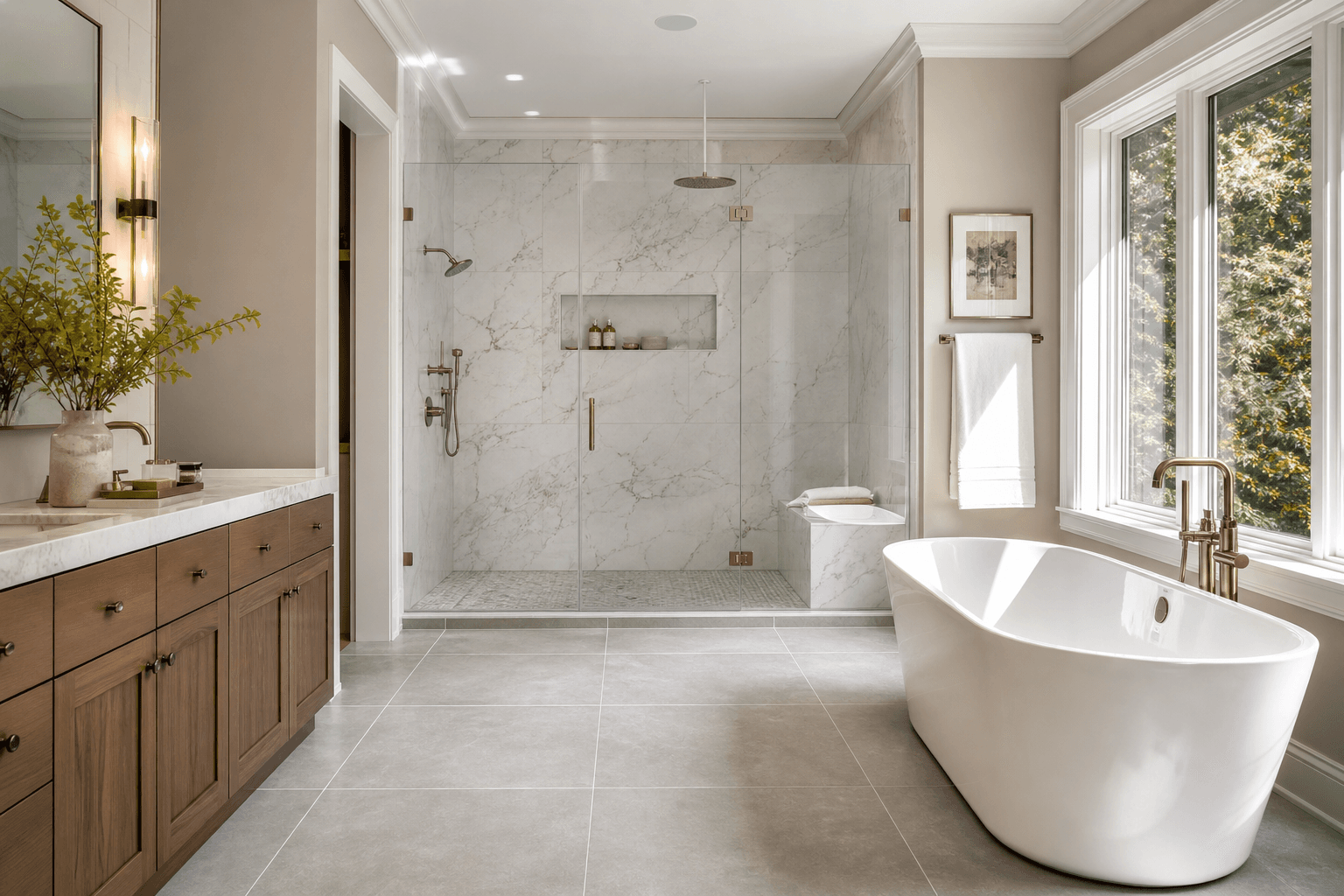
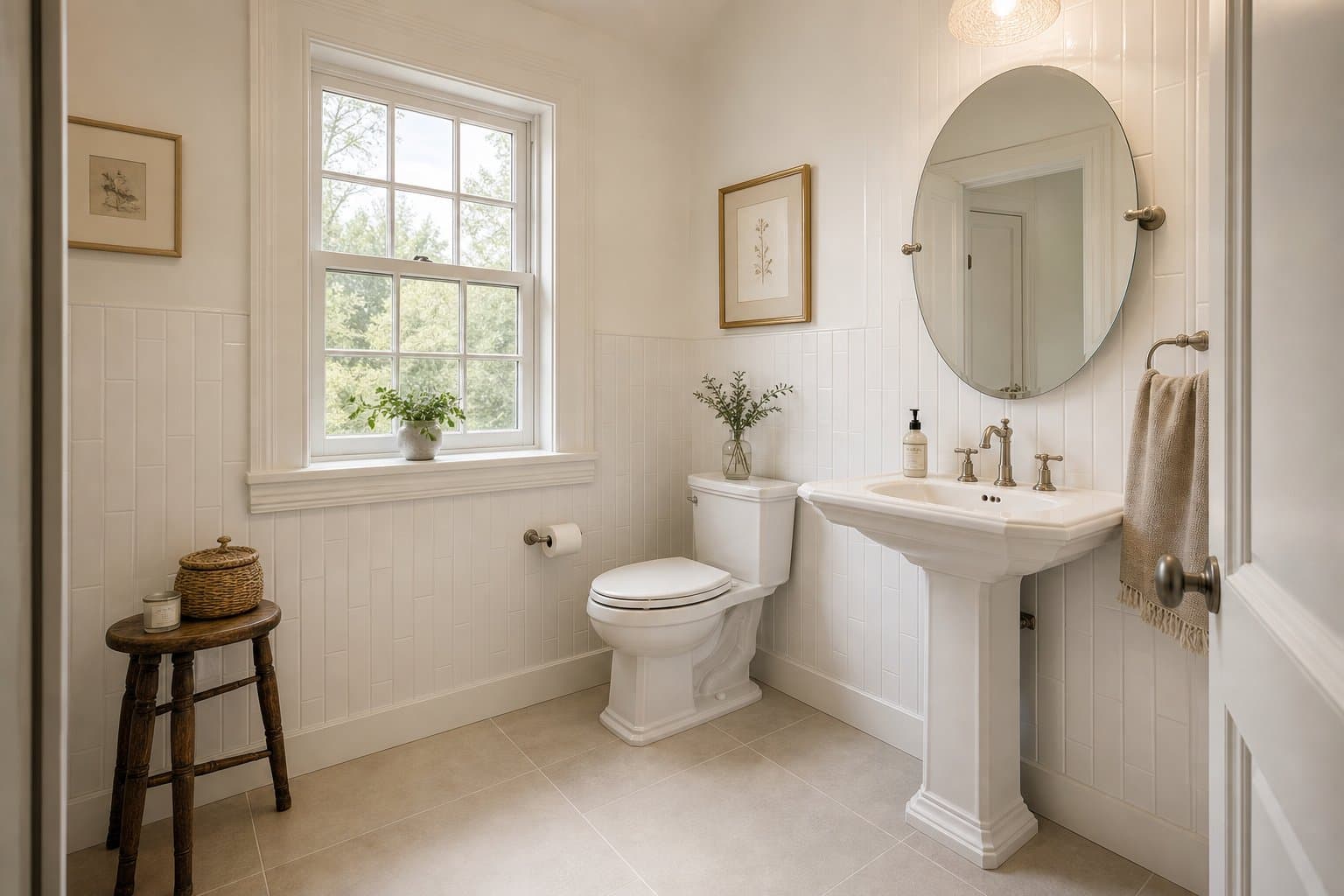
Small bathrooms present a surprisingly common design challenge for Chester County homeowners. Whether it’s a powder room off the main hallway, a compact guest bath in a Wayne colonial, or a tight en-suite in an older Malvern home, limited square footage can feel downright claustrophobic—unless you know how to work with tile.
The good news? Tile is one of the most powerful tools available for making a small bathroom look and feel significantly larger. When chosen and installed correctly, tile can add visual depth, draw the eye upward, and create a sense of openness that paint or wallpaper simply cannot match. At Milford Mills Tile, we’ve helped hundreds of Chester County homeowners transform cramped bathrooms into spaces that feel calm, spacious, and genuinely beautiful.
Here’s everything you need to know about using tile strategically in a small bathroom.
Why Tile Choice Matters More in Small Spaces
In a large master bath, a bold tile pattern or dramatic color can anchor the room and add character without feeling overwhelming. In a smaller space, every visual decision gets amplified. The wrong tile can make a bathroom feel even more boxed-in; the right tile can make it feel like it doubled in size.
The key principles at play are visual continuity, light reflection, and scale. Tiles that minimize visual “breaks”—grout lines, color shifts, pattern interruptions—allow the eye to travel freely across the surface, making the room read as more expansive. Tiles that reflect light bounce natural and artificial light around the room, adding brightness that opens up the space. And tiles that are appropriately scaled to the room (not too small, not too large) create the right visual rhythm without adding clutter or leaving empty voids.
Tile Sizes That Work Best in Small Bathrooms
One of the most persistent myths in bathroom design is that small rooms require small tiles. In reality, the opposite is often true.
Large-format tiles (12″×24″ or 24″×24″) are excellent in compact bathrooms because they reduce the total number of grout lines—and fewer grout lines mean fewer visual breaks. The eye reads the floor or wall as a continuous surface rather than a patchwork of small pieces, which dramatically expands the perceived size of the room.
That said, very large formats (like 24″×48″ or 32″×32″) can start to feel out of scale in very tight spaces—the installer may struggle to fit full tiles without awkward cuts, and the proportion can feel off. A sweet spot for most Chester County small bathrooms is 12″×24″ on floors and 12″×24″ or 12″×12″ on walls.
If you love smaller tiles—penny rounds, subway tiles, or hexagons—they can absolutely work in a small bathroom. The trick is to keep the grout color close to the tile color so the grout lines visually recede rather than create a busy checkerboard effect.
Color Strategies That Open Up the Room
Color is one of the fastest ways to either open or close a small bathroom. Here’s what we consistently see work well for Chester County homeowners:
Light neutrals and whites are the gold standard for small bathrooms. Creamy white, warm ivory, soft greige, and pale stone colors reflect light and create a clean, airy feel. Rectified large-format porcelain in a linen or warm white is a perennial favorite—it reads as sophisticated without feeling sterile.
Consistent color from floor to wall is a designer’s trick that works wonders in tight spaces. When your floor tile and wall tile share the same or closely related tones, the eye cannot easily find where one surface ends and another begins—giving the illusion of a much bigger, more continuous space. This monochromatic approach is particularly effective in compact Chester County bathrooms where visual breaks are the enemy of spaciousness.
Cool light blues and soft sage greens also work beautifully in small bathrooms—they feel fresh and airy without competing with natural light. These colors are especially popular in the Main Line and western Chester County, where homeowners want a spa-like retreat even in a smaller footprint.
What to avoid: very dark colors on all surfaces (one dark accent wall can be striking, but an all-dark small bathroom will feel like a closet), highly saturated warm colors (deep terracottas or saturated mustards can feel heavy), and high-contrast patterns that fight for attention.
Tile Layouts That Create the Illusion of Space
Beyond color and size, the way tile is laid has a major impact on how the room feels. A few layout strategies that our installers use regularly in small Chester County bathrooms:
Vertical stacking on walls: Laying subway tiles or rectangular tiles in a vertical stack bond (rather than horizontal running bond) draws the eye up and makes ceilings feel higher. This is especially effective in bathrooms with standard 8-foot ceilings where you want to create a sense of height.
Diagonal floor tile: A square tile laid at a 45-degree angle creates a diagonal line that the eye naturally follows across the floor—making the room feel wider and longer than it actually is. This is an old designer trick that still holds up beautifully in real installations.
Continuous floor-to-wall tile: Carrying the same tile from the floor up the lower portion of the wall—or running a niche or bench seamlessly into the surrounding tile—reduces visual interruptions and makes the space feel more unified.
Elongated tiles laid lengthwise: In a narrow bathroom, running a 12″×24″ floor tile with the long edge running lengthwise (in the same direction as the room’s longest dimension) can visually stretch the space in that direction.
Grout Color: The Often-Overlooked Factor
Grout color is one of the most underestimated design decisions in a small bathroom. The general rule: the closer the grout color matches the tile, the larger the room will feel. When grout blends into the tile, the surface reads as continuous. When it contrasts sharply, every grout line becomes a visual element—multiplied across hundreds of tiles, this adds significant visual noise.
For white or light-colored tile, we typically recommend a light grey, warm beige, or white grout. For stone-look porcelain, a warm greige or taupe grout that mimics the veining tends to look most natural. Even if you love a dark grout look (which can be stunning in the right context), save it for larger bathrooms where you have more visual breathing room.
For small bathroom floors especially, we often recommend consulting with our design team before finalizing grout color—it’s one of those decisions that’s very hard to change after installation and has a bigger-than-expected impact on the final result.
Shower Tile in Small Bathrooms: Make It Continuous
In a small bathroom with a walk-in shower or tub/shower combo, the shower enclosure takes up a significant portion of the visual field. How you tile it matters a great deal. Our standard recommendation for small bathrooms in Chester County: run the same tile in the shower as on the adjacent floor or walls.
This continuity—avoiding a visual break where the shower begins—is one of the most effective ways to make a small bathroom feel larger. When the eye doesn’t encounter a sharp transition, the shower and the rest of the bathroom read as one continuous space rather than two cramped boxes. Our bathroom tile installation team in Chester County specializes in exactly this kind of seamless approach.
For the shower walls specifically, a large-format tile with minimal grout lines and a matte or satin finish tends to work best—it’s easy to clean, reflects light without the glare of a high-gloss finish, and creates that seamless, spa-like look.
Feature Walls Without Overwhelming the Space
A common question we get from Chester County homeowners is whether they can still have a bold accent wall or interesting tile detail in a small bathroom. The answer is yes—with some care.
The most successful approach is to limit visual complexity to one surface. A single wall behind the vanity tiled in a subtle pattern (like a tone-on-tone textured tile or a soft Zellige-inspired surface) can add personality and interest without making the room feel cluttered. Alternatively, a tile niche in the shower with a contrasting tile can serve as the focal point without extending that contrast across multiple surfaces.
What doesn’t work: competing patterns on multiple surfaces, high-contrast tile on both the floor and a full wall, or large-scale bold patterns in a very small footprint. Less is genuinely more in tight spaces.
Practical Tips from Our Chester County Installers
A few final notes from our installation crews who work in Chester County homes every week:
- Don’t skip subfloor prep. In small bathrooms, uneven floors are unforgiving—especially with large-format tiles. A proper mortar bed or self-leveling compound is non-negotiable for a lasting result. Our tile installation team always addresses the substrate before a single tile goes down.
- Extend tile to the ceiling if you can. Floor-to-ceiling tile in a small bathroom eliminates the visual break created by painted drywall above the tile line, which makes the room feel taller and more finished.
- Use a linear drain in the shower. If you’re remodeling and have a choice, a linear drain allows for a continuous large-format floor tile in the shower with minimal cuts—cleaner, larger-feeling, and easier to maintain.
- Frameless glass on any enclosure. Not technically a tile decision, but it works hand in hand with your tile choices. A frameless glass shower door or panel allows the tile to be seen fully, extending the visual field through the enclosure rather than blocking it.
Ready to Transform Your Chester County Bathroom?
Whether you have a 35-square-foot powder room in Wayne or a tight en-suite in Malvern, the right tile strategy can make a remarkable difference. Milford Mills Tile has worked on small bathrooms throughout Chester County, Delaware County, and the Main Line—we know what works in these homes and what doesn’t.
We’d love to walk through your space and show you specific tile options that will make it feel open, beautiful, and exactly like you imagined. Get in touch with our team to schedule a consultation, or browse our project gallery to see small bathroom transformations we’ve completed in the area. You can also explore our full range of bathroom tile installation services or learn more about the areas we serve across the Delaware Valley.
Small doesn’t have to mean cramped. With the right tile, it can mean elegant.