Your staircase is one of the most-used surfaces in your home — and one of the most overlooked when it comes to design. For Chester County homeowners, tiling a staircase is a smart upgrade that blends function with lasting style. Done right, it adds a dramatic focal point to your entry or living space while creating a surface that’s far more durable and easier to maintain than carpet or hardwood.
At Milford Mills Tile, we’ve installed tile on everything from grand center-hall staircases in Wayne to tight, split-level stairs in Malvern. This guide covers everything you need to know — from material selection and layout to safety considerations and what to expect during installation.
Why Tile a Staircase?
Carpet wears out. Hardwood scratches, dents, and requires refinishing every few years. Tile, by contrast, is built to last decades without losing its appearance. It’s particularly well-suited to Chester County homes that see muddy boots, pets, and heavy daily foot traffic.
Here’s why homeowners in our area are increasingly choosing tile for their stairs:
- Durability: Porcelain and natural stone tile can outlast the home itself when properly installed.
- Easy maintenance: Sweep and damp-mop — no steam cleaning or professional shampooing required.
- Allergen reduction: Tile doesn’t harbor dust mites, pet dander, or mold the way carpet does.
- Design versatility: From sleek modern to classic stone, the options are nearly unlimited.
- Home value: A well-tiled staircase is a selling point in the Delaware Valley market.
If you’re already planning a bathroom tile renovation or kitchen upgrade, extending tile to your staircase creates visual continuity throughout the home.
Staircase Anatomy: Understanding the Parts
Before choosing materials, it helps to understand what you’re working with. A staircase has several distinct surfaces, each with its own installation requirements:
- Tread: The horizontal surface you step on. This is the most critical surface — it must be slip-resistant and dimensionally consistent.
- Riser: The vertical face between treads. Often decorated with accent tiles, contrasting colors, or patterned tile for visual interest.
- Nosing: The edge of the tread that overhangs the riser below. Requires a bullnose tile or a purpose-built stair nosing profile.
- Stringer: The side panel running the length of the staircase. Sometimes tiled, sometimes painted or wrapped in wood.
- Landing: Any flat area between flights. Often treated as a standard floor tile installation.
Each surface presents a different design and technical challenge, which is why staircase tile is not a DIY-friendly project. Precision cutting, proper adhesive selection, and correct substrate preparation are all essential.
Best Tile Materials for Staircases
Not every tile works on stairs. The tread surface in particular requires careful material selection — both for aesthetics and safety.
Porcelain Tile
Porcelain is the most popular choice for Chester County staircase installations. It’s dense, chip-resistant, and available in an enormous range of finishes. For treads, always choose a porcelain with a textured or matte finish — polished porcelain is dangerously slippery underfoot, especially in sock feet or when wet. Look for tiles with a DCOF (Dynamic Coefficient of Friction) rating of 0.42 or higher for any walking surface.
Natural Stone
Limestone, travertine, and slate all lend a timeless quality that suits Chester County’s historic stone-home aesthetic. Honed (matte) finishes are preferred over polished for treads. Natural stone requires sealing and is more prone to chipping on the nosing edge than porcelain, so installation technique and nosing treatment are especially important.
Ceramic Tile
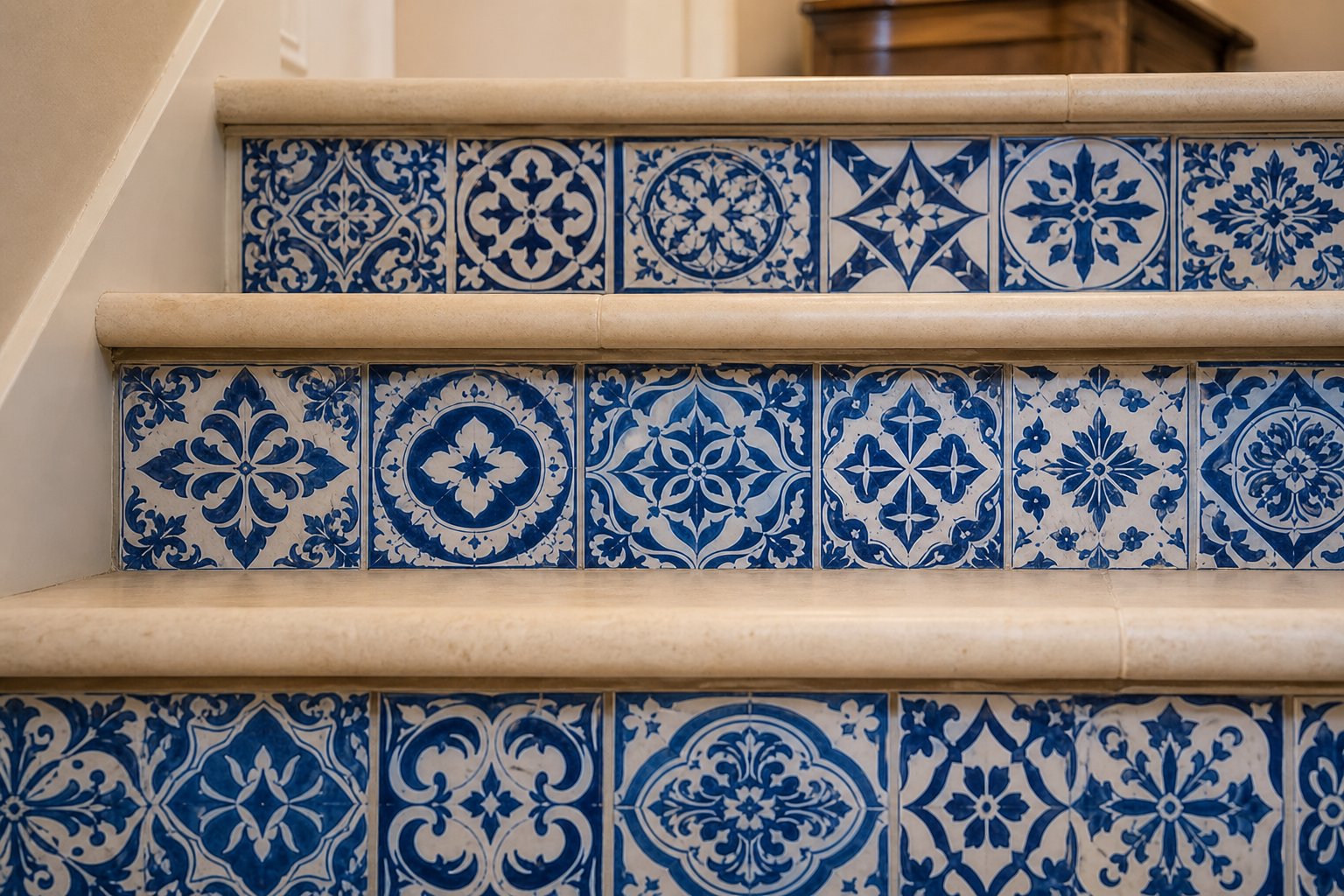
Ceramic is lighter and less dense than porcelain. It’s better suited for risers than treads, where durability demands are higher. Decorative hand-painted ceramic tiles on risers paired with porcelain treads is a classic combination that works beautifully in Main Line and historic-district homes.
Accent and Decorative Tile
Many homeowners use bold or patterned tile on risers as a design statement — Moroccan encaustic cement tiles, Spanish azulejo-style ceramics, or simple subway tiles in a contrasting grout color. This approach lets you tie the staircase into the home’s broader design story. Check out our project gallery for examples of decorative riser tile in Chester County homes.
⚠️ Safety First: Slip Resistance Matters
For any stair tread tile, verify the slip resistance rating before purchasing. The TCNA (Tile Council of North America) recommends a minimum DCOF of 0.42 for wet areas and 0.42+ for stair treads. Avoid polished or high-gloss finishes on treads. Your installer should always raise this with you during material selection — if they don’t, ask.
Design Approaches for Chester County Staircases
Chester County homes range from 18th-century farmhouses to contemporary new builds, so the right staircase tile aesthetic varies widely. Here are the most popular approaches we see in the area:
1. The Unified Look
Using the same tile on the treads, risers, and landing creates a clean, monolithic feel. This works especially well in contemporary homes with open floor plans. Large-format porcelain in a concrete or stone look ties the staircase visually to the rest of the first floor. If you’re planning tile installation throughout the main level, extending the same material to the staircase is a powerful design choice.
2. Contrasting Treads and Risers
Pairing a neutral, textured tread tile with a bold or patterned riser tile is a timeless formula. Classic combinations include white marble-look porcelain treads with navy or charcoal accent risers, or natural limestone treads with hand-painted blue-and-white ceramic risers for a coastal Main Line look.
3. Wood-Look Tile Treads
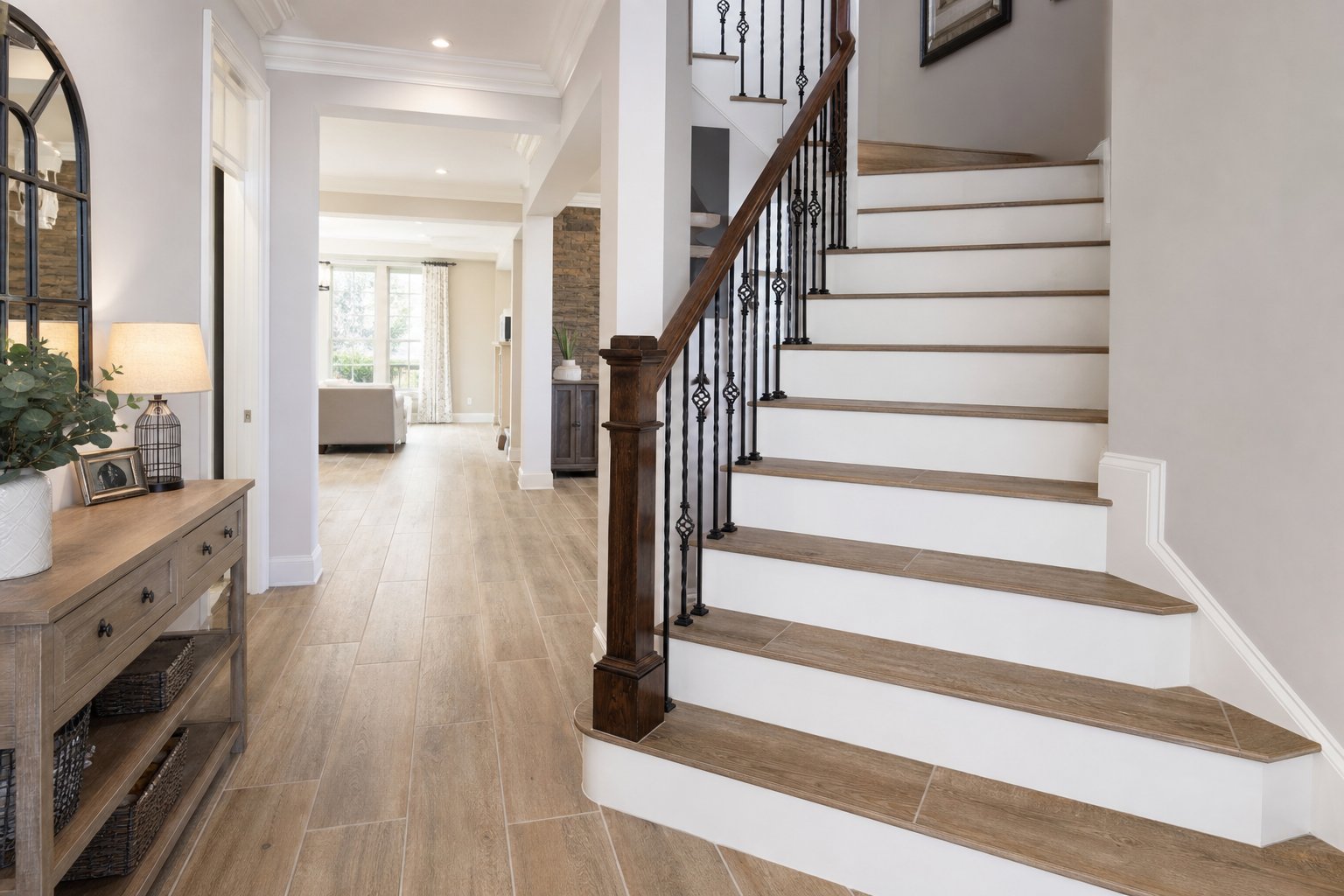
Wood-look porcelain on stair treads delivers the warmth of hardwood with the durability of tile — and eliminates concerns about moisture, scratching, or eventual refinishing. Pair with simple white riser tile for a clean, transitional aesthetic that suits most Chester County home styles.
4. The Statement Staircase
For homeowners who want their entry to make an impression, fully patterned tile — herringbone, encaustic geometric, or custom mosaic — on treads and risers creates a dramatic focal point. This approach requires careful planning, precise installation, and a willingness to commit to a bold design direction.
What to Expect During Installation
Staircase tile installation is one of the more technically demanding projects in residential tile work. Here’s a realistic breakdown of what the process involves:
Substrate Assessment
Before any tile goes down, the existing stair substrate must be evaluated for flatness, structural integrity, and material compatibility. Wood-framed stairs often require a cement backer board underlayment to prevent cracking. Concrete stairs may need patching or grinding to achieve the flatness tile requires.
Nosing Treatment
The stair nosing is where many DIY installations fail. The overhanging front edge of each tread must be handled carefully — either with a purpose-built bullnose tile, a metal or rubber nosing profile, or a carefully routed edge tile. A poorly handled nosing is both a trip hazard and a structural weak point where tiles are prone to chipping.
Layout and Pattern Planning
Each tread must be measured and cut precisely. On a straight staircase, this is fairly straightforward. On curved, spiral, or winder stairs (stairs with pie-shaped treads), each tread is a custom cut. Layout planning also determines where grout joints fall relative to the nosing edge.
Adhesive and Grout Selection
Stairs experience more dynamic loading and flexion than horizontal floors. A polymer-modified mortar appropriate for the tile material is essential, and epoxy grout is often recommended for heavy-traffic stair installations. Your installer should match the adhesive system to the substrate and tile type — not use a generic all-purpose thinset.
Curing Time
In a lived-in home, staircase installation requires planning around foot traffic. Allow a minimum of 24 hours before light foot traffic on any tread, and 72 hours before full use. Some homeowners tile one side of a wide staircase at a time, or work section by section to maintain access during the curing period.
If you’re curious about what a full staircase project looks like start-to-finish, our service area page has more detail on the communities where we work, and our team is always happy to walk through the process at a no-obligation consultation.
Cost Considerations
Staircase tile installation costs more per square foot than floor tile, primarily due to the complexity of the cuts, the nosing treatment, and the time required to work step-by-step. A typical Chester County residential staircase (12–16 steps) will range depending on material selection, existing substrate condition, and the complexity of the design. Natural stone and custom patterned installations are at the higher end.
Keep in mind: a properly tiled staircase adds lasting value to your home and eliminates the ongoing cost of carpet replacement or hardwood refinishing. Most homeowners find the investment pays for itself over time.
Questions to Ask Your Tile Installer
When evaluating tile contractors for a staircase project, these questions will help you separate experienced professionals from general contractors who’ve occasionally tiled a floor:
- How will you handle the stair nosing — bullnose tile, metal profile, or routed edge?
- What mortar system will you use, and why?
- Do you plan a test layout before committing to the pattern?
- How will you manage foot traffic access during installation?
- What slip resistance rating does the tread tile you’re recommending carry?
At Milford Mills Tile, we answer all of these questions before a single tile is set — because a staircase installation done wrong is both dangerous and expensive to fix.
Ready to Tile Your Chester County Staircase?
Whether you’re transforming a dated carpeted staircase or upgrading an existing tile installation, Milford Mills Tile brings the precision and craftsmanship Chester County homeowners expect. We serve West Chester, Malvern, Paoli, Wayne, Bryn Mawr, Newtown Square, and surrounding communities across Delaware and Montgomery Counties.
Explore our full range of tile services, browse completed projects, or reach out directly to schedule a consultation — we’d love to see what your staircase could become.
Contact Milford Mills Tile today to discuss your staircase project.