Quick Summary
Tile expands and contracts as temperatures, moisture, sunlight, and building materials change. Properly planned movement joints give a finished tile assembly room to respond, helping protect grout and tile while remaining visually discreet.
Tile expansion joints Chester County PA homeowners need are not decorative grout lines or an optional upgrade. They are planned spaces filled or covered with a flexible material so the tiled surface can accommodate normal movement. That movement may come from seasonal humidity, strong sunlight, radiant heat, long floor spans, or the different ways wood, concrete, mortar, and tile respond over time.
When a tile floor looks continuous, it is easy to assume every joint should be packed with rigid grout. In practice, a few carefully located flexible joints can be one of the least visible and most important details in the installation. They help keep ordinary building movement from concentrating at one vulnerable grout line, doorway, or tile edge.
Milford Mills Tile evaluates the room, substrate, exposure, and layout before deciding where those joints belong. Homeowners considering a new floor can review our professional tile installation services to see how planning, preparation, and finish work fit together.
Why Rigid Tile Still Needs Room to Move
Porcelain, ceramic, and natural stone feel solid because they are. The installation beneath them, however, is a layered assembly. Tile is bonded to mortar, which sits over a substrate such as concrete, plywood, or an underlayment. Walls, framing, thresholds, cabinets, and adjacent floors may all move at different rates.
Chester County homes add several local variables. Humid summers and dry heated winters change wood framing and subfloors. Large windows can warm one section of a floor more than another. Older Main Line and West Chester homes may combine original framing with newer additions. A sunroom, kitchen, or open first floor can include long runs of tile that cross multiple structural conditions.
A movement joint does not make a weak installation stronger by itself. The substrate must still be sound, flat, and appropriate for tile. It does give the completed surface a controlled place to absorb movement instead of forcing that stress through a rigid field of grout and tile.
Where Tile Expansion Joints Chester County PA Homes Need Them
The right locations depend on the project, but several conditions deserve attention during layout. The perimeter of a tiled room needs room for movement rather than rigid mortar or grout packed tightly against walls. Changes in plane, such as where a tile floor meets a wall or a tiled shower wall meets another wall, are also movement-sensitive locations.
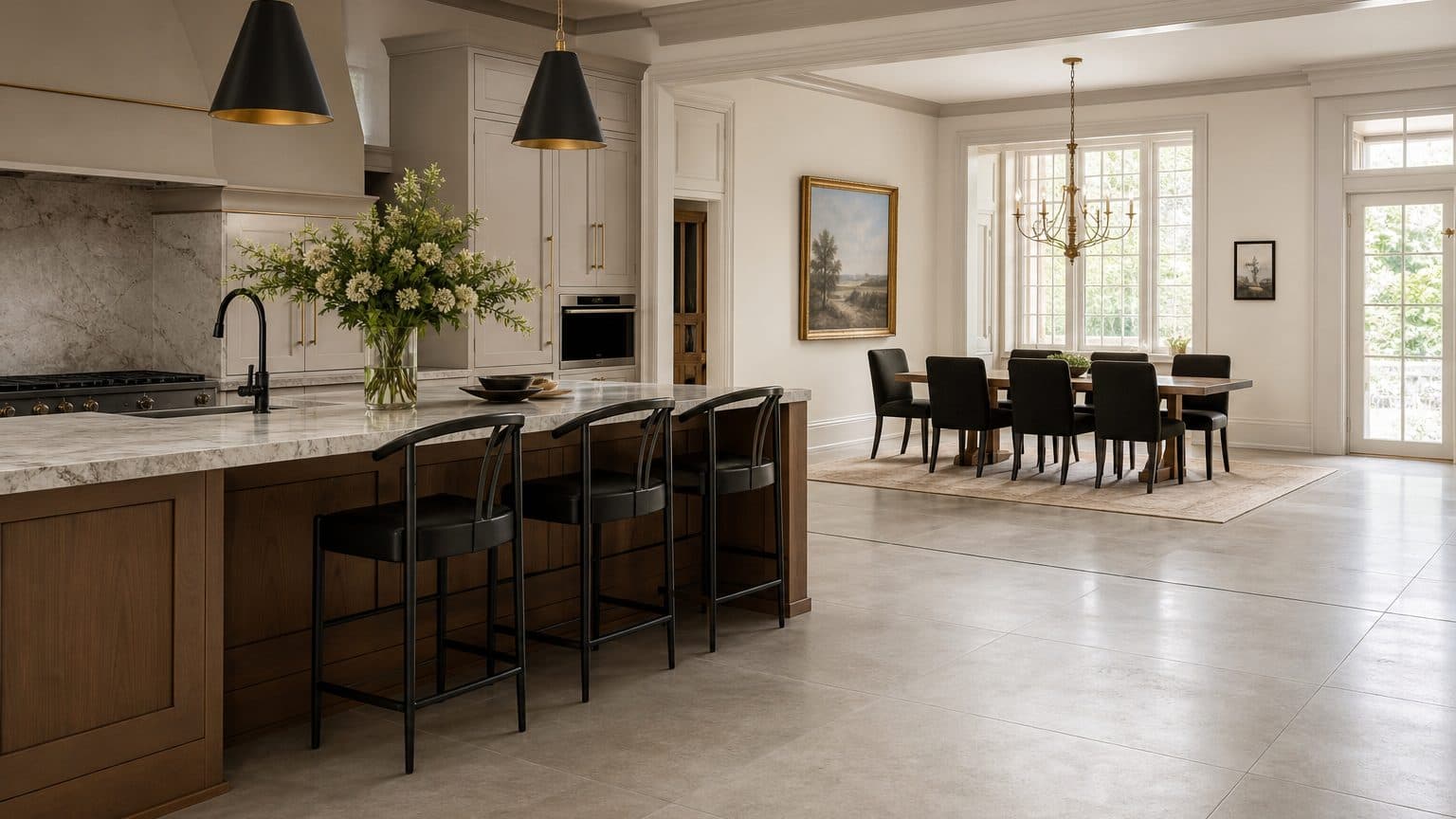
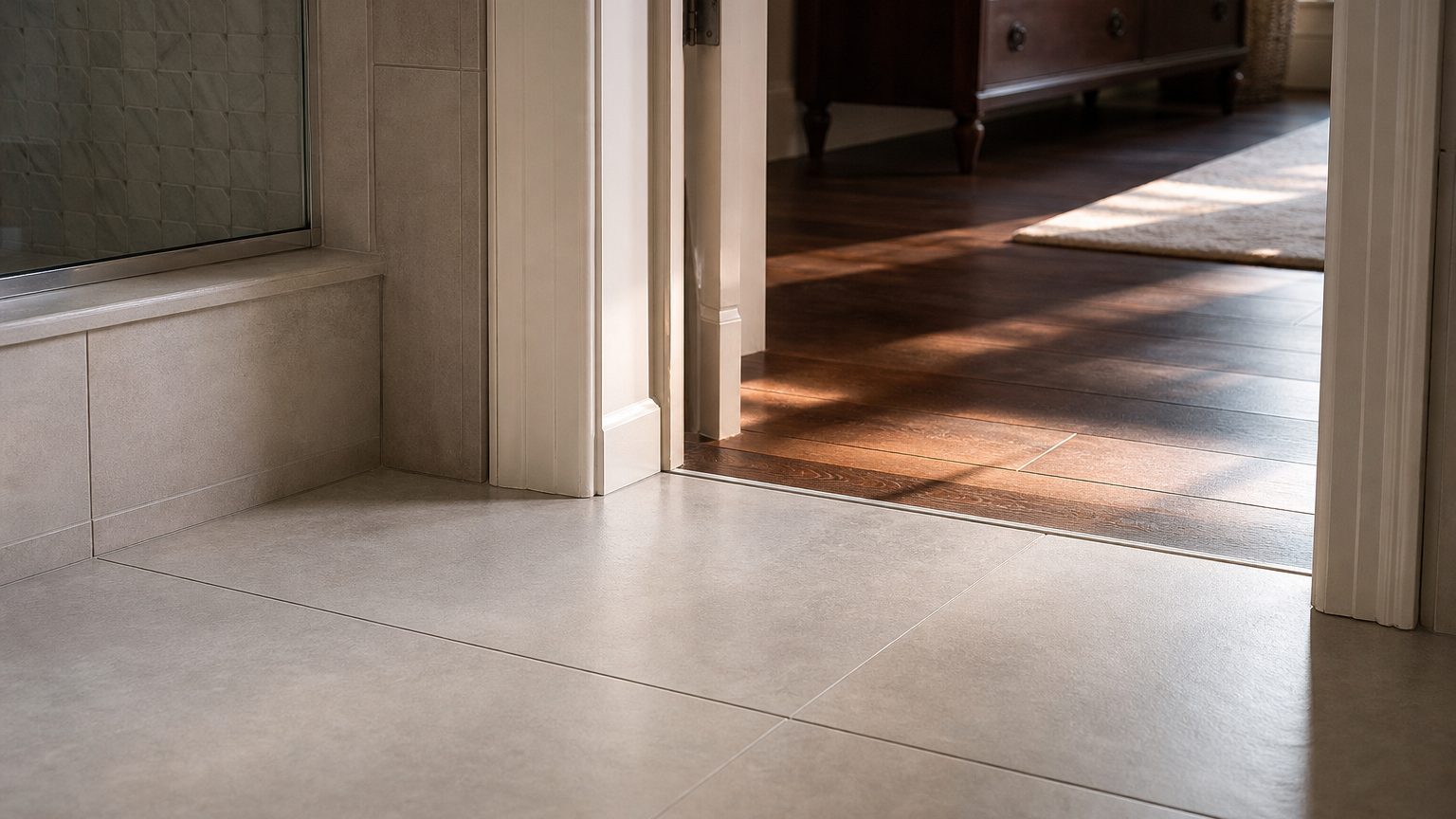
Doorways and thresholds can be logical places for a flexible joint because they already create a visual transition. Long uninterrupted floor runs may need joints within the field, especially when direct sun, moisture, or heat exposure increases movement. Existing joints in a concrete slab must be evaluated rather than simply tiled over and forgotten.
Transitions between additions and original structures deserve special care. So do floors above different framing directions or substrate types. The goal is not to scatter flexible lines randomly. It is to coordinate necessary movement accommodation with grout lines, thresholds, room boundaries, and the overall tile pattern.
Movement Joints, Control Joints, and Grout Lines Are Different
These terms are often used as if they mean the same thing, but they serve different purposes. A standard grout joint is filled with a rigid cementitious or resin-based material. It spaces tile evenly, supports tile edges, and completes the finished surface. It is not designed to stretch like a flexible sealant.
A movement joint is intentionally detailed to accommodate motion in the tile assembly. Depending on the location and design, it may use a suitable flexible sealant with the proper backing or a manufactured profile. Its width, depth, and material must work together; simply smearing caulk over cracked grout is not the same as creating a functional joint.
A control or contraction joint is created in concrete to influence where shrinkage cracking occurs. An expansion or isolation joint in the structure separates sections of the building assembly. These substrate joints require project-specific treatment. Covering them with tile without a plan can transfer movement directly into the finished surface.
How a Professional Plans the Joint Layout
Good planning starts before tile is set. An installer inspects the substrate for cracks, joints, transitions, deflection concerns, moisture conditions, and changes in construction. Room dimensions and tile size matter because a large-format layout creates different grout-line opportunities than a smaller pattern.
Exposure is the next consideration. A shaded powder room and a south-facing sunroom should not automatically receive the same movement-joint strategy. Radiant heating, sliding doors, large windows, and exterior-adjacent spaces can increase thermal cycling. The installer also considers whether cabinetry, islands, partitions, or heavy fixed finishes will interrupt the tile field.
Industry guidance, including the Tile Council of North America movement-joint recommendations, informs spacing and detailing. The final plan still must respond to actual site conditions and the products in the assembly. That is why a single universal spacing number copied from the internet is not a substitute for inspecting the room.
Substrate preparation remains part of the same conversation. Our guide to subfloor preparation for a tile project explains why flatness and structural readiness have to be addressed before finish details can do their job.
Making Flexible Joints Look Intentional
Homeowners sometimes worry that movement joints will interrupt a carefully chosen floor. With thoughtful layout, they can be subtle. Placing them on an existing grout line preserves the pattern. At a doorway, a slim profile or color-coordinated sealant can align with the transition. Around the perimeter, the necessary gap is commonly concealed by baseboard or trim rather than left exposed.
Color selection matters. A flexible sealant chosen to coordinate with the grout is usually less noticeable than one selected after the rest of the installation is complete. Joint edges should be clean and straight, and the sealant should be properly shaped rather than overfilled or smeared across tile faces.
The goal is not to pretend movement does not exist. It is to accommodate it in places that support both the installation and the design. A controlled line planned at the beginning is typically more attractive than a random cracked grout line that appears later.

Warning Signs in an Existing Tile Floor
Cracked grout does not always mean a missing movement joint, but repeated cracking along the same line is worth investigating. Tented or lifted tile is a more urgent warning because it can indicate that compressive stress has built up without enough room for relief. Hollow sounds, loose tile, or cracks that mirror a substrate joint can point to other underlying conditions.
Do not assume that replacing grout alone will solve a recurring crack. A repair should begin by identifying whether the cause is movement, substrate failure, poor bond coverage, impact, moisture, or another condition. Our tile repair and restoration guide outlines the value of diagnosing the source before choosing a repair method.
If tiles are lifting or edges create a trip hazard, limit traffic in the area and arrange an evaluation. A professional can determine whether the issue is localized or whether the installation needs a broader movement and substrate review.
Questions to Ask Before Installation Begins
A homeowner does not need to design the technical detail, but a few questions can reveal whether movement has been considered. Ask how perimeter gaps will be maintained, how existing slab joints or cracks will be handled, and whether direct sunlight or radiant heat changes the layout. For an open floor plan, ask where the installer expects to place flexible joints and how they will coordinate with the grout color.
Also ask which sealant or manufactured profile is being specified and whether it is suitable for the location. Wet areas, floors, and changes of plane may have different product needs. A clear answer before installation is more useful than a cosmetic patch after cracking appears.
Milford Mills Tile serves Chester County, Delaware County, Montgomery County, the Main Line, and nearby communities. If you are planning a new tile floor or investigating recurring cracks, request a tile project consultation so the assembly and movement conditions can be reviewed together.
Frequently Asked Questions
Are expansion joints the same as grout joints?
No. A typical grout joint is rigid and helps space and finish the tile field. A movement joint uses a flexible material or profile so selected parts of the assembly can move without concentrating stress in the tile or grout.
Will movement joints be visible in my finished floor?
They may be visible on close inspection, but good planning makes them discreet. Installers often align them with grout lines, thresholds, or room transitions and use a color that coordinates with the surrounding grout.
Does every tiled room need a flexible joint in the middle of the floor?
Not necessarily. Perimeter and change-of-plane accommodation are broadly important, while joints within the tile field depend on dimensions, exposure, substrate joints, heat, sunlight, and other site conditions.
Can an uncoupling membrane replace movement joints?
No. An uncoupling or crack-isolation product may help manage certain substrate stresses, but it does not eliminate the need to evaluate structural, perimeter, and field movement joints according to the assembly and product instructions.
Can cracked grout be replaced with flexible sealant?
Sometimes a properly designed flexible joint is part of the repair, but the cause must be diagnosed first. Packing sealant into a failed line without correcting loose tile, substrate movement, or an improperly sized joint can hide rather than solve the problem.