
Milford Mills Tile
Fall Tile Maintenance Checklist for Chester County PA Homes
September 1, 2026Milford Mills Tile TeamMaintenance, Repair & Value7 min read

Fall Tile Maintenance Checklist for Chester County PA Homes

Share
Quick Summary
This fall tile maintenance checklist walks Chester County homeowners through the grout, caulk, and tile checks worth making before winter freeze-thaw and heating season turn small issues into real repairs. It covers the checklist itself, warning signs that mean don't wait, and when a DIY fix is enough versus when to call a professional.

A fall tile maintenance checklist is worth ten minutes of your weekend before Chester County's freeze-thaw season sets in. Grout that looked fine all summer can crack once temperatures start swinging between warm afternoons and cold nights, and small caulk gaps around a shower or tub only get worse once the furnace kicks on and indoor humidity drops. Milford Mills Tile walks Chester County, Delaware County, Montgomery County, and Main Line homeowners through the exact checks worth making now, so a small issue doesn't turn into a mid-winter repair call.

We're Wedi Certified and Schluter Certified, with over 20 years of experience and more than 1,000 completed tile projects across the region. Every fall, we get calls from homeowners who noticed a hairline crack or loose corner back in September and put off dealing with it — by January, it's a bigger job. This checklist is built from what we actually see go wrong once the weather turns.

Why Fall Is the Right Time to Check Your Tile

Tile and grout move with the seasons more than most homeowners realize. A few things happen in Chester County specifically as summer turns to fall:

  • Freeze-thaw cycles start. Moisture that's worked its way into a hairline grout crack expands when it freezes overnight, widening the crack a little more each cycle through winter.
  • Heating season changes humidity. Once the furnace runs regularly, indoor air dries out, which can shrink caulk and grout slightly and expose gaps that summer humidity had been hiding.
  • Outdoor and mudroom tile takes on more moisture. Wet boots, melting snow, and de-icing salt all land on entryway and mudroom tile starting in late fall — any existing grout or sealant gaps let that moisture underneath.

Catching these issues in September or October, while the ground is still workable and schedules are open, is a lot easier than dealing with a cracked tile or a leaking shower pan in the middle of winter.

Your Fall Tile Maintenance Checklist

Here's the walk-through we recommend before the weather turns:

  • Inspect grout lines room by room. Look for hairline cracks, crumbling grout, or spots where grout has pulled away from the tile edge, especially in bathrooms and kitchens.
  • Check caulk at every wet-area seam. Tub surrounds, shower corners, and where countertops meet a backsplash all rely on caulk, not grout, to stay flexible — recaulk anywhere it's cracked, peeling, or missing.
  • Tap-test a few tiles. A hollow sound under a gentle tap can mean the tile has lost its bond to the substrate underneath, which is worth addressing before it becomes a full crack.
  • Look for efflorescence. That chalky white residue on grout or natural stone is a sign moisture is moving through the tile assembly and evaporating at the surface — it's worth investigating the source.
  • Reseal natural stone and grout. If it's been a year or more since your last sealer application, fall is a good time to reseal before winter moisture arrives.
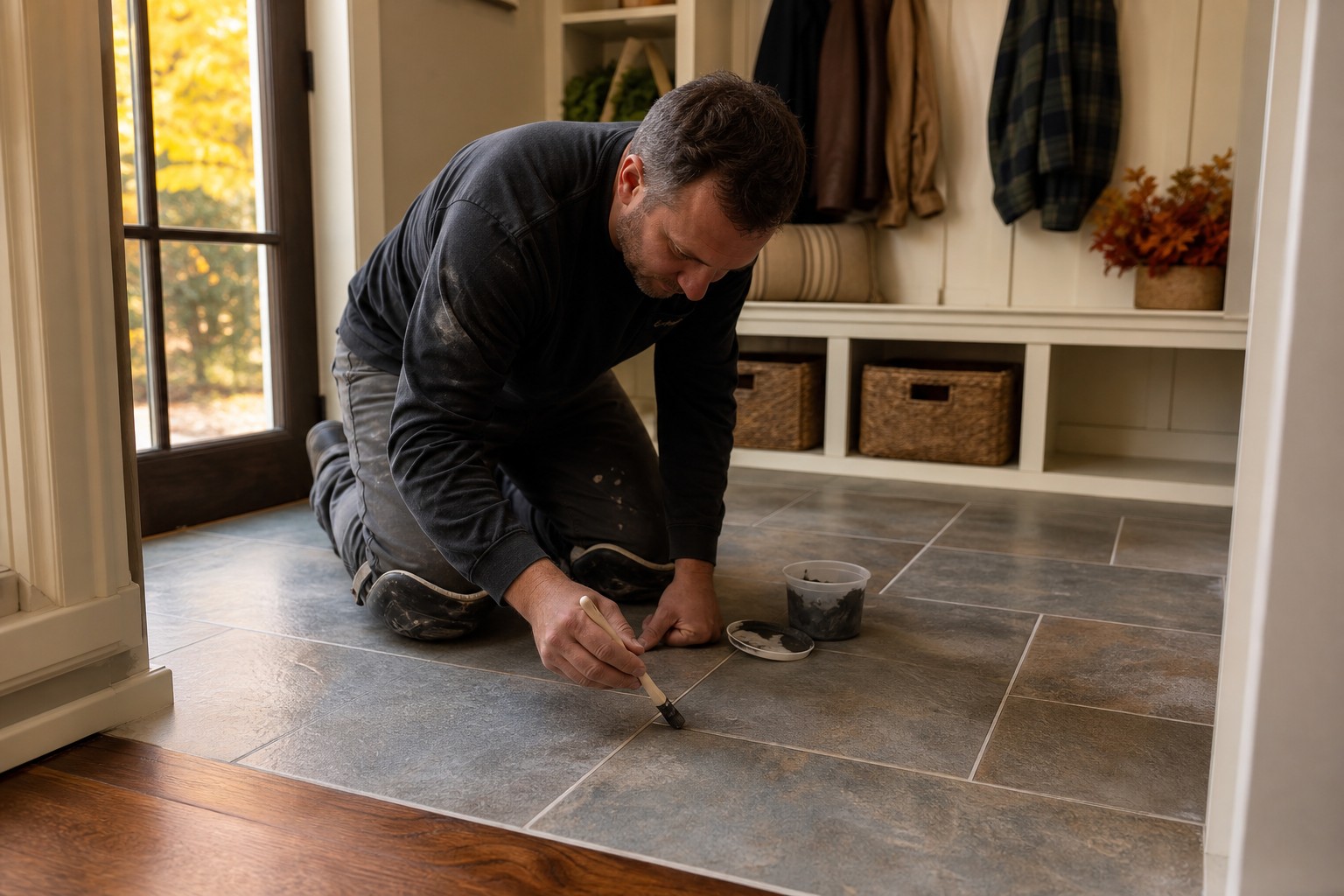
  • Check mudroom and entryway tile. This is the area about to take the heaviest seasonal abuse — confirm grout lines are solid and any transition strips are secure before boots and salt start coming through the door.
  • Verify shower pan drainage. Slow draining or standing water at the shower floor can mean a pan or slope issue that's easier to address now than after a winter's worth of daily use.

Homeowner running a fall tile maintenance checklist inspection on bathroom grout lines in a Chester County PA home
100+ Five-Star Reviews

Get a Free Tile Quote

20+ years installing bathroom, kitchen, and custom tile across Chester, Delaware & Montgomery counties, PA.

Warning Signs You Shouldn't Wait to Fix

Most items on a fall tile maintenance checklist are simple enough to handle over a weekend. A few, though, are worth calling in a professional for before winter rather than after:

  • Cracked or shifting tile near a shower or tub. This often points to a moisture or substrate problem underneath, not just a cosmetic issue.
  • Grout that's missing over a large area. Once grout is gone in more than a small spot, water has a direct path to the substrate below.
  • Soft or spongy flooring near tile. This is a strong sign of subfloor damage that's already underway, not something a fall touch-up will fix.
  • Persistent musty smell in a bathroom or mudroom. This can mean moisture is trapped somewhere it shouldn't be, even if the tile surface looks fine.

If you're seeing any of these, our guide to tile repair and restoration covers how we diagnose and fix the underlying issue rather than just patching the surface.

Tile professional resealing grout as part of a fall tile maintenance checklist in a Chester County PA mudroom

DIY Maintenance vs. When to Call a Professional

Cleaning, resealing grout, and recaulking a shower seam are all reasonable DIY tasks for most homeowners, and our tile cleaning and maintenance guide walks through how to do them right. Where we recommend bringing in a professional is anywhere the tile itself has moved, cracked, or come loose — those situations usually mean something underneath the tile needs attention, and regrouting or recaulking over the top of a substrate problem just delays a bigger repair.

See our full tile installation and repair services for the diagnostic and repair work behind every fall maintenance call we take across Chester County, Delaware County, and Montgomery County.

Want a professional set of eyes on your tile before winter? Request a free, no-obligation quote and we'll let you know exactly what needs attention now versus what can wait.

Frequently Asked Questions

What should be on a fall tile maintenance checklist?

A fall tile maintenance checklist should include inspecting grout lines for cracks, checking and renewing caulk at wet-area seams, tap-testing tile for hollow spots, checking for efflorescence, resealing natural stone or grout, and confirming mudroom and shower drainage are working properly.

Why does tile damage show up more in fall and winter?

Freeze-thaw cycles widen existing cracks as trapped moisture expands when it freezes overnight, and heating season dries indoor air, which can shrink caulk and grout and expose gaps that summer humidity had been hiding.

Can I do fall tile maintenance myself, or do I need a professional?

Cleaning, resealing grout, and recaulking are reasonable DIY tasks for most homeowners. Cracked, shifting, or loose tile usually points to an underlying substrate or moisture issue that's worth having a professional diagnose before it gets worse over winter.

How often should grout be resealed?

Most grout and natural stone should be resealed about once a year. Fall is a convenient time to do it, since it's right before the season when moisture intrusion tends to cause the most damage.

What's the risk of ignoring small tile cracks going into winter?

A small hairline crack can widen with each freeze-thaw cycle as moisture trapped inside expands. What starts as a cosmetic issue in September can become a larger repair, including subfloor damage, by the time winter is over.

Questions? Call Us Directly

Serving Chester, Delaware & Montgomery counties, PA

(484) 883-9948
Share

Related Articles