August 25, 2026Milford Mills Tile TeamDesign & Trends7 min read
Japandi Tile Design Trends for Chester County PA Homes
Share
Quick Summary Japandi tile design blends Japanese minimalism with Scandinavian warmth — matte, wood-look porcelain, soft neutral tones, and clean lines instead of cold, stark surfaces. This guide covers what defines the look, which tile formats and colors get it right, and how Chester County homeowners are using Japandi tile design in kitchens, bathrooms, and mudrooms without sacrificing warmth or function.
Japandi tile design has moved from interior-design blogs into real Chester County renovation requests over the past year, and it's easy to see why. The style borrows the calm, uncluttered discipline of Japanese interiors and pairs it with the warm, natural materials Scandinavian design is known for — the result is a bathroom or kitchen that feels quiet and grounded rather than sterile or trend-chasing. For homeowners tired of stark white subway tile or busy pattern mixes, Japandi tile design offers a middle path: minimal, but never cold.
Milford Mills Tile is Wedi Certified and Schluter Certified, with over 20 years of experience and more than 1,000 completed tile projects across Chester County, Delaware County, Montgomery County, and the Main Line. We've installed enough Japandi-inspired spaces this year to know exactly which materials hold up to real family life — not just a moodboard.
What Is Japandi Tile Design?
"Japandi" is shorthand for Japanese + Scandinavian design, two aesthetics that share more in common than most people expect: both prioritize function, natural materials, and restraint over ornamentation. Applied to tile, that translates into a specific, recognizable set of choices:
Matte, not glossy, finishes. Japandi tile design avoids high-shine surfaces in favor of honed or matte finishes that soften light instead of bouncing it.
Warm wood-look tones over stark white or gray. Wood-look porcelain, clay, and sand tones replace the cool grays that defined the last decade of minimalist bathrooms.
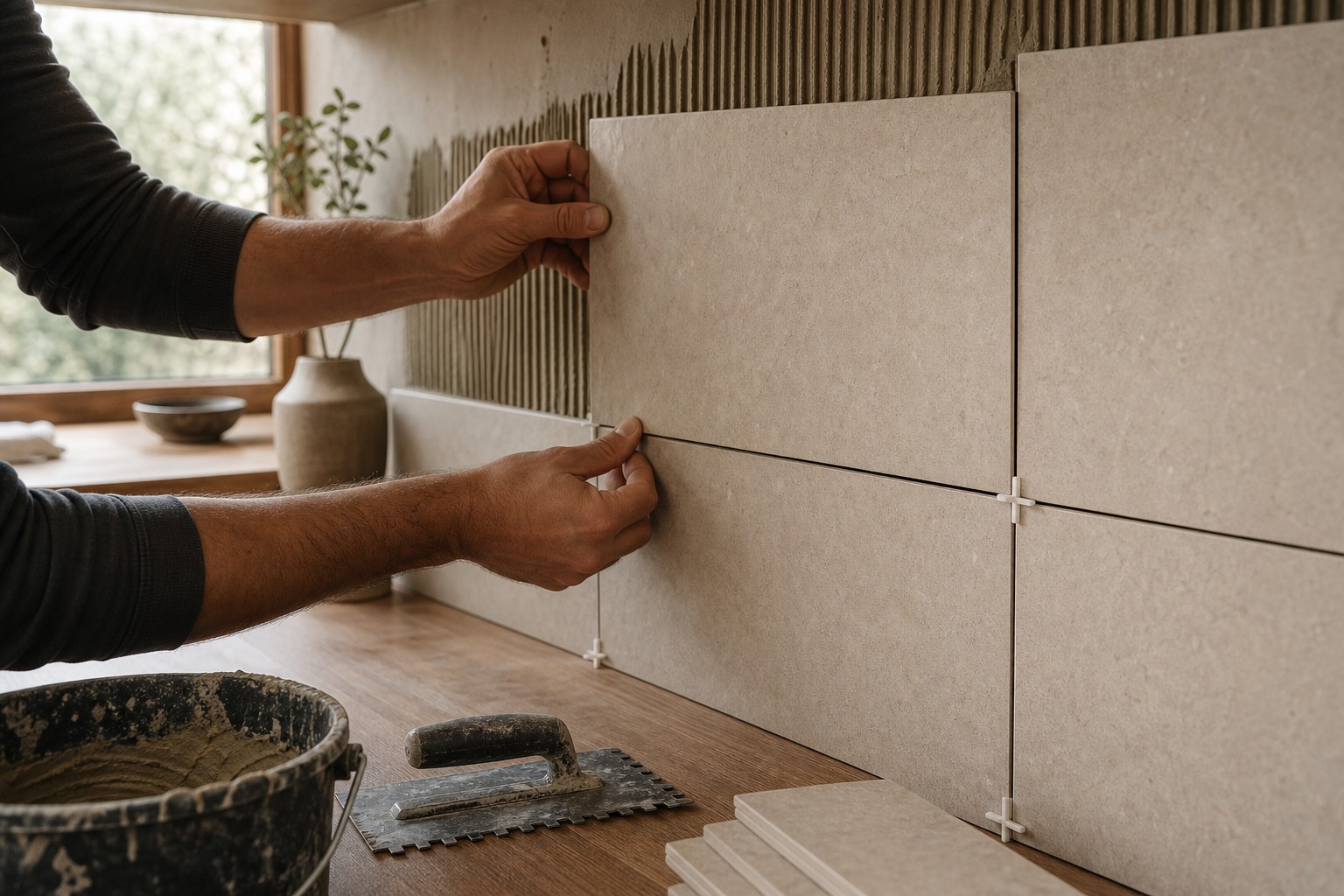
Large-format tile with minimal grout lines. Fewer joints keep the surface reading as one continuous, calm plane — a core Japandi principle.
Texture over pattern. Subtle stone or linen-look texture stands in for busy mosaics or bold graphic tile.
Why Japandi Tile Design Works in a Chester County Home
Chester County's older stone farmhouses and newer Main Line builds both lean toward warm, natural materials already — fieldstone, wide-plank hardwood, timber beams — which makes Japandi tile design an easier fit here than in a house built around cool, high-contrast finishes. Homeowners we work with are usually coming off a decade of bright-white subway tile and gray quartz, looking for something that feels less like a rental flip and more like it belongs in a house they plan to keep for years.
It ages well. Because the palette is neutral rather than trend-specific, a Japandi bathroom or kitchen doesn't read as dated the way a saturated color choice can five years later.
It shows well for resale. Buyers touring a Main Line listing respond to warmth and calm more consistently than they do to bold statement tile.
It pairs with what's already in the house. Wood-look porcelain sits naturally alongside existing hardwood floors, stone exteriors, and wood trim instead of fighting them.
100+ Five-Star Reviews
Get a Free Tile Quote
20+ years installing bathroom, kitchen, and custom tile across Chester, Delaware & Montgomery counties, PA.
Japandi tile design isn't limited to one room, but a few spaces take to it especially well:
Primary bathrooms. A large-format, matte wood-look tile on the floor and a honed stone-look tile on the shower wall keeps the space feeling like a retreat rather than a showroom.
Kitchen backsplashes. A quiet, textured backsplash lets natural wood cabinetry and stone countertops stay the visual focus instead of competing with a busy pattern.
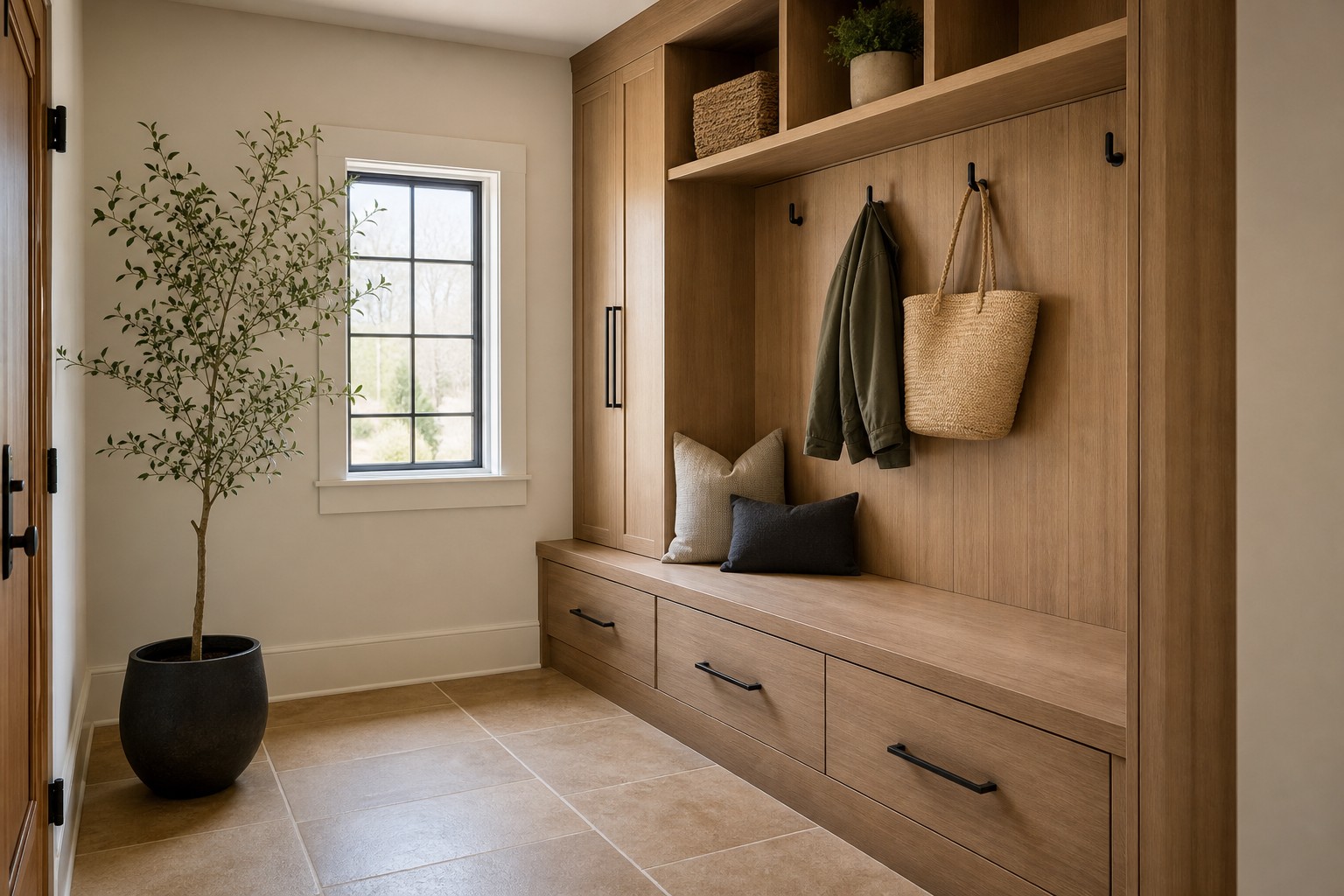
Mudrooms and entryways. Warm, durable porcelain flooring handles daily traffic while still feeling intentional rather than purely utilitarian.
If you're mixing more than one material in the same space — wood-look porcelain on the floor with a natural stone-look tile on an accent wall, for example — our guide to mixing tile materials covers how to keep the combination cohesive instead of busy.
Getting Japandi Tile Design Right: Materials, Grout, and Layout
The look lives or dies in the details most homeowners don't think to ask about upfront:
Grout color matters more than usual. A grout line that's too dark or too bright against a wood-look tile breaks the calm, continuous surface Japandi design depends on — we typically match grout closely to the tile body rather than using a contrasting line.
Layout should run long, not busy. A simple running-bond or stack layout in a large-format tile reinforces the quiet, linear feel; herringbone and chevron patterns, while beautiful, work against the minimalism Japandi design is built on.
One accent material, not three. The most common mistake we see is a homeowner adding a wood-look floor, a stone-look wall, and a patterned mosaic niche in the same room. Japandi tile design works because it edits — pick one warm material and let it carry the space.
We walked through more of the current material and color shifts we're seeing across Chester County in our 2026 Delaware Valley tile trends guide, including where Japandi-adjacent choices are showing up alongside other popular styles.
See our full tile installation services for the wood-look porcelain, matte finishes, and layout expertise behind every Japandi-style project we build across Chester County, Delaware County, and Montgomery County.
Thinking about a Japandi-style bathroom, kitchen, or mudroom for your own home? Request a free, no-obligation quote and we'll help you choose materials that fit your space and your budget.
Frequently Asked Questions
What is Japandi tile design?
Japandi tile design combines Japanese minimalism with Scandinavian warmth, using matte, wood-look, or stone-look porcelain in neutral tones with minimal grout lines. It favors calm, continuous surfaces over bold pattern or high-shine finishes.
What tile works best for a Japandi bathroom or kitchen?
Large-format matte porcelain in warm wood-look or sand tones is the most common choice, paired with a honed stone-look tile as an accent. Both hold up well in wet areas while keeping the soft, natural look the style is known for.
Is Japandi tile design a passing trend or a lasting one?
Because the palette is neutral rather than tied to a specific color trend, Japandi tile design tends to age better than saturated or highly patterned choices. We treat it as a durable design direction rather than a short-term trend.
How much does a Japandi-style tile remodel cost in Chester County?
Cost depends on the room, tile format, and scope of the project, but wood-look and stone-look porcelain used in Japandi design are comparable in price to the standard porcelain most Chester County homeowners already budget for. We provide a free, no-obligation quote for an exact number.
Can Japandi tile design work in an older Main Line or Chester County home?
Yes — the warm, natural materials at the center of Japandi tile design tend to complement older stone and hardwood-heavy homes more easily than a stark, high-contrast modern palette. We regularly install it in both historic renovations and new construction.
Questions? Call Us Directly
Serving Chester, Delaware & Montgomery counties, PA