Quick Summary
Porcelain is a ceramic tile with water absorption of 0.5% or less; non-porcelain ceramic absorbs more. The PTCA mark shows a tile has been independently certified as porcelain. In showers, the waterproofing behind the tile keeps water out, not the tile body. For floors, check the floor rating and slip-resistance classification; outdoors, check the manufacturer’s exterior rating.
The real difference between porcelain and ceramic tile is how much water the tile body absorbs. Porcelain is a dense tile that, by industry definition, has water absorption of 0.5% or less. Non-porcelain ceramic tile absorbs more. That one number shapes where each tile works best, which is why it helps to choose room by room. If you're planning a bathroom tile project, here's how to think it through.
What is the difference between porcelain and ceramic tile?
Porcelain is a type of ceramic tile, so the real comparison is porcelain vs non-porcelain ceramic. According to the Tile Council of North America (TCNA), porcelain tiles are typically made with porcelain clays, are dense, and have water absorption of 0.5% or less. Non-porcelain tiles absorb more than 0.5%.
That threshold comes from the industry standard, which defines porcelain as an "impervious" tile measured with the ASTM C373 test method. It's a lab test, not something you can judge by looking at a tile in a showroom.
A few other differences TCNA points out:
- Glaze. Porcelain comes glazed or unglazed. Non-porcelain tile is usually glazed, apart from unglazed quarry tile.
- Cutting and setting. Non-porcelain tile is generally easier to cut and bond. Porcelain is harder to cut and harder to bond, which matters to your installer more than to you, as long as the right setting materials are used.
- Wear. Unglazed "through-body" porcelain carries its color all the way through, so wear tends not to show. Many glazed tiles, porcelain or not, also have very durable surfaces.
How do you know a tile is really porcelain?
Look for the Porcelain Tile Certification Agency (PTCA) mark on the box or in the product literature. TCNA notes that some tile sold as "porcelain" doesn't meet the 0.5% standard. A tile carrying the PTCA mark has been independently tested and certified as porcelain.
If there's no mark, ask for the manufacturer's spec sheet. It should list water absorption and the areas where the tile is rated for use. "Porcelain-look" or "porcelain-style" on a label tells you about appearance, not the tile body.
Get a Free Tile Quote
20+ years installing bathroom, kitchen, and custom tile across Chester, Delaware & Montgomery counties, PA.
Which tile is better for a shower or bathroom?
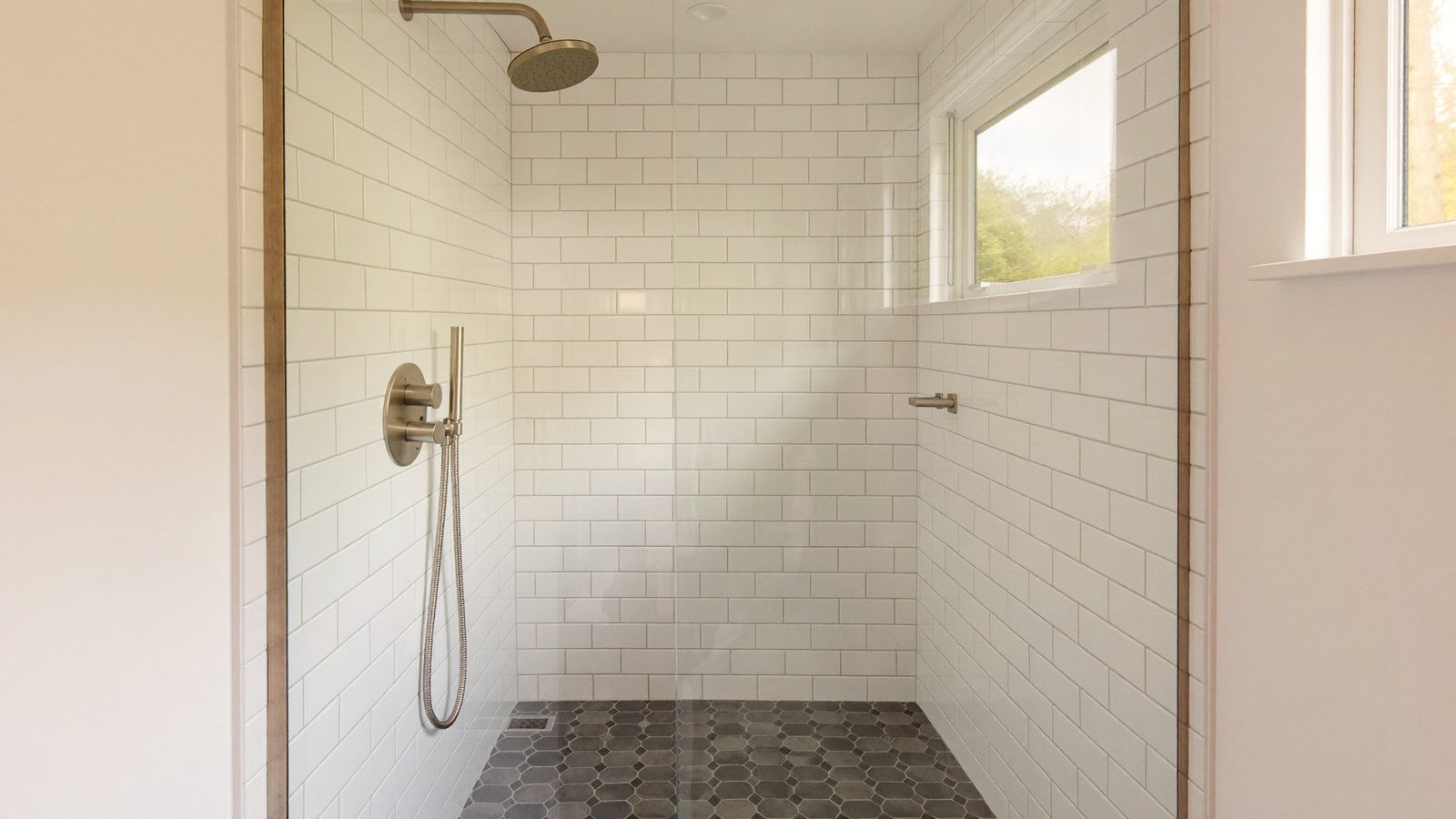
Both porcelain and ceramic tile are used in showers and bathrooms. Low absorption isn't what keeps water out of your walls, though; the waterproofing behind the tile does. TCNA's guidance is plain: grout joints aren't waterproof, so in a shower you rely on the installation method and substrate to protect the space around it.
On shower and bathroom walls, either can work. TCNA notes that non-porcelain tile is generally easier to cut. For shower floors and bathroom floors, check two things on the spec sheet:
- that the tile is rated for floors, not walls only
- its slip-resistance rating for wet areas (more on that below)
According to TCNA, unglazed porcelain may have better slip resistance than glazed porcelain, which can matter on a wet shower floor. Our guide to large format vs standard tile in PA bathrooms covers how tile size plays into that choice, and our post on shower waterproofing before tile explains what belongs behind the tile.
Which tile is better for kitchen floors and backsplashes?
For a backsplash, either works, because a wall behind a counter sees splashes, not standing water or foot traffic. The finish and how easy it is to wipe down are worth thinking about. Our post on matte vs glossy tile walks through that tradeoff.
Kitchen floors take spills, dropped pans and daily traffic. Here the spec sheet matters most: confirm the tile is rated for floors and check its slip-resistance classification. Glazed porcelain is usually a little easier to clean than unglazed, TCNA notes, because the glaze fills in tiny surface pores. If you're also weighing stone, see porcelain vs natural stone for Malvern kitchens. You can see the kind of kitchen work we do on our kitchen tile page.
What about entryways, mudrooms and outdoor areas?
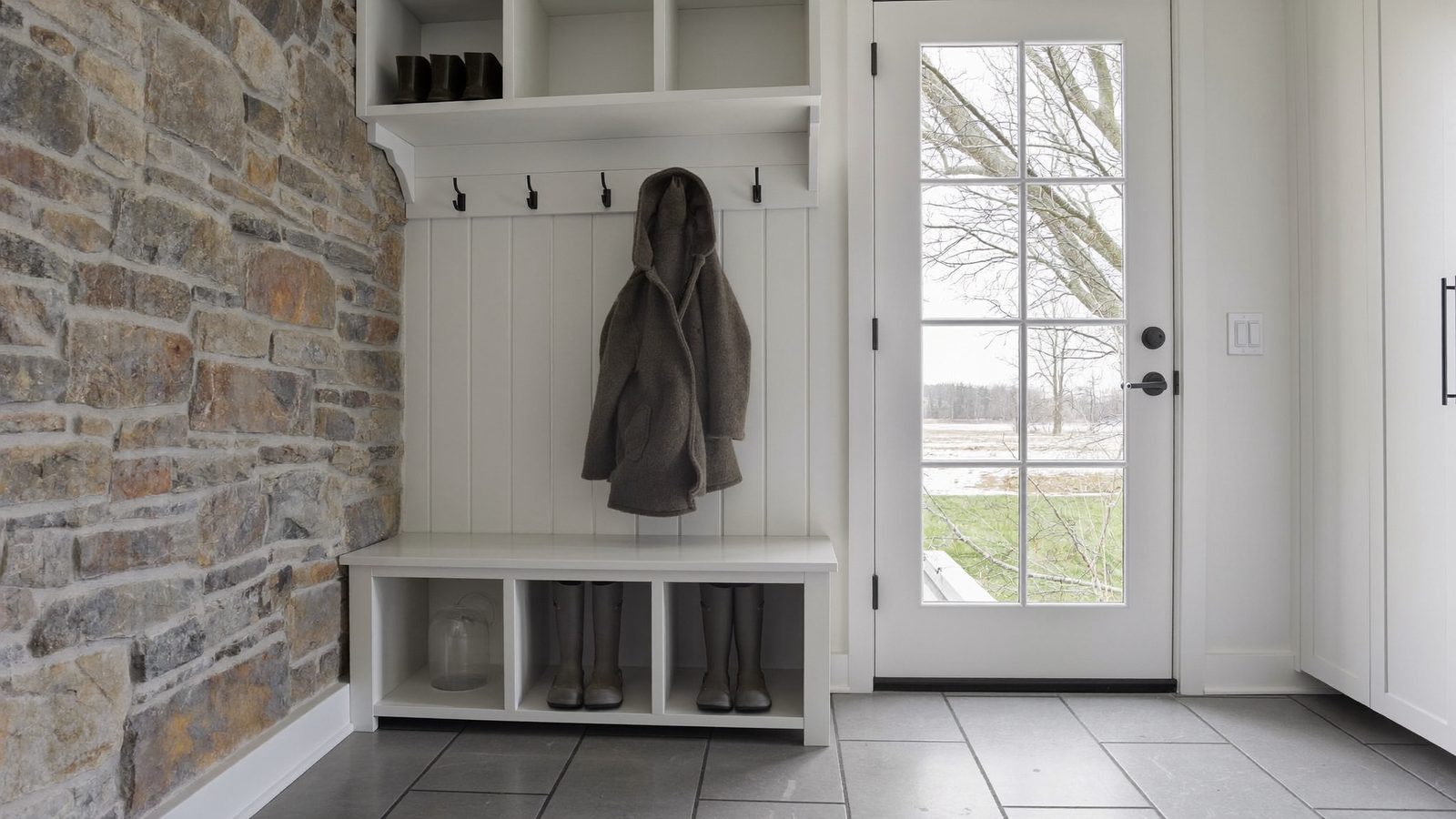
Entryways and mudrooms see wet boots, grit and road salt in a Chester County winter, so a floor-rated tile with good slip resistance is the starting point. Either tile body can work if the rating fits.
Outdoors, the question is frost resistance. Because porcelain absorbs so little water, TCNA says it's usually frost resistant, but not always. And porcelain isn't the only option: TCNA notes that many non-porcelain tiles, including quarry tiles, are rated for exterior use. Always check the manufacturer's "area of use" for the specific product.
Even a frost-resistant tile can be damaged outside if water sits on it and gets into the grout joints or gaps in the setting bed. That's why outdoor tile also depends on slope, drainage and setting materials rated for exterior conditions.
What does slip resistance mean on a tile spec sheet?
Slip resistance has its own rating system. The national standard for measuring it, ANSI A326.3, includes a five-category product use classification that lets manufacturers state where a floor tile is suited based on its slip resistance, as TCNA explains.
When you're comparing two floor tiles you like, look for that classification on the spec sheet or ask your supplier for it, since not every product may list it yet. It's more useful than "porcelain" or "ceramic" alone when the floor will get wet.
What should you ask your installer before choosing?
A good installer will help you match the tile to the room. Questions worth asking:
- Is this tile rated for floors, walls or both, and is it rated for this room?
- Does the spec sheet list water absorption, and is there a PTCA mark if it's sold as porcelain?
- What slip-resistance classification does it have for a wet floor?
- Which setting materials will you use for this tile body and size?
- For outdoor areas, is it rated by the manufacturer for exterior use, and how will water drain?
Bring the product name or the box label to your estimate so these questions can be answered for the exact tile, not just the category.
Frequently Asked Questions
Is porcelain tile always better than ceramic?
No. Porcelain absorbs less water, which helps in some locations, but many non-porcelain ceramic tiles perform well where they're rated for use. TCNA notes that non-porcelain tiles can have very durable glazes and that many are rated for exterior use. The right choice depends on the room and the specific product.
Can you use ceramic tile on a floor?
Yes, when the manufacturer rates it for floors. TCNA advises checking that a non-porcelain tile has been tested and that its glaze hardness suits your application. For wet floors, also check the tile's slip-resistance classification.
Is porcelain tile waterproof?
Porcelain tile has very low water absorption, but a tiled surface isn't waterproof. Grout joints let water through, according to TCNA. In a shower, a waterproofing system under the tile protects the walls and floor.
Is porcelain tile harder to install?
It's harder to cut and harder to bond than non-porcelain tile, TCNA says. That mainly affects the installer's tools and setting materials. With the right materials, it makes little difference to you as the homeowner.
Does porcelain tile work outdoors in Pennsylvania?
Often, but check first. TCNA says porcelain is usually frost resistant, though not always, so confirm the manufacturer rates the specific tile for exterior use. Drainage and exterior-rated setting materials matter just as much as the tile itself.
Choosing tile for a Chester County or Main Line home
If you're deciding between porcelain and ceramic for a bathroom, kitchen or floor, we can look at the space and the tile you're considering together. Milford Mills Tile serves Chester County, Delaware County, Montgomery County, the Main Line and Northern Delaware. Request a quote or call (484) 883-9948. You can also learn more about our work in Chester County.
Sources


