October 16, 2026Milford Mills Tile TeamBathroom Tile7 min read
Shower Waterproofing Before Tile: What Chester County PA Homeowners Should Know
Share
Quick Summary Tile and grout are not a waterproof barrier on their own. Shower waterproofing is a board, sheet membrane or liquid-applied layer installed under the tile, and the details at corners, niches, the curb and the valve matter most. Ask your installer which system they use, whether it meets ANSI A118.10, and whether they will flood-test the floor before tiling.
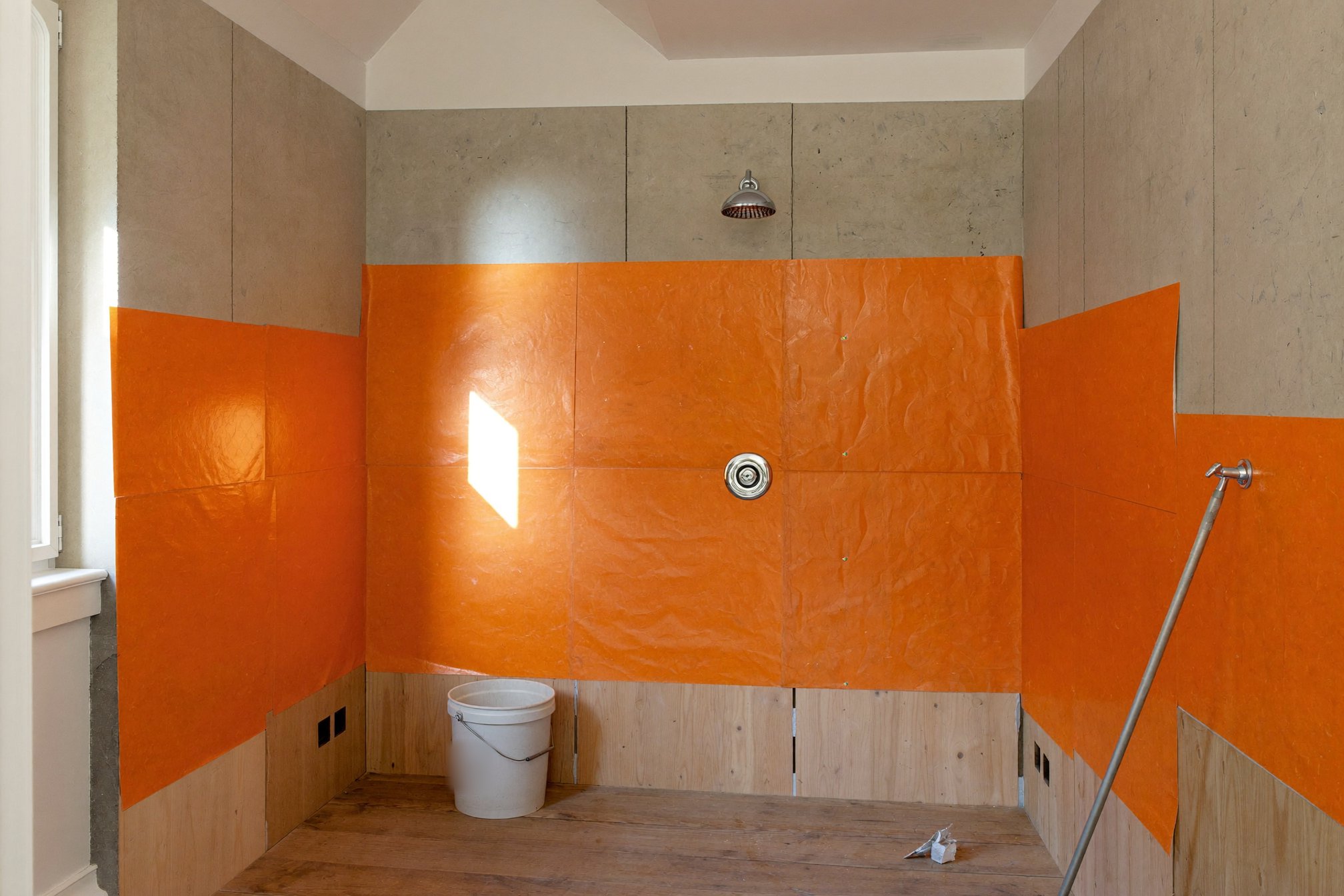
Shower waterproofing is the layer behind and under your tile that actually keeps water out of the walls and floor. Tile and grout look solid, but they aren't a waterproof barrier on their own. If you're planning a new shower in West Chester, Malvern or along the Main Line, knowing what goes behind the tile helps you ask the right questions before work starts. Our bathroom tile and shower page shows the kind of shower work we do.
Why don't tile and grout keep water out on their own?
Tile is the finish, not the barrier. Most grout is porous, so water can slowly work through grout joints, small cracks and the edges around fixtures.
Behind a shower wall you usually have wood framing, and under the floor a wood subfloor. Once water gets past the tile and into those materials, it has nowhere to go. That's why the waterproofing layer matters more than the tile you see. A shower can look perfect on day one and still be letting water through behind the scenes, and by the time you notice, the repair usually means taking the tile off.
Sealing grout helps it resist stains and absorb less water, but it doesn't turn a shower into a waterproof system. In a shower, the waterproof layer has to be built in underneath.
What are the main shower waterproofing systems?
Tiled showers commonly use one of three types of waterproofing. All three are installed under the tile, and each has its own manufacturer instructions that the installer has to follow.
Foam board systems
These are lightweight boards that go up on the walls in place of standard backer board. The seams and fastener heads are sealed so the walls form one waterproof surface. wedi, for example, describes its Fundo shower system as "100% waterproof and mold resistant" (wedi America). Many board systems pair with a matching pre-sloped shower floor and drain.
Bonded sheet membranes
A thin, flexible sheet is set in thin-set mortar over the backer board, and the tile is set directly on top of it. Schluter's KERDI is a well-known example of this kind of sheet membrane. Seams, corners and pipe openings get overlapping pieces or pre-formed corners.
Liquid-applied membranes
These are rolled or brushed onto the backer board in coats, much like thick paint, and cure into a rubbery waterproof layer. Getting the full thickness the manufacturer calls for, especially in corners and around fixtures, is the key.
What standard should the membrane meet?
The Tile Council of North America lists ANSI A118.10 as the American National Standard for load-bearing, bonded, waterproof membranes under thin-set tile, and ANSI A108.13 for how those membranes are installed (TCNA). It's reasonable to ask your installer which product they plan to use and whether it meets A118.10.
100+ Five-Star Reviews
Get a Free Tile Quote
20+ years installing bathroom, kitchen, and custom tile across Chester, Delaware & Montgomery counties, PA.
What does proper prep look like before the tile goes on?
Good shower waterproofing is mostly about details. The flat parts of the wall are the easy part; leaks usually start at the transitions.
Here's what a careful installation pays attention to:
Slope to the drain: the shower floor has to slope toward the drain so water doesn't sit on it.
The pan and curb: the floor waterproofing has to tie into the drain and run up and over the curb, or flow cleanly to the threshold on a curbless shower.
Corners and seams: inside and outside corners, where wall meets floor and where panels meet, get extra attention.
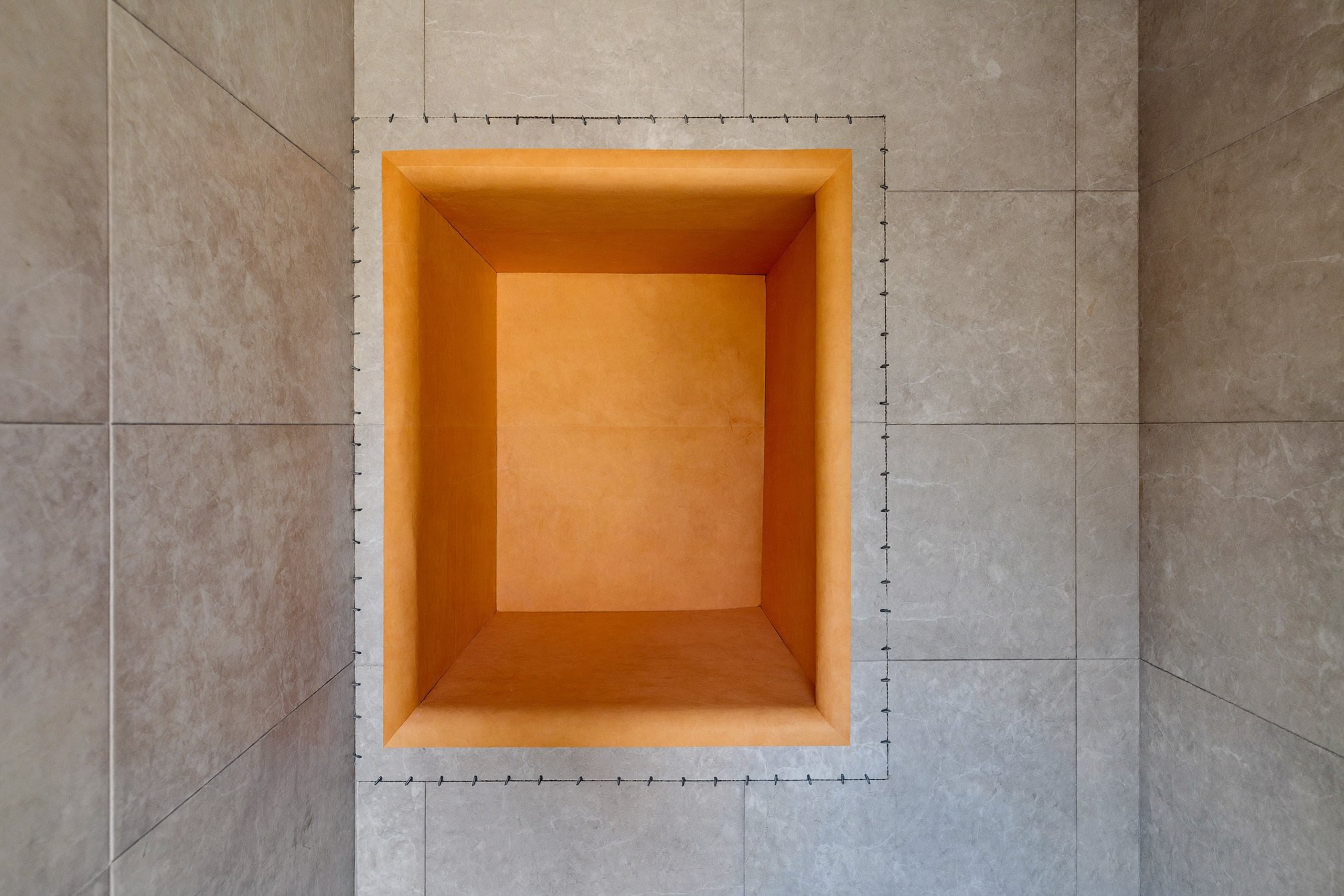
Niches and benches: every surface of a recessed niche or built-in bench needs the same waterproofing as the walls. Our post on shower niches and benches covers the design side.
Penetrations: the valve, the shower head arm and any body sprays need sealed collars or gaskets made for the system.
A sound substrate: waterproofing can't make up for a weak or uneven floor. That's why subfloor preparation comes first.
What is a flood test?
Many installers test the shower floor before any tile goes down. They plug the drain, fill the pan with water, and leave it for a set time to make sure the level doesn't drop and nothing leaks below. Whether a test is required, and how long it lasts, depends on local code and the membrane maker's instructions, so ask how your installer handles it.
What should you ask a Chester County installer about shower waterproofing?
Before you sign off on a shower project, these questions help you compare installers:
Which waterproofing system will you use on the walls and the floor?
Does the membrane meet ANSI A118.10, and will you follow the manufacturer's installation instructions?
How will you handle the niche, bench, curb or curbless entry, and the valve and shower head?
Will you flood-test the shower floor before tiling?
Can I see photos of the waterproofing before the tile goes on?
A good installer will answer these plainly. If you're replacing an older shower on the Main Line, ask what they expect to find once the old tile comes off, since that can change the plan. For curbless designs, our post on curbless bathroom remodels explains what changes at the floor.
What are the signs a shower wasn't waterproofed correctly?
Some problems show up years later, but these are common warning signs worth having checked:
grout that stays dark long after showers, or keeps cracking in the same spots;
loose or hollow-sounding tiles;
peeling paint, bubbling or soft drywall on the other side of the shower wall;
stains on the ceiling below a second-floor bathroom; and
a musty smell that doesn't go away with cleaning.
These don't always mean the waterproofing failed. Caulk gaps or plumbing leaks can cause some of them. But they're a reason to have someone look before small damage gets bigger.
Frequently Asked Questions
Is shower waterproofing the same as sealing the grout?
No. Grout sealer is a surface treatment that helps grout resist stains and absorb less water. Shower waterproofing is a membrane or board system installed under the tile that keeps water out of the walls and floor.
Can you add waterproofing to an existing tiled shower?
Not behind the tile you already have. The waterproof layer goes under the tile, so adding or replacing it usually means removing the old tile and backer down to the framing.
Which is better, a board system or a membrane?
Each type can work well when it's installed correctly. The choice often depends on the shower's layout, the walls you're starting with and the installer's training on that system. Ask which one they recommend for your bathroom and why.
How can I tell which waterproofing system went into my shower?
Once the tile is up, you usually can't see it. Ask your installer for the product names before work starts, and ask for photos of the walls, corners and floor after waterproofing and before tile. Keep those with your home records. They help if you ever need a repair or sell the house.
Does a curbless shower need different waterproofing?
It uses the same kinds of systems, but the floor waterproofing usually extends beyond the shower area and the floor has to be built so water still flows to the drain. That planning has to happen before the floor is built.
Planning a Shower in Chester County or on the Main Line
Milford Mills Tile installs bathroom tile and shower systems across Chester County, the Main Line, Delaware County, Montgomery County and Northern Delaware. If you're weighing a shower remodel and want to talk through the waterproofing, request a consultation or call (484) 883-9948.