September 15, 2026Milford Mills Tile TeamBathroom Tile7 min read
Bathroom Floor Tile Ideas for Chester County PA Homes
Share
Quick Summary Bathroom floor tile has to handle standing water, bare feet, and daily traffic no other room in the house sees, so slip resistance and material durability matter more here than almost anywhere else. This guide covers the bathroom floor tile options Chester County homeowners ask for most, how to choose a slip-resistant finish, and how to keep the floor coordinated with the shower and vanity.
Bathroom floor tile is one of the most-asked-about upgrades we install across Chester County, Delaware County, Montgomery County, and the Main Line. A bathroom floor sees standing water, bare wet feet, and more daily traffic than almost any other surface in the house, so the material has to perform as well as it looks. Whether you're replacing a dated floor in a full renovation, upgrading a powder room, or planning a curbless shower that ties the whole room together, the right bathroom floor tile keeps the space safe, easy to clean, and built to last.
Milford Mills Tile is Wedi Certified and Schluter Certified, with over 20 years of experience and more than 1,000 completed tile projects in the Delaware Valley. Bathroom floors are one of the areas where the wrong material choice shows up fastest — a floor that looks great dry can turn dangerously slick the moment it gets wet. Here's what we recommend most often.
Popular Bathroom Floor Tile Materials
Most of the bathroom floors we install fall into a few material categories, and the right one depends on the room's size, traffic, and how much water it sees:
Matte porcelain. Porcelain resists water absorption almost completely and holds up to decades of daily use. A matte or honed finish, rather than polished, is what keeps a wet porcelain floor from becoming a slip hazard.
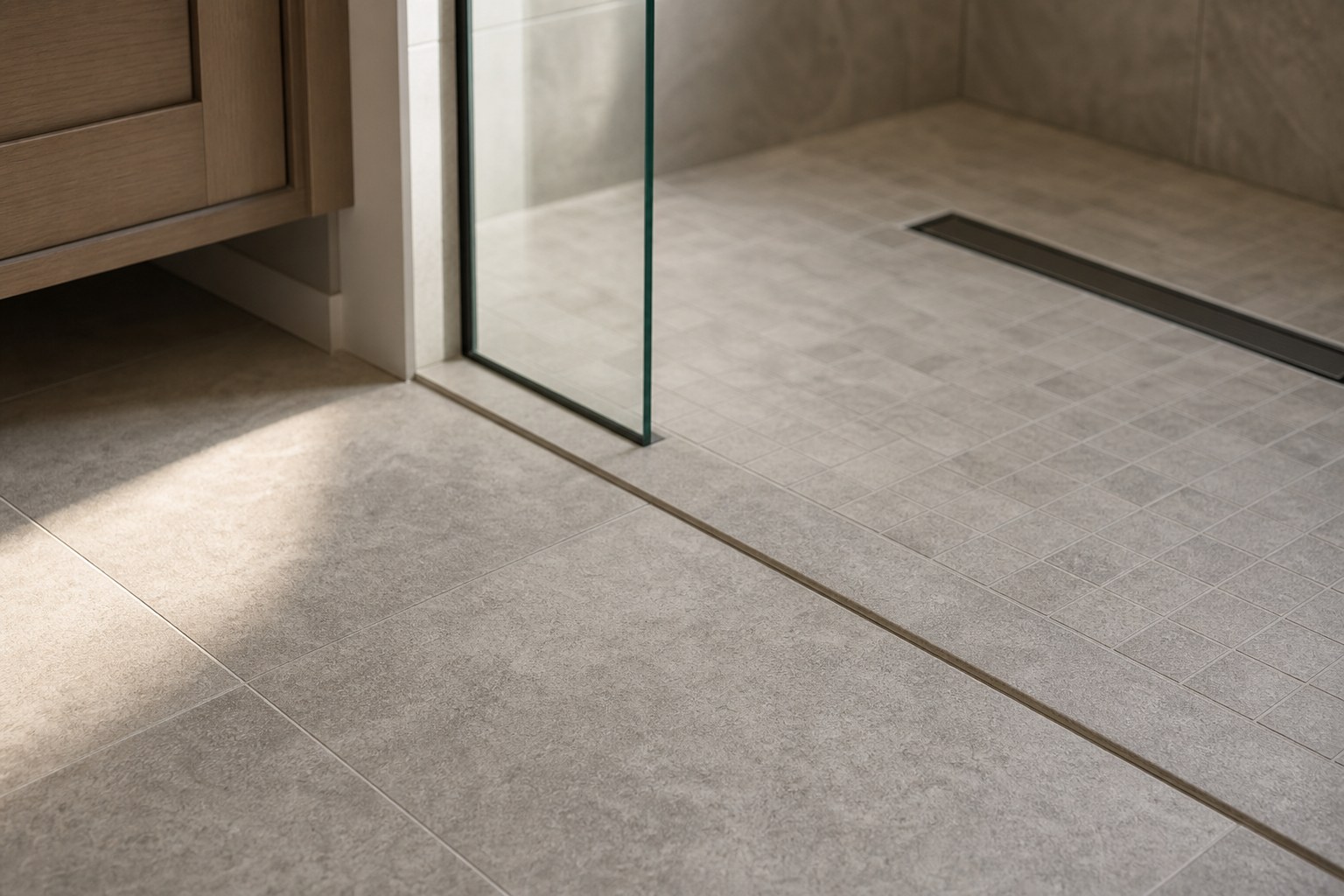
Small-format mosaic. Smaller tiles mean more grout lines, and more grout lines mean more traction underfoot — which is exactly why we still install penny tile and small hexagon mosaic on shower floors and curbless transitions even when the rest of the bathroom uses large-format tile.
Natural stone. Honed limestone, slate, and travertine give a bathroom floor a texture porcelain can't fully replicate, but stone is porous and needs regular sealing to stay water-resistant and stain-free.
Slip resistance is the single most important spec for a bathroom floor, and it's the one homeowners overlook most often when they're shopping by look alone. A few things determine how a floor performs wet:
Finish, not just material. A polished or glossy porcelain can be just as slick as glass when wet, regardless of how durable the material is underneath. We steer clients toward a matte, honed, or lightly textured finish for any floor that sees regular water.
Tile size in wet zones. Inside a shower or on a curbless floor, smaller-format tile with more grout lines gives feet more traction than a single large slab. We often mix formats — large-format tile for the dry floor, small mosaic for the shower pan.
Grout texture and sealing. Properly sealed grout stays slightly textured rather than glassy, which adds a meaningful amount of grip in a wet bathroom.
Our shower niche and bench tile guide covers the same wet-zone material logic in more detail if you're planning the shower alongside the floor.
Coordinating the Floor With the Shower and Vanity
A bathroom floor works best when it's planned alongside the shower and vanity rather than chosen on its own. If the shower floor uses a different material or format — which is common, since wet-zone tile often needs to be smaller for traction — we tie the two together with a shared grout color or a consistent tone so the transition reads as intentional rather than mismatched. Vanity flooring gets less water exposure, so it has more flexibility in finish, but we still keep it within the same tone family as the wet-zone tile so the room doesn't feel split in two.
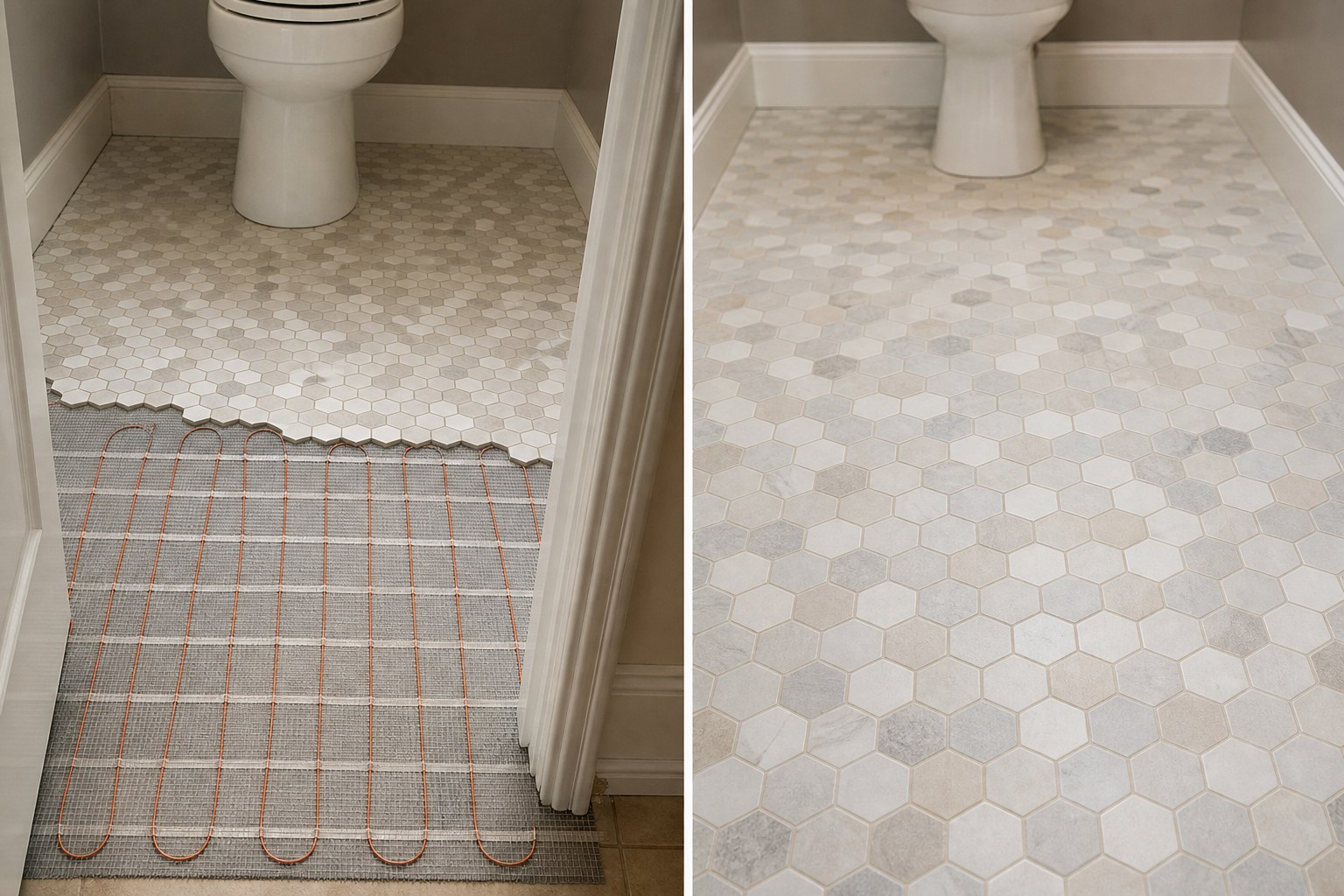
Radiant floor heating is worth planning at the same time as the tile itself, since the heating cable or mat has to go down before the tile, not after. It's one of the more requested upgrades on full bathroom floor replacements, and it adds very little to the project timeline when it's built into the plan from the start.
Ready to plan your bathroom floor tile? Request a free, no-obligation quote and we'll bring samples to your home to work out the floor, shower, and vanity pairing together.
Frequently Asked Questions
What's the most slip-resistant bathroom floor tile?
Matte or honed porcelain with a slightly textured surface is the most slip-resistant option for a dry bathroom floor, while small-format mosaic with more grout lines performs best inside a shower or on a curbless transition where water pools.
Should the shower floor match the rest of the bathroom floor?
Not necessarily. Many of the bathrooms we install use a smaller-format tile in the shower for traction and a larger format on the dry floor, tied together through matching grout color or tone rather than an identical tile.
Can I add radiant heat under existing bathroom floor tile?
Not without removing the existing tile first. Radiant heating cable or mat has to be installed directly on the subfloor before new tile goes down, so it's most practical to add during a full floor replacement.
How long does a bathroom floor tile replacement take?
Most bathroom floor replacements take two to three days once materials are on site, longer if the project includes radiant heat, a curbless shower transition, or subfloor repair.
Questions? Call Us Directly
Serving Chester, Delaware & Montgomery counties, PA