October 27, 2026Milford Mills Tile TeamBathroom Tile6 min read
Shower Floor Tile: Slope and Grip
Share
Quick Summary A shower floor needs drainage; the Ceramic Tile Foundation describes 1/4 inch per foot. Confirm project requirements locally. Tile size is a layout decision: every tile sits on a sloped surface. For grip, ask for a recommendation for your exact sloped shower floor. ANSI A326.3 use categories do not address inclined surfaces; no tile is "slip-proof." Grout joints aren't waterproof, and floor-to-wall corners usually take caulk (TCNA).
Choose shower floor tile for the slope, wet barefoot use and grout layout of your particular shower. A wet-use label alone doesn't settle all three. If you're planning a bathroom tile and shower project, here is what to ask before you pick a tile.
Why does a shower floor need a slope?
Water has to travel to the drain, so the shower floor has to tilt toward it. The Ceramic Tile Foundation describes a 1/4 inch per foot slope toward the drain in a stall shower. In a traditional lined shower assembly, the sloped layer beneath the liner is often called the pre-slope. The International Masonry Institute's TCNA-based shower detail shows a mortar bed beneath the membrane pitched 1/4 inch per foot toward the drain.
Slope matters for what you can't see, too. The Foundation warns that missing pre-slope can leave stagnant water beneath the tile and cause odors. The surface also needs to avoid depressions that hold water. Ask your installer and local code official to confirm the required slope and assembly for your project; the examples here aren't a determination of your town's code requirements.
Choose a size that your installer can lay cleanly on the sloped floor. This is a layout question as much as a style one, because every tile sits on a surface that tilts toward the drain.
Here's how the common choices compare:
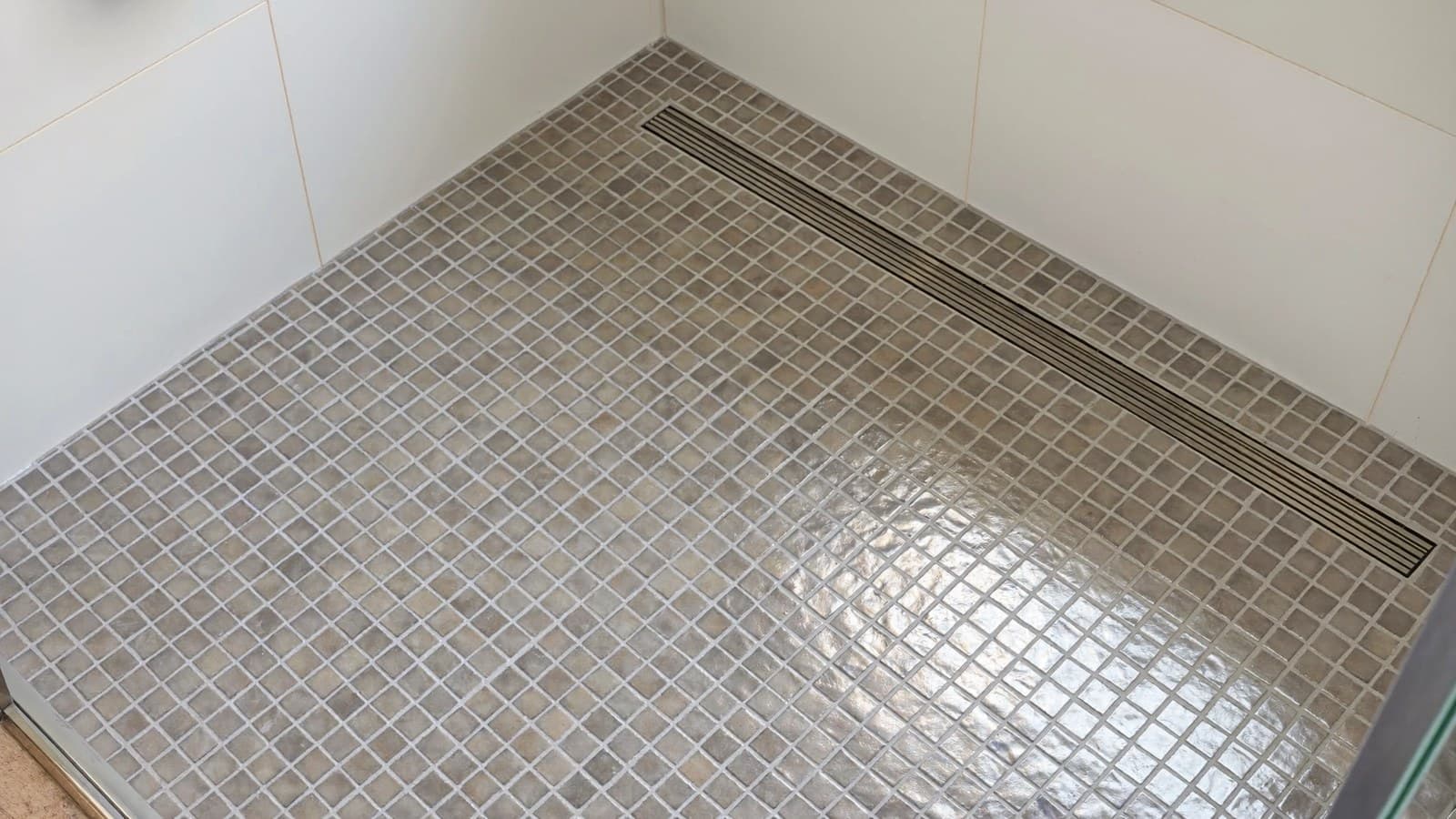
Mosaic and small-format tile. These put more grout lines on the floor. Our post on penny tile and mosaic tile covers the look.
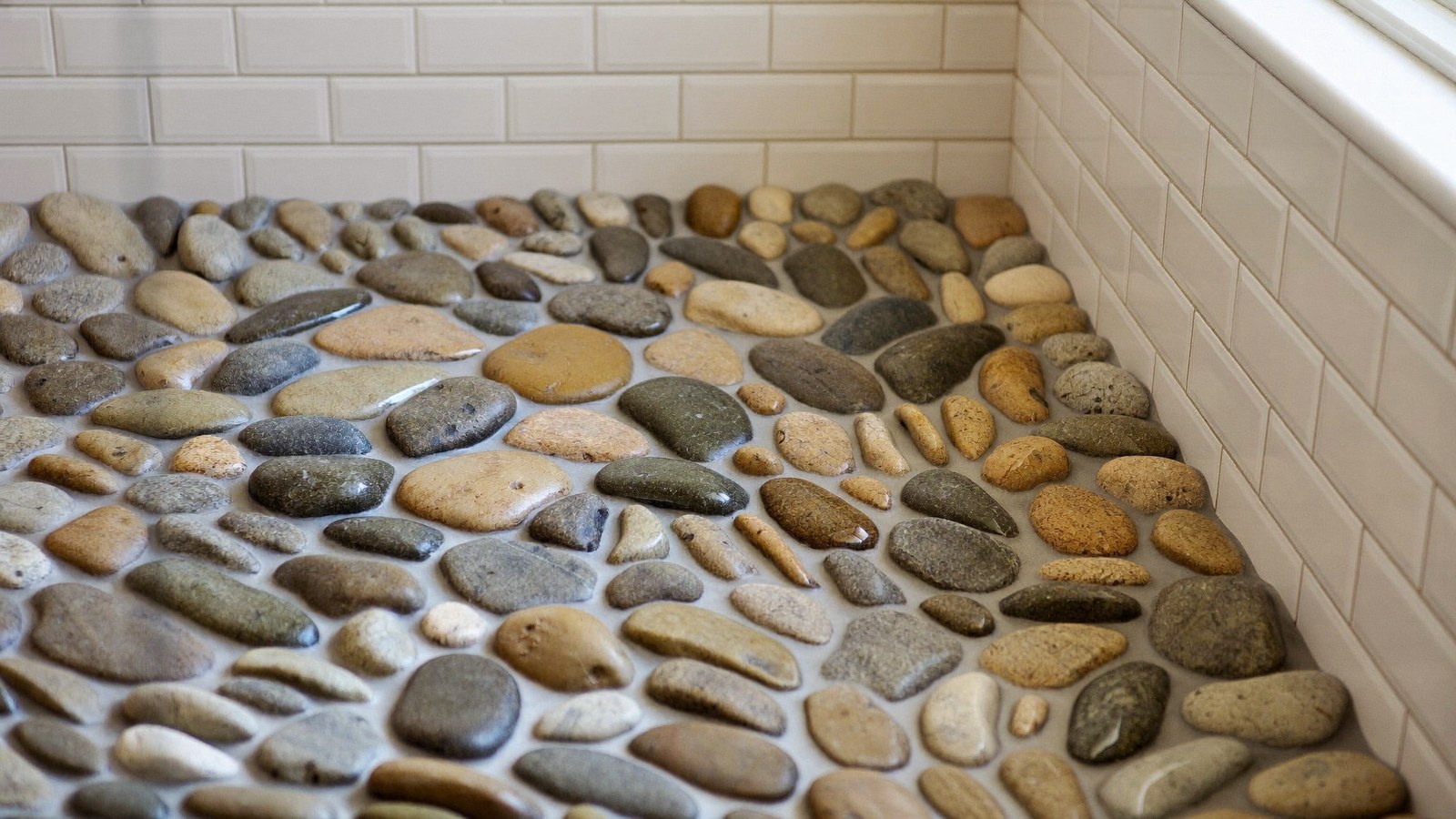
Pebble tile. Uneven stone surfaces make drainage and grout placement especially important. Have the installer explain how the finished surface will shed water without pockets around the stones.
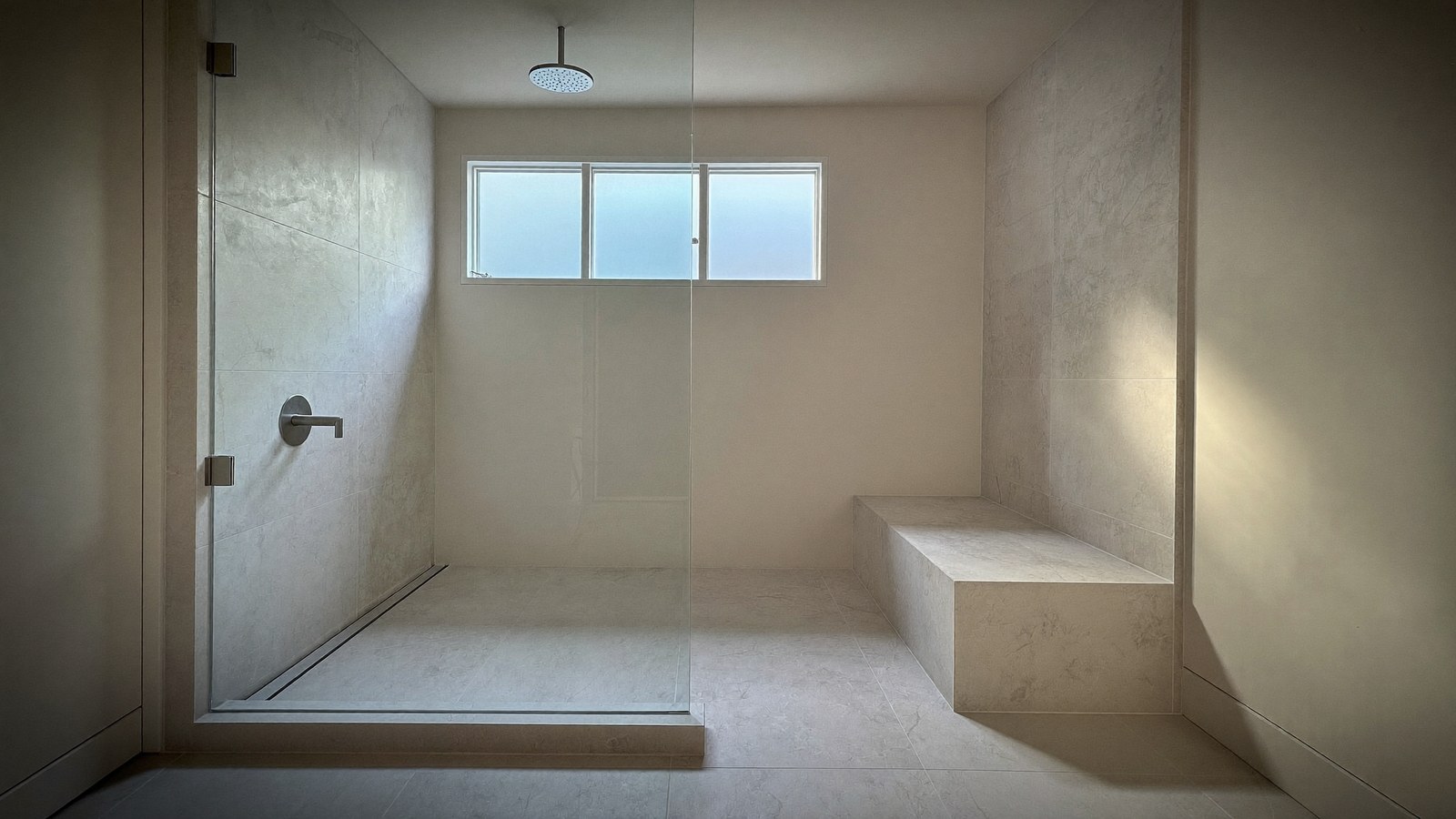
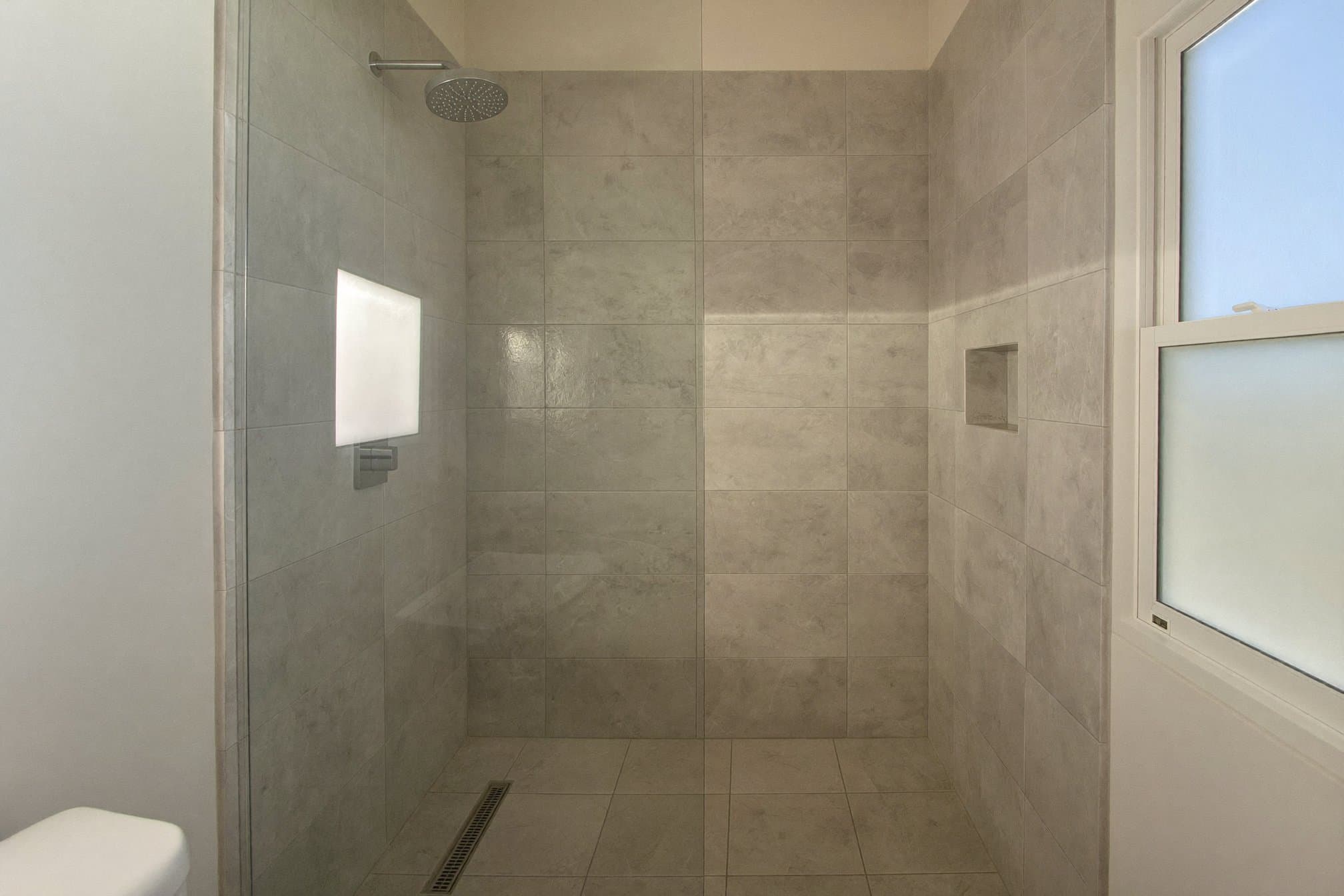
Larger tile. Bigger tiles mean fewer grout lines. Ask how the installer will lay them on the slope, around the drain and at the edges before you commit.
If you're also comparing tile bodies for a wet floor, our post on porcelain vs ceramic tile by room explains how to read the spec sheet.
100+ Five-Star Reviews
Get a Free Tile Quote
20+ years installing bathroom, kitchen, and custom tile across Chester, Delaware & Montgomery counties, PA.
Look for a published slip-resistance classification rather than relying on a "non-slip" label. TCNA explains that ANSI A326.3 is the standard test method for measuring a tile's dynamic coefficient of friction (DCOF), and that it also includes product use classifications. You can read more on TCNA's DCOF page.
Under that standard, TCNA says manufacturers must classify products into one or more of five categories: Interior, Dry; Interior, Wet; Interior, Wet Plus; Exterior, Wet; and Oils/Greases. TCNA's announcement also says the standard offers informative "possible areas of use" for each category (see the A326.3 announcement).
Those categories aren't a shower-floor approval. TCNA's DCOF FAQ says they do not address inclined surfaces and that DCOF alone cannot predict a slip. Ask the manufacturer and installer whether the exact tile is suitable for your sloped shower floor, including barefoot use, soap, drainage and cleaning.
Practical steps:
Ask the supplier or check the spec sheet for the tile's slip-resistance classification.
Confirm the manufacturer recommends the exact tile for a shower floor, including your planned slope and barefoot use.
Treat grip as one factor among several. No tile can be called "slip-proof."
What should you know about grout on a shower floor?
Grout fills the joints between tiles, and it needs planning. TCNA's grout guidance says joint width depends on tile size and variation, edge shape and location. Its general advice for cementitious grout is unsanded grout below 1/8 inch and sanded grout at 1/8 inch or wider. Ask your installer to check the chosen grout manufacturer's instructions and the tile's scratch sensitivity before selecting a product.
Two points matter most in a shower:
Grout isn't waterproof. TCNA says it plainly: "Remember that grout joints are not waterproof." In a wet area, the installation method and the substrate protect the space around the shower, according to TCNA's ceramic tile FAQ.
Corners are different. TCNA recommends caulk, not grout, at changes of substrate such as floor-to-wall joints, since those surfaces move independently. It also warns that acrylic caulks break down in horizontal wet applications and suggests silicone, urethane or multi-polymer caulks instead.
Movement can also crack grout. TCNA lists substrate movement, poor packing and mixing mistakes among the causes (see its cracked and loose grout page). Our grout sealing guide covers upkeep once the floor is in.
What about curbless showers, benches and niches?
Horizontal surfaces in the shower need drainage, too. The Ceramic Tile Foundation cites the TCNA Handbook's requirement to slope seats, sills and curbs toward a drain. Our posts on curbless showers on the Main Line and shower niches and benches show how those features fit into the design.
What should you ask your installer before choosing?
Bring the tile name or box label to your estimate so the answers fit the exact tile. Good questions:
How will you lay this tile size on the sloped floor, and where will the layout lines fall around the drain?
Does the manufacturer recommend this tile for my sloped shower floor and barefoot use, and what slip-resistance information is available?
What grout and joint width do you plan to use for this tile?
Where will you use caulk instead of grout?
How are the horizontal surfaces, such as the curb or bench, sloped to the drain?
Frequently asked questions
What is the best tile for a shower floor?
There's no single best tile. Choose a tile the manufacturer recommends for your particular shower floor, then confirm its layout, drainage and barefoot-use suitability with your installer before you buy.
Is mosaic tile better for a shower floor?
Mosaic tile is a common choice, but it isn't required. It adds more grout lines, and the installer still has to keep the floor free of low spots where water could collect. Ask your installer whether a larger tile would suit your shower's layout.
Does a shower floor have to slope?
Yes, it needs to drain. The Ceramic Tile Foundation describes a 1/4 inch per foot slope in a stall shower. Your installer and local code official should confirm the required slope and assembly for your project.
Is grout waterproof in a shower?
No. TCNA says grout joints aren't waterproof. A shower relies on the waterproofing method and the substrate under the tile to protect the walls and floor around it.
Is there a "slip-proof" shower tile?
No tile can promise that. An ANSI A326.3 classification is useful information, but TCNA says the categories do not address inclined surfaces. Ask for a recommendation for your exact shower conditions.
Planning a shower floor in Chester County or the Main Line
If you're choosing floor tile for a new or remodeled shower, we can look at the space and the tile you have in mind. Milford Mills Tile serves Chester County, Delaware County, Montgomery County, the Main Line and Northern Delaware. Request a quote or call (484) 883-9948. You can also read more about our work in Chester County.