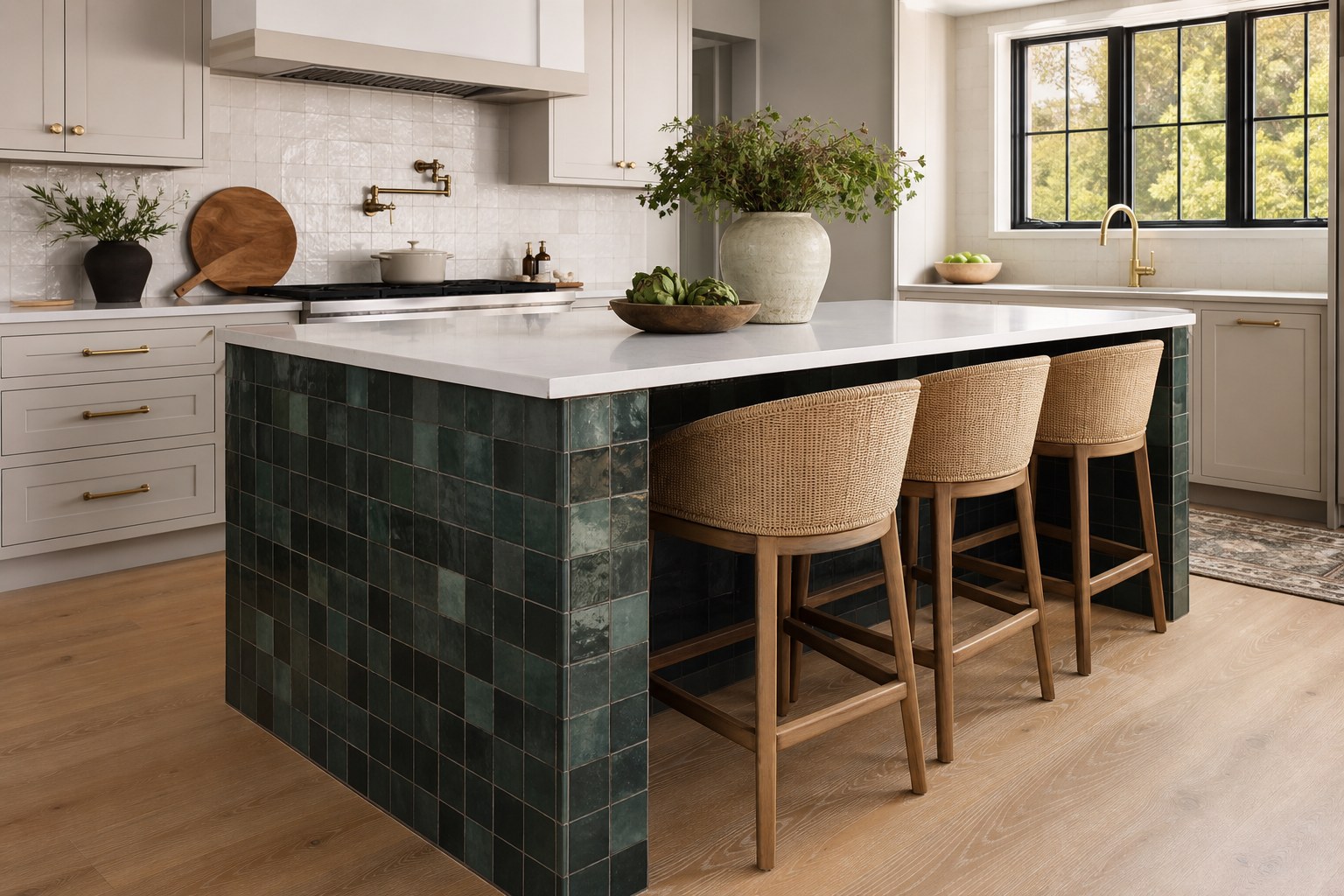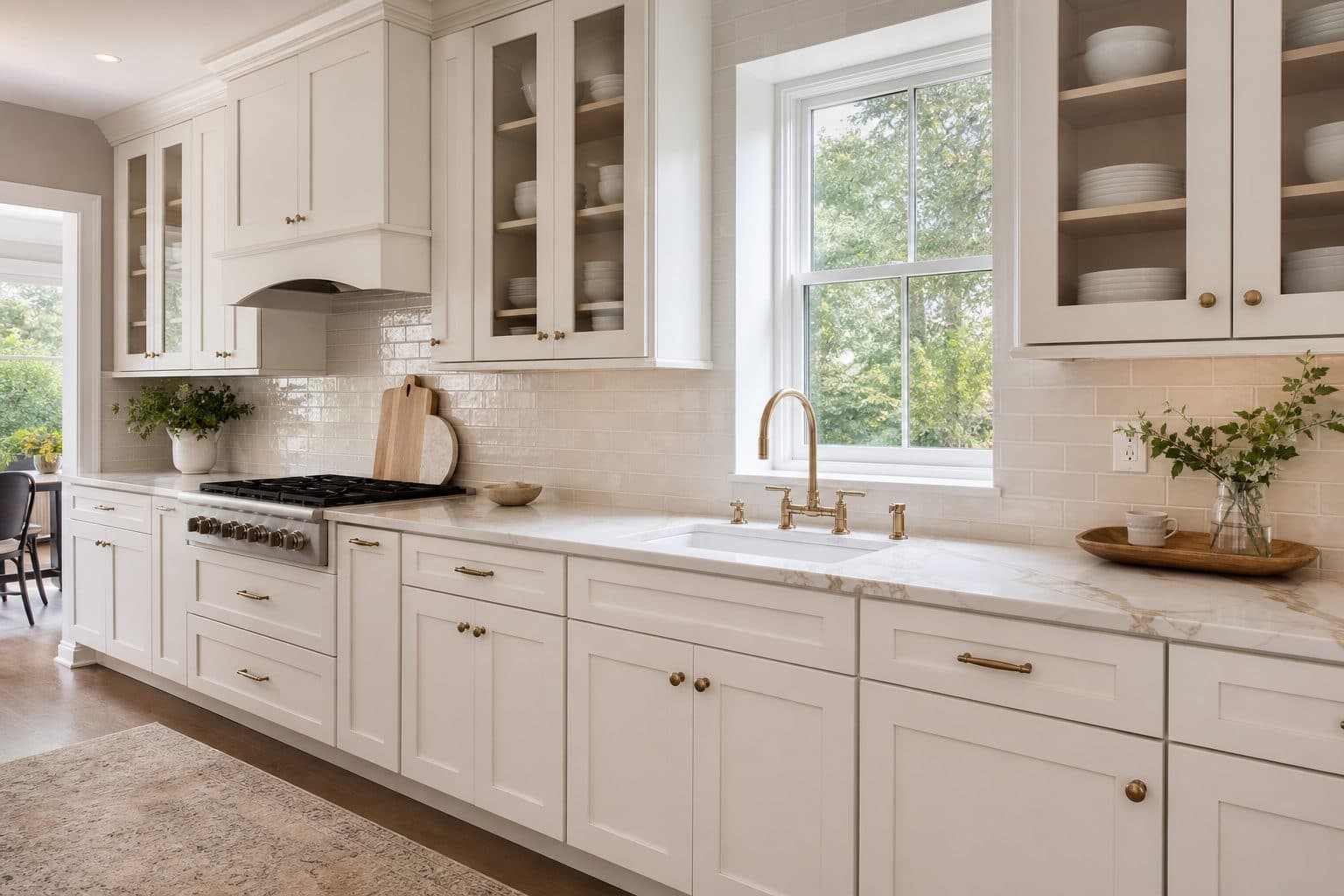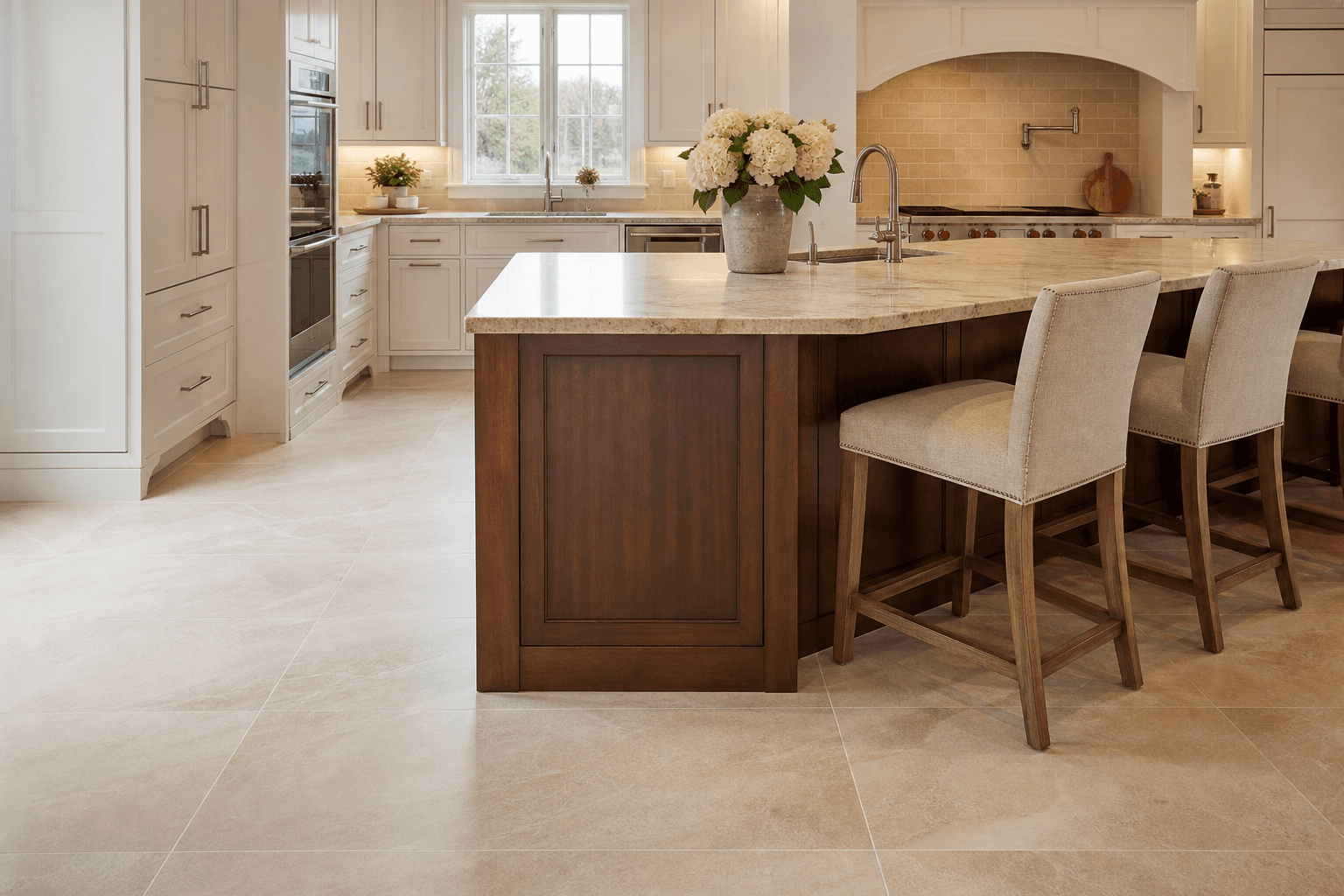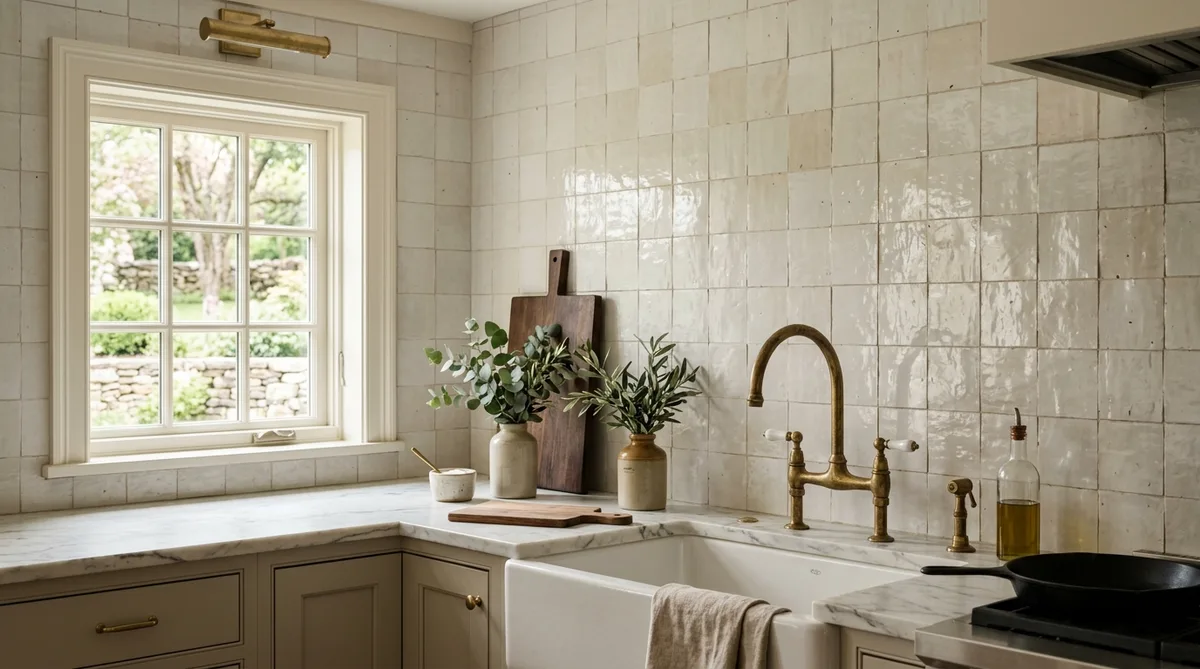
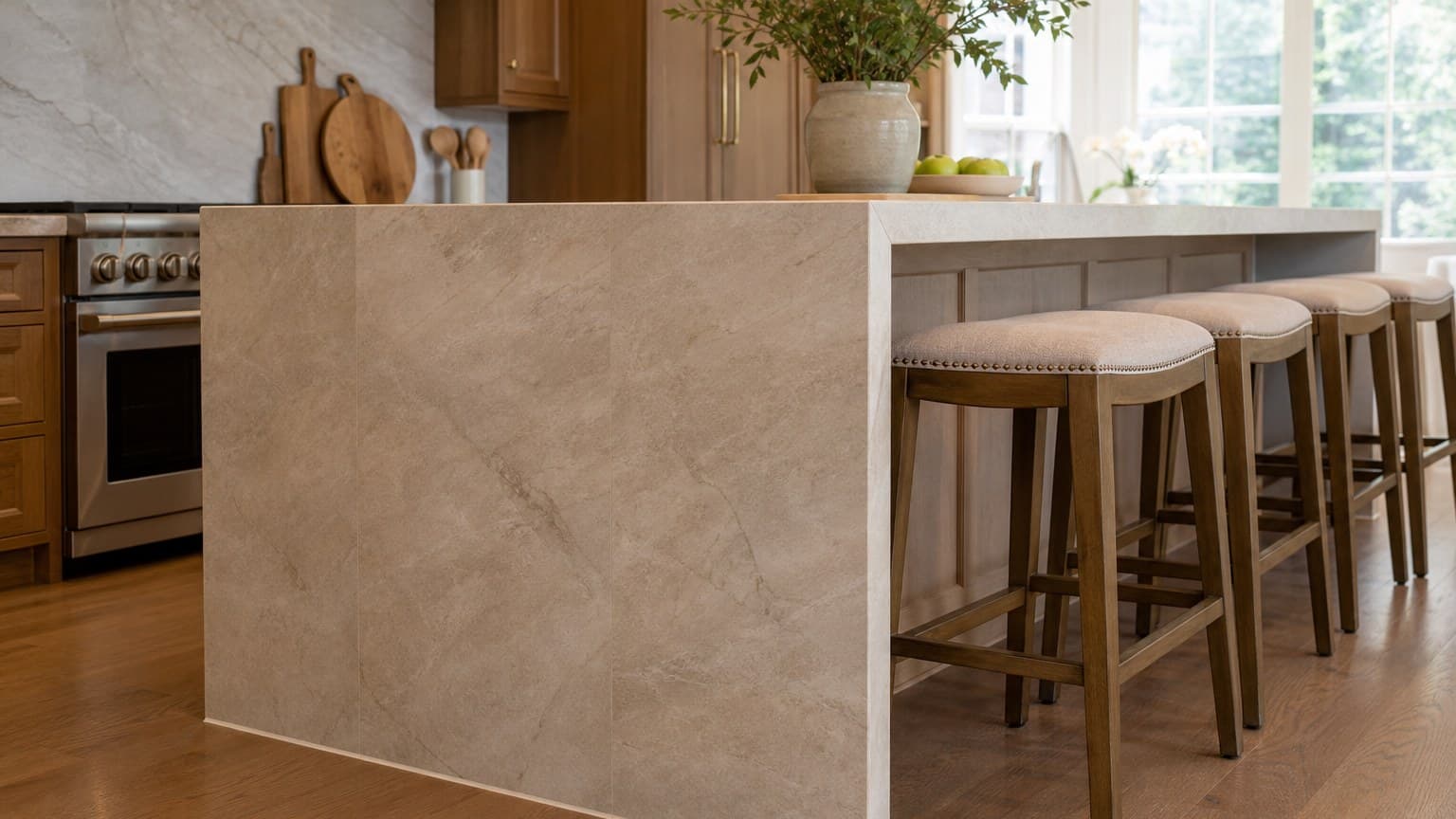
Kitchen island tile is one of the highest-impact upgrades in a Chester County kitchen remodel — waterfall-edge cladding, contrasting accent panels, and durable large-format porcelain all turn a plain island base into a focal point. This guide covers the most popular kitchen island tile ideas, which materials hold up to daily use, and how to keep the island coordinated with the rest of the kitchen.
Kitchen island tile has become one of the most requested upgrades we install in Chester County kitchens. An island sits at the center of the room, gets seen from every angle, and takes more daily wear than almost any other surface in the house — so the tile choice has to work as hard visually as it does physically. Whether you’re cladding the sides of an island in a bold pattern, wrapping a waterfall edge in matching stone-look porcelain, or simply choosing a durable material for heavy everyday use, the right kitchen island tile turns a plain box into the room’s focal point.
Milford Mills Tile is Wedi Certified and Schluter Certified, with over 20 years of experience and more than 1,000 completed tile projects across Chester County, Delaware County, Montgomery County, and the Main Line. Islands are one of the trickiest details to get right — waterfall miters, contrasting reveals, and outlet or appliance cutouts all have to be planned before a single tile is set. Here’s what we recommend most often.
Popular Kitchen Island Tile Ideas for Chester County Kitchens
Most of the island projects we install fall into three categories, and the right one depends on how much of a statement you want the island to make against the rest of the kitchen:
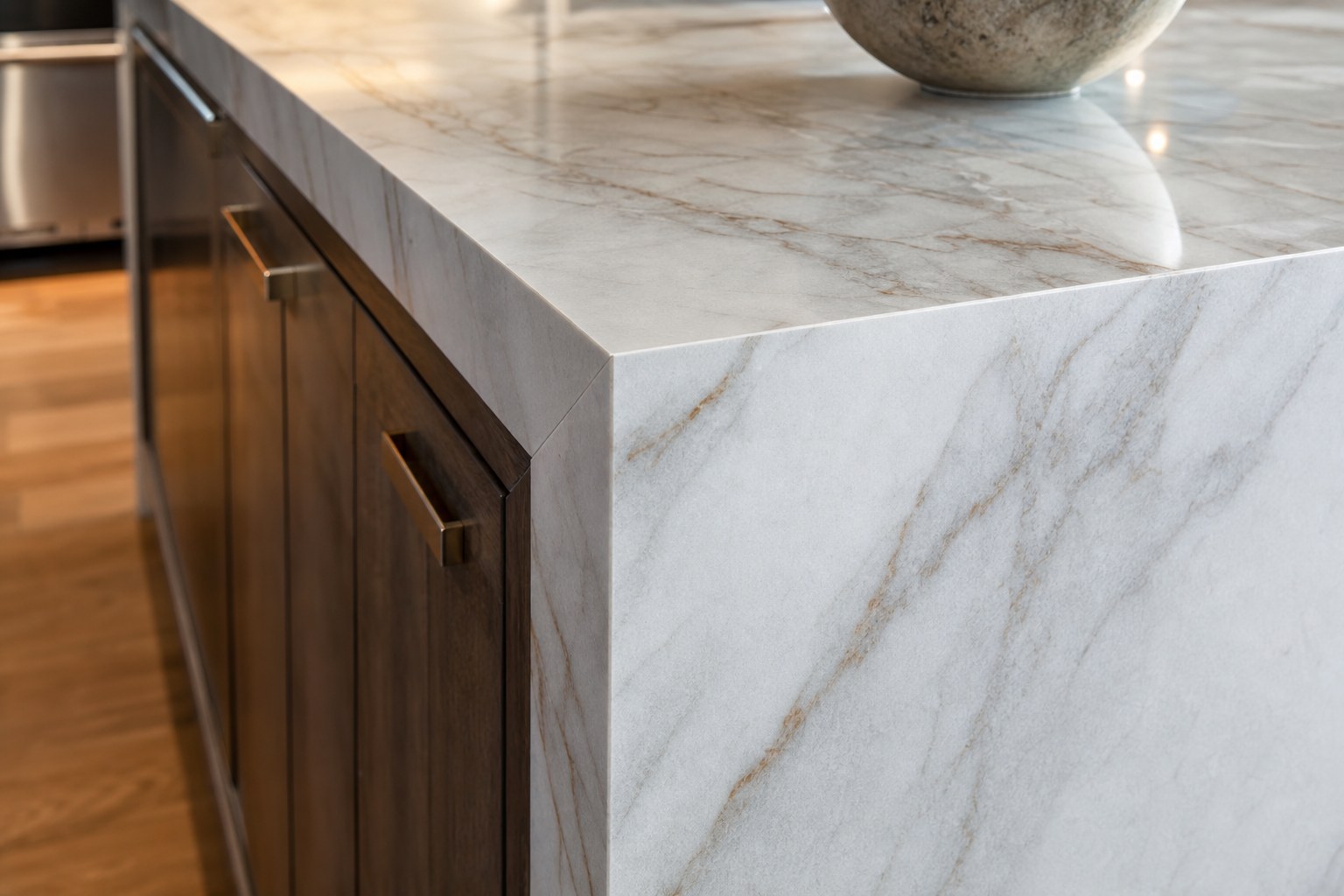
- Waterfall-edge porcelain. The countertop material wraps continuously down the side of the island to the floor, with the corner mitered at 45 degrees so the veining or pattern lines up across the bend. It reads as one continuous slab and is the most requested island look in newer Main Line and West Chester builds.
- Contrasting tile cladding. Instead of matching the countertop, the island sides get their own tile — often a bold color, a textured zellige-style finish, or a geometric pattern — while the perimeter cabinetry stays neutral. This works well when the island is meant to anchor the room rather than blend into it.
- Mosaic or patterned accent panels. A smaller-format mosaic or patterned tile applied to just the seating-side panel, framed by a plain field tile or painted panel on the remaining sides. It gives most of the visual punch of a full cladding job at a lower material cost.
See our full kitchen tile installation services for the materials and formats we install most often, or read our guide on matching kitchen tile with cabinets and countertops if you’re still deciding how the island should relate to the rest of the room.
Choosing a Durable Material for an Island
An island takes a different kind of abuse than a backsplash or a wall. Bar stools bump the base, kids lean on the corners, and dishes get set down harder on an island than anywhere else in the kitchen. Material choice matters more here than almost anywhere in the house:
- Large-format porcelain (12×24 or bigger). Fewer grout lines mean fewer places for the tile to chip or catch an impact, and porcelain resists scratching and staining far better than natural stone. This is what we recommend for most island cladding jobs.
- Porcelain slab. Thicker, book-matched panels that minimize seams almost entirely — the premium option for a true waterfall look, and what we install most often on Main Line and Villanova projects. Our kitchen floor tile guide covers how large-format and slab porcelain compare on the floor, and the same durability logic carries over to an island.
- Natural stone. Beautiful, but softer and more porous than porcelain, so it needs a sealer on a regular schedule if it’s installed on high-traffic island corners. We still install it when a client wants the specific veining only real stone provides, with the sealing schedule built into the recommendation up front.
Corner protection matters as much as the field material. We finish exposed island corners with a mitered edge or a metal Schluter profile rather than a raw tile edge, since a raw corner is the first thing to chip once stools start bumping it.