August 18, 2026Milford Mills Tile TeamOutdoor & Specialty Spaces7 min read
Screened Porch Tile Installation Chester County PA
Share
Quick Summary Screened porch tile installation has to handle Pennsylvania's freeze-thaw winters and humid summers without the protection of glass walls or a full roofline seal. This guide covers the frost-resistant materials, slope and drainage details, and design choices that keep a Chester County screened porch looking (and performing) like part of the house for decades.
Screened porch tile installation is one of the trickier calls a Chester County homeowner can make, because a screened porch lives in the gap between full outdoor exposure and real indoor comfort. Unlike a glass-enclosed sunroom, a screened porch stays open to wind-driven rain, humidity, and hard winter freezes year-round — while still needing to feel like a genuine extension of the house rather than an afterthought. Get the material wrong here and cracked grout, lifted tile, or a slick floor after the first rain usually shows up within a season or two, not a decade.
Milford Mills Tile is Wedi Certified and Schluter Certified, with over 20 years of experience and more than 1,000 completed tile projects across Chester County, Delaware County, Montgomery County, and the Main Line. Screened porches are one of the spaces we get called back to repair most often when the original material wasn't rated for the exposure — here's what actually holds up.
Why Screened Porch Tile Installation Needs Different Materials Than a Patio or Sunroom
A screened porch isn't a patio and it isn't a sunroom, and treating it like either one during material selection is the most common mistake we see. The screen keeps out bugs and cuts down on driving rain, but it does nothing to block humidity, temperature swings, or the freeze-thaw cycles that define a Chester County winter. A few things make this space its own category:
No thermal envelope. A sunroom's glass and heating keep the slab above freezing; a screened porch slab sees the same overnight temperature drops as the ground outside it.
Higher moisture exposure than a patio. The roof and screens trap humidity and slow evaporation compared to a fully open patio, which means standing moisture lingers longer against the tile and grout.
Visual continuity with the house. Most Chester County screened porches sit directly off a kitchen, family room, or mudroom, so the tile needs to read as an intentional extension of the home — not a separate outdoor project bolted on.
The Best Tile Materials for a Chester County Screened Porch
Once a client understands the exposure a screened porch actually faces, material selection gets a lot more specific. What we install most often:
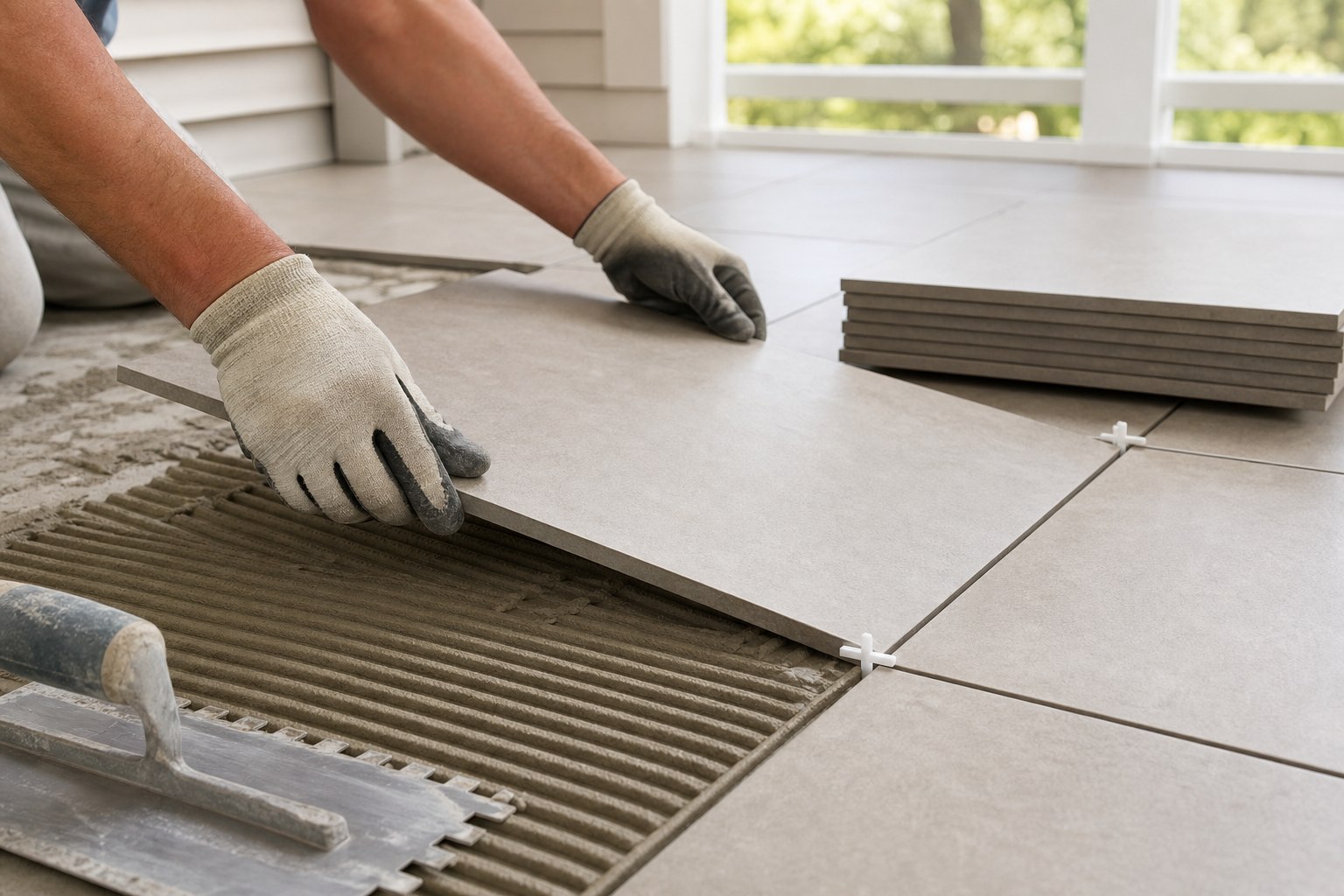
Frost-resistant porcelain, rated for exterior use. Porcelain with a low water absorption rate (look for a rating below 0.5%) resists the freeze-thaw cracking that ruins interior-grade tile installed outdoors on a budget.
Textured, slip-resistant finishes. A screened porch floor gets wet from blown-in rain and morning dew even without direct exposure, so we spec the same wet-traction standard we'd use on a pool deck or patio.
Large-format tile with minimal grout lines. Fewer grout joints means fewer places for freeze-thaw movement to find a weak point, and it keeps the floor reading clean season to season.
Epoxy or polymer-modified grout. Standard cementitious grout absorbs water and is far more prone to winter cracking than an epoxy or polymer-modified formula built for exterior movement.
100+ Five-Star Reviews
Get a Free Tile Quote
20+ years installing bathroom, kitchen, and custom tile across Chester, Delaware & Montgomery counties, PA.
Freeze-Thaw Protection: Getting the Slab, Slope, and Grout Right
Material choice only solves half the problem. Most of the screened porch failures we get called to fix trace back to what's underneath the tile, not the tile itself:
Proper slope to drain. A screened porch slab needs a deliberate slope — usually toward existing weep holes or a drain — so water doesn't pool against the tile edge and work its way into hairline cracks over a freeze cycle.
Uncoupling membrane over the slab. An uncoupling membrane lets the slab and tile layer move independently as the concrete expands and contracts with temperature, which is the single biggest defense against cracked grout lines after a hard winter.
Movement joints at transitions. Anywhere the porch tile meets a threshold, wall, or the house's foundation, a flexible sealant joint (not rigid grout) has to absorb seasonal expansion.
We covered similar drainage and slab prep in our outdoor patio tile installation guide, though a screened porch's partial enclosure changes how aggressively we slope the slab and where we place transition joints.
Design Details That Tie Your Screened Porch to the Rest of the Home
Once the structural side is settled, the best screened porches we build read as a natural continuation of the house rather than a separate project:
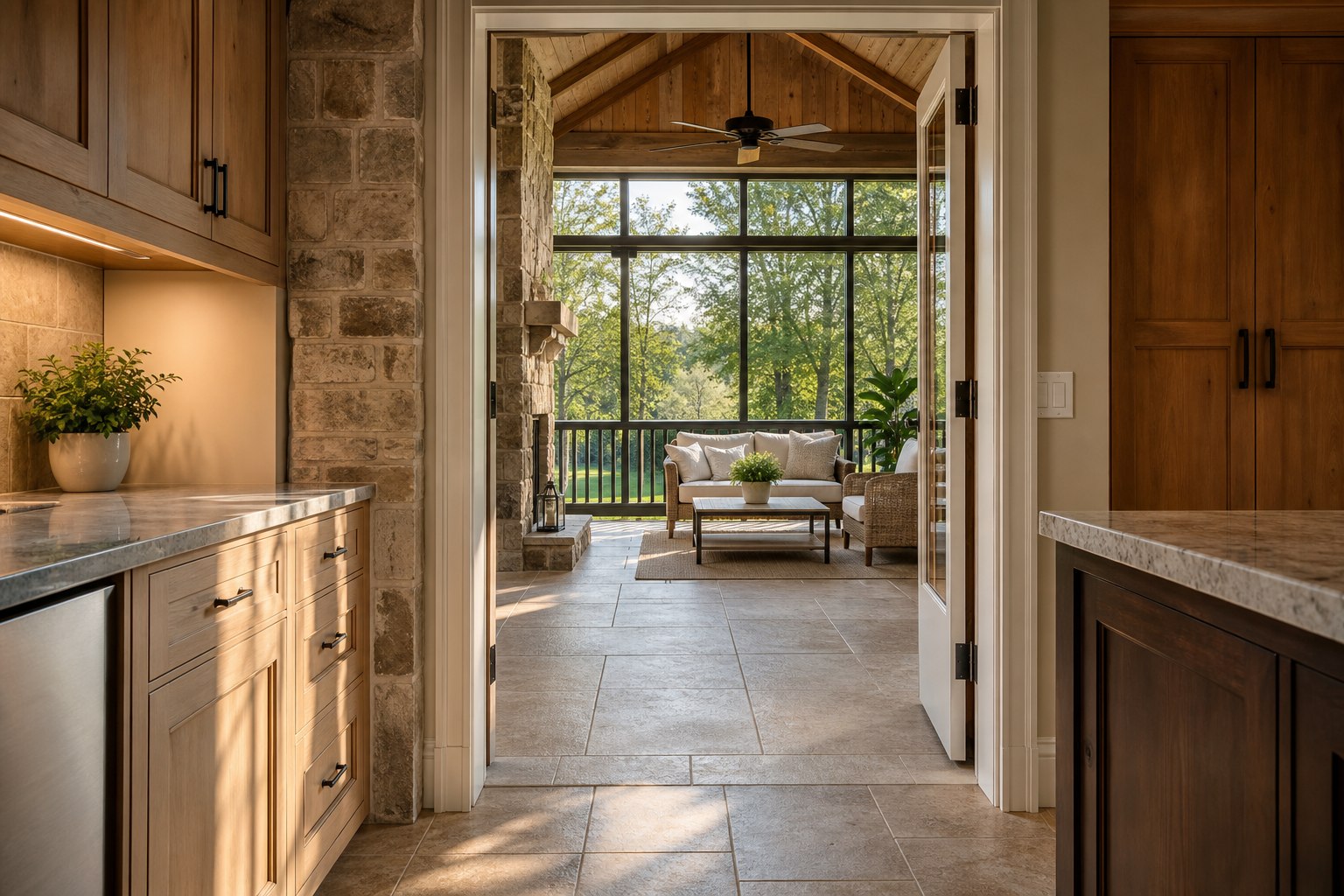
A coordinated (not identical) tile from the adjoining room. Matching the tone or format of an interior floor visible through the doorway makes the transition feel intentional, even when the exterior-rated tile itself is a different product.
A consistent threshold detail. A clean, low-profile transition strip at the doorway keeps the sightline uninterrupted instead of announcing "outdoor material starts here."
Warm, neutral tones under natural light. Screened porches get filtered, indirect light most of the day; warmer porcelain tones tend to read better in that light than the cool grays that work well on a fully exposed patio.
If your porch sits closer to a fully enclosed, climate-controlled space, our sunroom tile installation guide covers the material differences once glass and heating come into play.
See our full tile installation services for the exterior-rated materials, waterproofing systems, and design details we install most often across Chester County, Delaware County, and Montgomery County screened porches.
Ready to plan a screened porch that can actually handle a Pennsylvania winter? Request a free, no-obligation quote and we'll walk through material and slab-prep options built for your porch's exact exposure.
Frequently Asked Questions
What's the best tile for a screened porch in Pennsylvania?
Frost-resistant porcelain with a water absorption rate below 0.5%, installed over an uncoupling membrane with proper slope to drain, is the most reliable combination we install. It resists the freeze-thaw cracking that ruins interior-grade tile once it's exposed to a full Chester County winter.
Does screened porch tile need to be different from patio tile?
The tile itself can be similar, but the installation details differ. A screened porch traps more humidity than a fully open patio and usually ties directly into the house's structure, so slope, drainage, and transition joints need more careful planning than an open-air patio slab.
How do you prevent screened porch tile from cracking in winter?
The two biggest factors are an uncoupling membrane between the slab and tile, which lets both layers move independently as temperatures swing, and flexible movement joints at every transition. Epoxy or polymer-modified grout also resists the cracking that standard cementitious grout develops under repeated freeze-thaw cycles.
Can screened porch tile match my home's interior flooring?
Yes, and we usually recommend a coordinated rather than identical match. Since the porch tile has to be exterior-rated, we typically select a frost-resistant porcelain in a similar tone or format to the adjoining interior floor so the transition feels intentional rather than mismatched.
Do you install tile on covered porches, or only fully enclosed rooms?
Both. Milford Mills Tile installs on open patios, screened porches, and fully enclosed sunrooms, and we select materials and slab prep specific to each space's actual exposure. We serve Chester County, Delaware County, Montgomery County, and the Main Line with over 20 years of experience and more than 1,000 completed projects.
Questions? Call Us Directly
Serving Chester, Delaware & Montgomery counties, PA