September 22, 2026Milford Mills Tile TeamOutdoor & Specialty Spaces7 min read
Outdoor Kitchen Tile Installation in Chester County PA
Share
Quick Summary Outdoor kitchen tile has to survive freeze-thaw cycles, direct sun, grease, and standing water all in one surface, so material choice and installation method matter more here than in almost any indoor room. This guide covers the outdoor kitchen tile materials that hold up through a Chester County winter, how to keep the floor slip-resistant around a grill, and how to tile the backsplash and countertop so the whole space reads as one finished room.
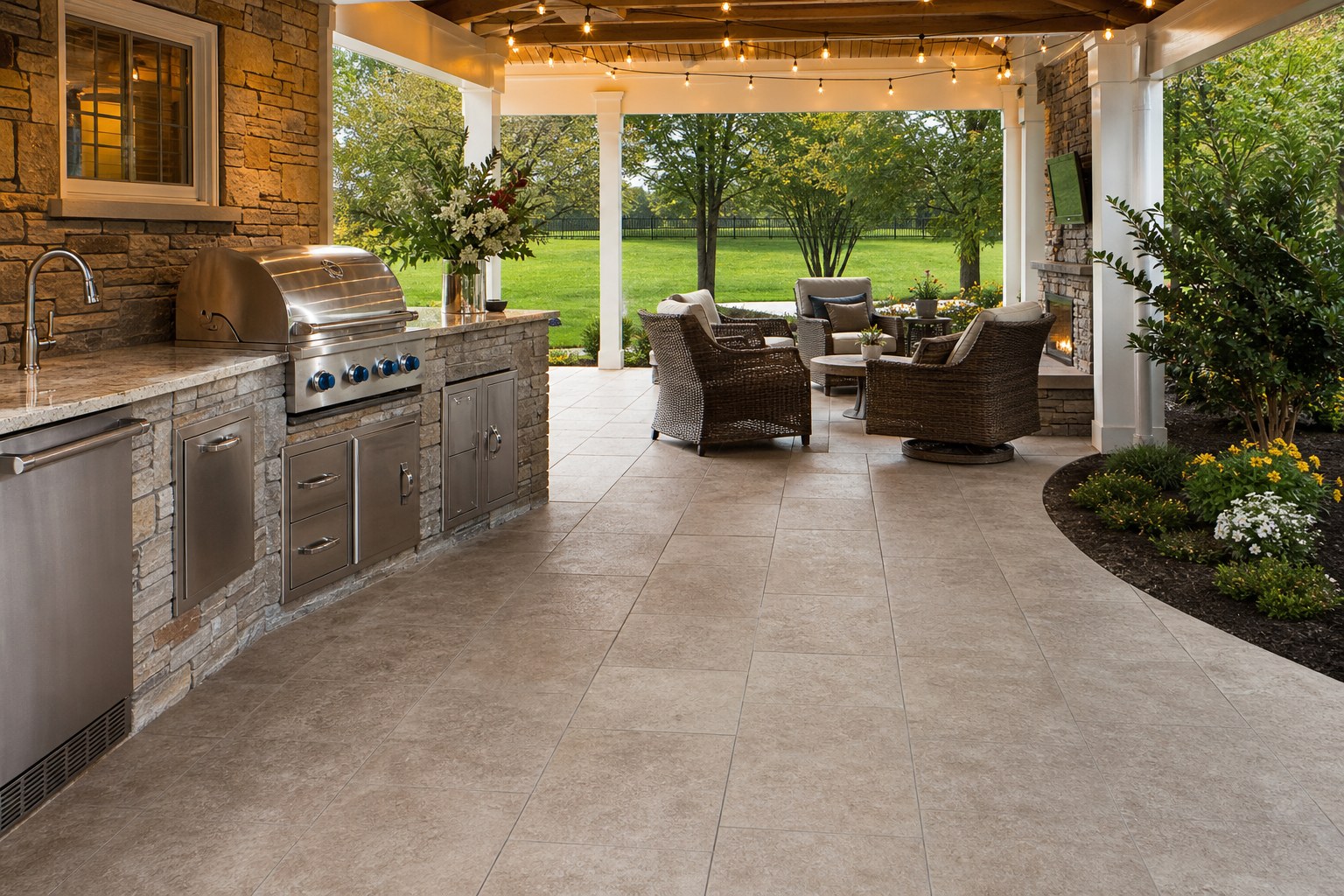
Outdoor kitchen tile is one of the most demanding installations we take on across Chester County, Delaware County, Montgomery County, and the Main Line. An outdoor kitchen floor and backsplash face direct sun, driving rain, grease splatter, and Pennsylvania's freeze-thaw winters all at once, so a material that performs beautifully indoors can crack or spall outside within a season if it's the wrong choice. Whether you're finishing a new outdoor kitchen from scratch or replacing tile that didn't survive its first winter, choosing frost-rated material and installing it correctly the first time is what keeps the space looking finished for decades.
Milford Mills Tile is Wedi Certified and Schluter Certified, with over 20 years of experience and more than 1,000 completed tile projects in the Delaware Valley. Outdoor kitchens are one of the areas where cutting corners shows up fastest — a floor that isn't rated for freeze-thaw will start cracking by the second Pennsylvania winter. Here's what we recommend most often.
Best Outdoor Kitchen Tile Materials for Chester County Weather
Not every tile that looks good on a showroom floor belongs outside. The materials that hold up best in a Chester County outdoor kitchen share a few traits:
Frost-rated porcelain. Porcelain rated for exterior/freeze-thaw use has extremely low water absorption, which means it won't crack when moisture trapped inside the tile freezes and expands. This is the single most important spec for any outdoor kitchen floor or countertop in our climate.
Natural stone with a honed finish. Bluestone, granite, and some limestones perform well outdoors and give an outdoor kitchen a warmer, more organic look than porcelain, though they need periodic sealing to stay stain- and frost-resistant.
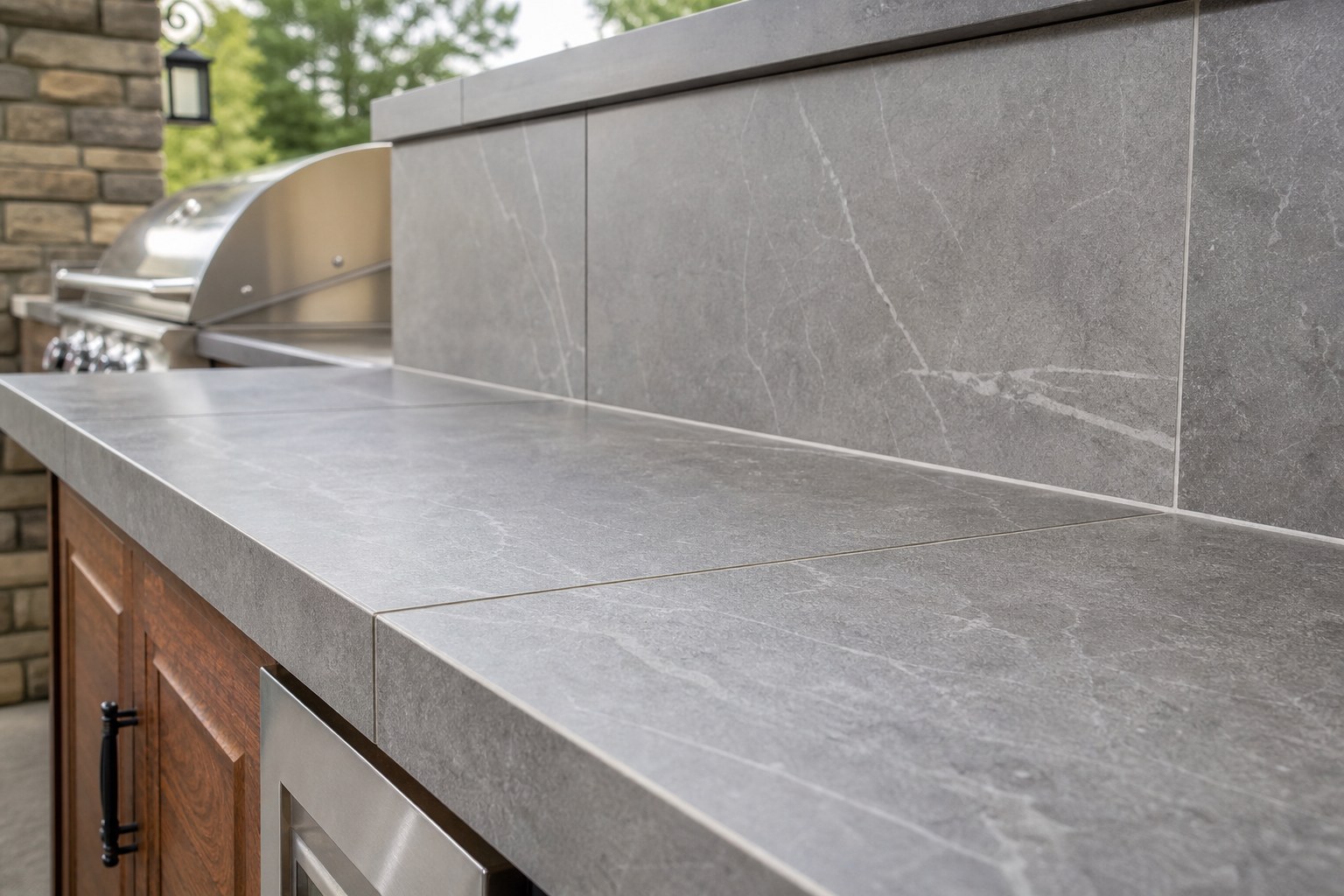
Large-format porcelain slabs for countertops. Sintered porcelain countertop slabs resist heat, scratches, and UV fading better than natural stone counters exposed to direct sun all summer, which matters directly next to a grill.
An outdoor kitchen floor gets wet from rain, hose-downs, and spilled ice, often right next to an open flame, so slip resistance isn't optional. A few things determine how the floor performs:
Textured or matte finish. A polished porcelain or stone finish looks sharp in photos but turns slick fast when wet. We install a matte, honed, or lightly textured finish on every outdoor kitchen floor we do.
Proper slope to drain. The floor needs a slight, consistent slope away from the house and toward a drain or the yard edge so water never pools against the grill island or cabinetry.
Grout selection. A textured, slightly wider grout joint adds real traction underfoot in a wet outdoor kitchen, the same way it does on a pool deck or curbless shower floor.
Our pool deck tile installation guide covers the same wet-zone slip-resistance logic in more detail if your outdoor kitchen sits near a pool, and our outdoor patio tile guide is a good next read if you're tiling the surrounding patio at the same time.
Tiling the Backsplash and Countertop as One Space
The outdoor kitchens that read as a finished room, rather than a grill bolted to a slab, are the ones where the floor, backsplash, and countertop edge are planned together. A tile backsplash behind the grill and prep area protects the wall from grease and heat while tying the color and texture of the floor into the vertical surfaces. We typically recommend keeping the backsplash tile in the same material family as the floor — frost-rated porcelain on both — so the whole kitchen weathers evenly instead of one surface aging faster than the other.
If your outdoor kitchen connects to a covered porch or three-season room, our sunroom tile installation guide covers how we handle that indoor-outdoor transition so the flooring reads as continuous rather than two mismatched projects.
Ready to plan your outdoor kitchen tile? Request a free, no-obligation quote and we'll bring frost-rated samples to your home to work out the floor, backsplash, and countertop together.
Frequently Asked Questions
What's the best tile for an outdoor kitchen in Pennsylvania?
Frost-rated porcelain is the safest choice for a Chester County outdoor kitchen because its extremely low water absorption keeps it from cracking during freeze-thaw cycles. Honed natural stone is a good alternative if it's properly sealed each season.
Can I use the same tile indoors and outdoors for a seamless look?
Only if the tile is rated for exterior and freeze-thaw use. Many indoor porcelain lines are made in a matching outdoor-rated version specifically so the floor can run continuously from an indoor kitchen or sunroom onto an outdoor kitchen.
How do I keep an outdoor kitchen tile floor from getting slippery?
Choose a matte or textured finish rather than polished, use a slightly wider grout joint for traction, and make sure the floor has a consistent slope so water drains away instead of pooling near the grill.
How long does outdoor kitchen tile installation take?
Most outdoor kitchen tile projects take three to five days once materials are on site, depending on whether the backsplash, countertop, and surrounding patio are being tiled at the same time.
Questions? Call Us Directly
Serving Chester, Delaware & Montgomery counties, PA