November 17, 2026Milford Mills Tile TeamMaintenance, Repair & Value7 min read
Tile Lippage: A Homeowner's Guide
Share
Quick Summary
Tile lippage is a height difference between the edges of neighboring tiles; TCNA calls it the variation in the height of adjoining tiles.
TCNA lists tile thickness, tile warpage, spacing and substrate flatness as factors; in many cases, thinset-method tile over an uneven substrate will not meet lippage standards.
Large tiles are less forgiving, so surface flatness and setting method matter more as the tile gets bigger; light and finish change how visible lippage is.
Ask at the estimate how the surface will be checked, which standard applies and who looks at the work before grout.
Tile lippage is when one tile edge sits higher than the tile next to it. It shows up most on floors and large tiles, and it is easier to prevent than to fix. If you're planning new bathroom tile or a kitchen floor, here is what causes it and what to ask before work starts.
What is tile lippage?
Tile lippage is a difference in height between the edges of two neighboring tiles. You can usually feel it with a bare foot or a fingertip, and you can often see it as a line of shadow along the grout.
The Tile Council of North America (TCNA) puts it this way: "Variation in the height of adjoining tiles is called lippage." It cites the ANSI A108.02 standard, which says lippage "refers to differences in elevation between edges of adjacent tile modules."
A little variation between tiles is normal, because tile is a manufactured product and no installation is perfectly flat. The question to ask is how much variation is acceptable for your tile, your room and your standard, and that is a conversation to have with your installer before the job begins.
What causes uneven tile edges?
Several things add up to lippage, and TCNA lists most of them. Usually it is a mix, not one single mistake.
Tile thickness. TCNA names the allowable thickness variation of the tile modules as one factor.
Tile warpage. TCNA also lists the allowable warpage of the tile modules. A tile that is slightly bowed or curved along its edge will not lie perfectly level against its neighbor.
Spacing. TCNA says the spacing or separation of each tile affects whether the change in height is gradual or abrupt.
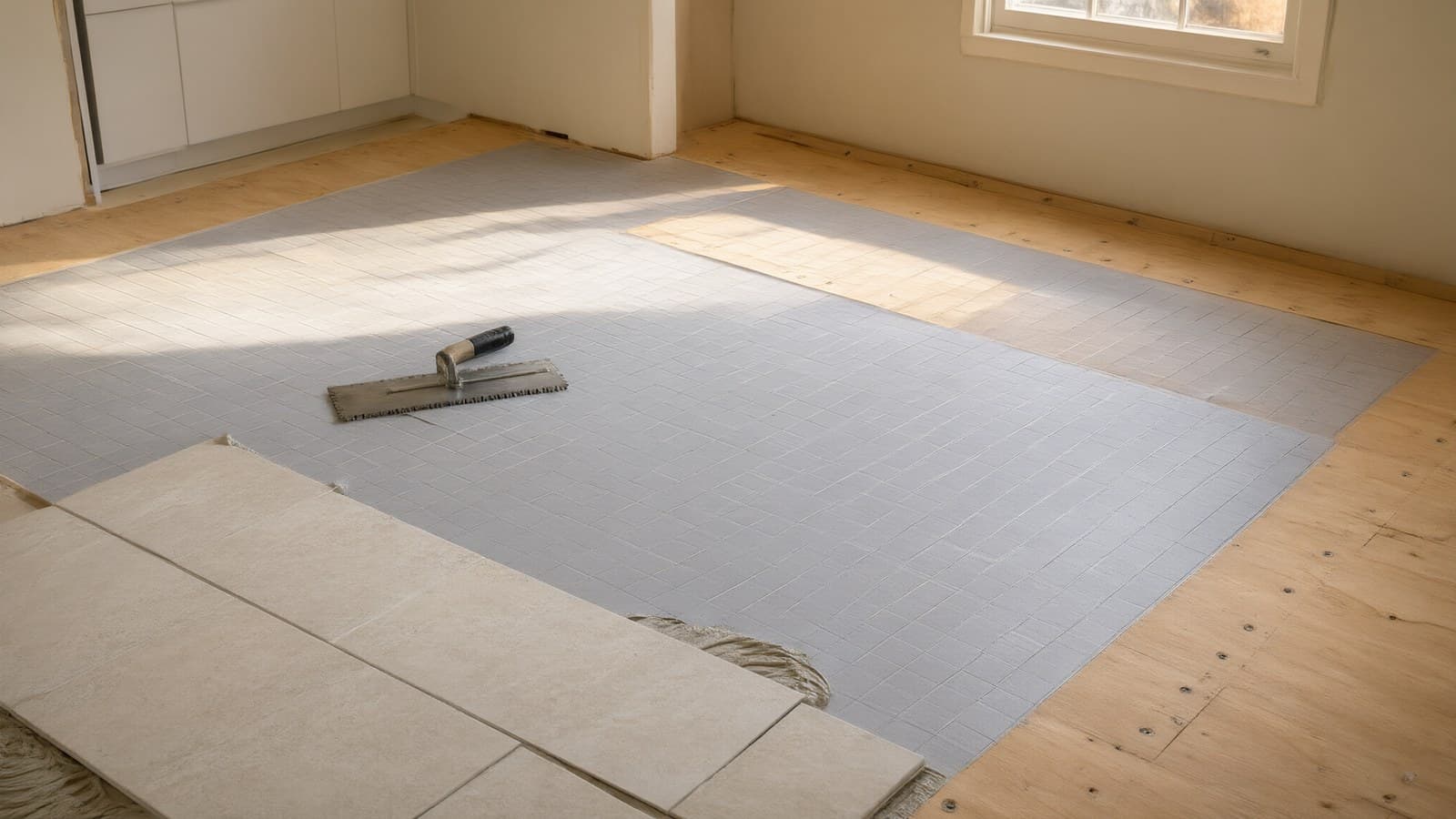
The surface underneath. TCNA says variations in the plane of the substrate also affect lippage. It adds that, in many cases, tile set by the thinset method over an uneven substrate will not meet lippage standards.
That last point is why so much of the work happens before any tile goes down. Our post on subfloor preparation makes the same case from the installer's side: check the floor for flatness first, because a flat starting surface helps control variation at tile edges. It also warns that using a thick layer of thin-set mortar to level a floor invites shrinkage and hollow spots.
Illustration.
100+ Five-Star Reviews
Get a Free Tile Quote
20+ years installing bathroom, kitchen, and custom tile across Chester, Delaware & Montgomery counties, PA.
Bigger tiles are less forgiving, so the same small bump or dip shows more. Our post on large format tile in open spaces says large tiles have little flexibility, so the surface under them has to be exceptionally flat. Our large format versus standard tile guide says the same thing in plain terms: large tiles show every imperfection, and minor dips or bumps can lead to uneven edges.
TCNA's general ceramic-tile guidance stresses selecting the right adhesive, bedding tiles properly and avoiding voids beneath them. That supports asking your installer how they will achieve proper contact beneath larger tiles. The method and products should follow the applicable installation and manufacturer instructions, rather than a single size-based rule.
None of this means large tile is a bad choice. It means the flatness of the surface, the setting method and the care taken tile by tile matter more as the tile gets bigger.
Why does lippage show more in some rooms?
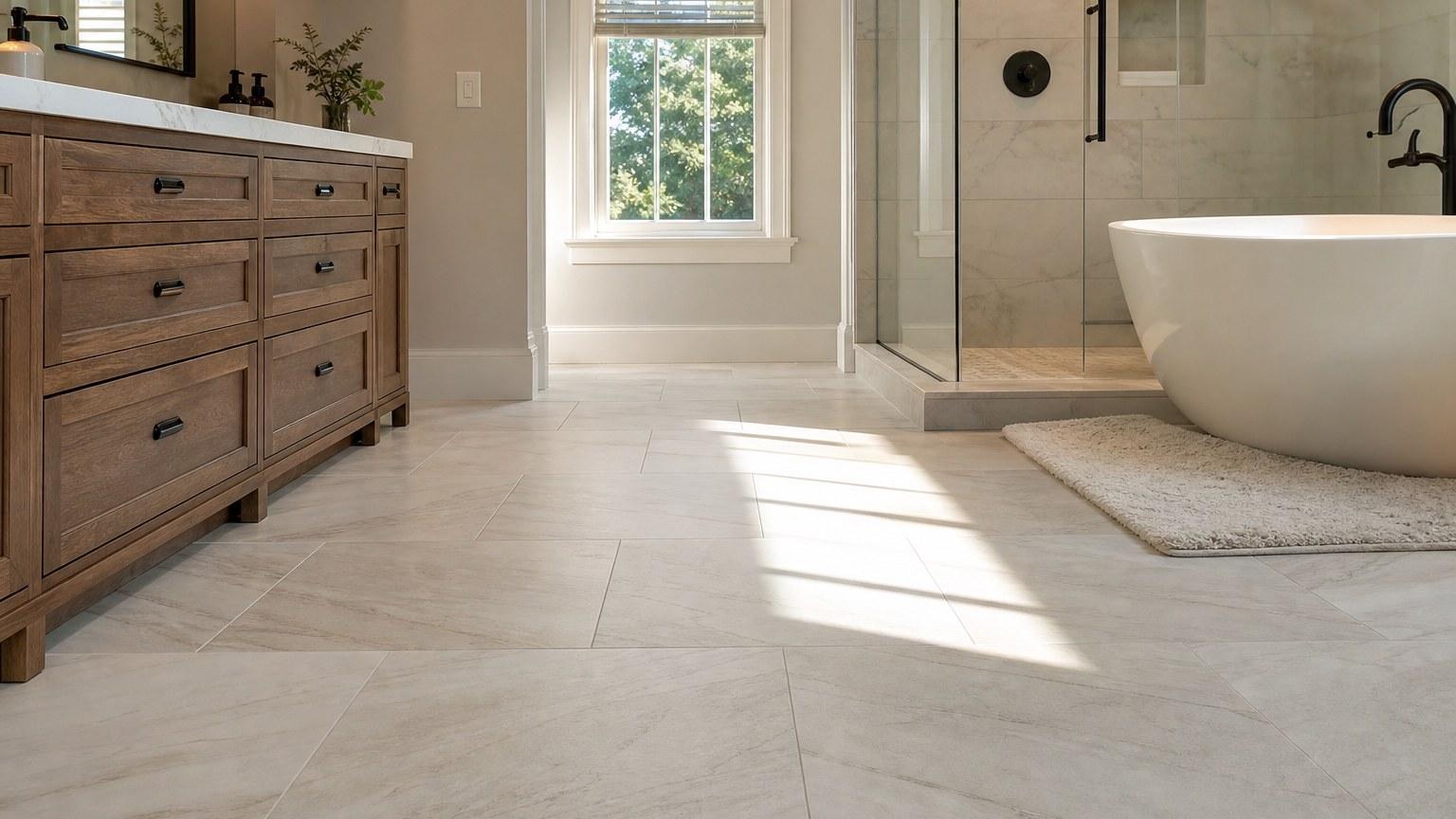
Light changes how much you notice it. TCNA says lighting and reflectivity affect how lippage is perceived. A glossy tile viewed in strong side light may make a height difference more noticeable than a matte surface viewed in diffuse light. This is about visibility, not a different allowance for the installation.
That is worth thinking about when you choose a finish. Our post on matte versus glossy tile looks at how matte and glossy finishes hold up in a busy household. If you are leaning toward a high-gloss or large tile, ask your installer how the light in that room will treat the surface once it is set.
Illustration.
What should you ask before the job starts?
Bring up lippage at the estimate, not after the grout is in. Good questions:
How will you check that the floor or wall is flat before tile goes down, and what happens if it is not?
What lippage standard do you work to, and how will the finished surface be judged?
Does the tile I picked have a known tendency to warp, and how will you handle that?
Will you test-lay a few tiles first so we can look at the edges in this room's light?
How will you control height differences between neighboring tile edges, and how will you choose grout-joint widths?
Who looks at the work with me before it is grouted, when a tile can still be adjusted?
You do not need to know the standards yourself. A good installer will answer these plainly. If an answer is vague, that tells you something too.
What if you already see uneven tile edges?
First, note where you see the uneven edges and whether a tile moves. Appearance or a hollow sound alone does not establish the cause, so avoid diagnosing the floor yourself. Our guide to tile repair and restoration explains why the surface underneath needs to be assessed before a repair is chosen.
Do not try to grind or shave a raised edge yourself on a finished floor. Tile can chip, and glazed surfaces can be damaged. Instead, take photos in daylight, note where you see it, and ask a professional to assess it. Our tile repair and replacement page explains what we handle, and what can be repaired depends on what the assessment finds.
Frequently asked questions
What is tile lippage?
Tile lippage is a difference in height between the edges of adjacent tiles. TCNA calls it the variation in the height of adjoining tiles, and cites ANSI A108.02, which describes it as differences in elevation between edges of adjacent tile modules.
Is some lippage normal?
Some variation is expected, because tiles are not perfectly uniform and no surface is perfectly flat. TCNA says allowable lippage depends on the tile's actual warpage plus an allowance from a table in the standard. The table is not reproduced here, so ask your installer which standard applies to your tile and how they will judge the result.
Can an uneven floor cause lippage?
Yes. TCNA says variations in the plane of the substrate affect lippage and that, in many cases, thinset-method tile over an uneven substrate will not meet lippage standards. That is why flatness is checked before tile is set.
Does large format tile always have lippage?
No, but it is less forgiving. Our posts note that large tiles show imperfections in the surface under them, so flatness and careful setting matter more. Ask your installer how they plan to handle it for the size you chose.
Can lippage be fixed after the tile is set?
It depends on the cause and the tile, so there is no one answer. A professional assessment can tell whether the problem is the tile edges, the surface underneath or the way the tile was bedded. Avoid DIY grinding of finished tile.
Planning a tile project in Chester County or the Main Line
If you want a second opinion on a floor you are about to tile, or on edges that don't look right, we can take a look and talk through the options. Milford Mills Tile serves Chester County, Delaware County, Montgomery County, the Main Line and Northern Delaware. Request a quote or call (484) 883-9948. You can also read more about our work in Chester County.
Sources
Tile Council of North America, Lippage FAQ (read November 17, 2026)
Tile Council of North America, Ceramic Tile FAQ (read November 17, 2026)
Questions? Call Us Directly
Serving Chester, Delaware & Montgomery counties, PA