November 3, 2026Milford Mills Tile TeamMaintenance, Repair & Value6 min read
Uncoupling Membrane for Tile
Share
Quick Summary An uncoupling membrane sits between the floor and the tile so small movements below aren't passed straight to the tile and grout. Installers consider one for cracked slabs, certain wood subfloors, large-format tile or stone, and heated floors; the product's own rules decide. It doesn't fix a bouncy or damaged floor and doesn't replace movement joints (TCNA). Ask which product, what the manufacturer allows for your subfloor, and where the movement joints go.
An uncoupling membrane for tile is a thin layer between the floor underneath and the tile on top. It lets the two move a little independently, so shifting below isn't passed straight to the tile and grout. If you're planning a bathroom tile floor or told yours needs one, here is what it does, when installers use one and what it can't fix.
What does an uncoupling membrane for tile do?
It separates the tile layer from the surface below so small movements in that surface aren't transferred directly to the tile. Tile and the floor beneath it expand, contract and shift at different rates. A rigid bond between them can crack grout or the tile itself when the floor moves.
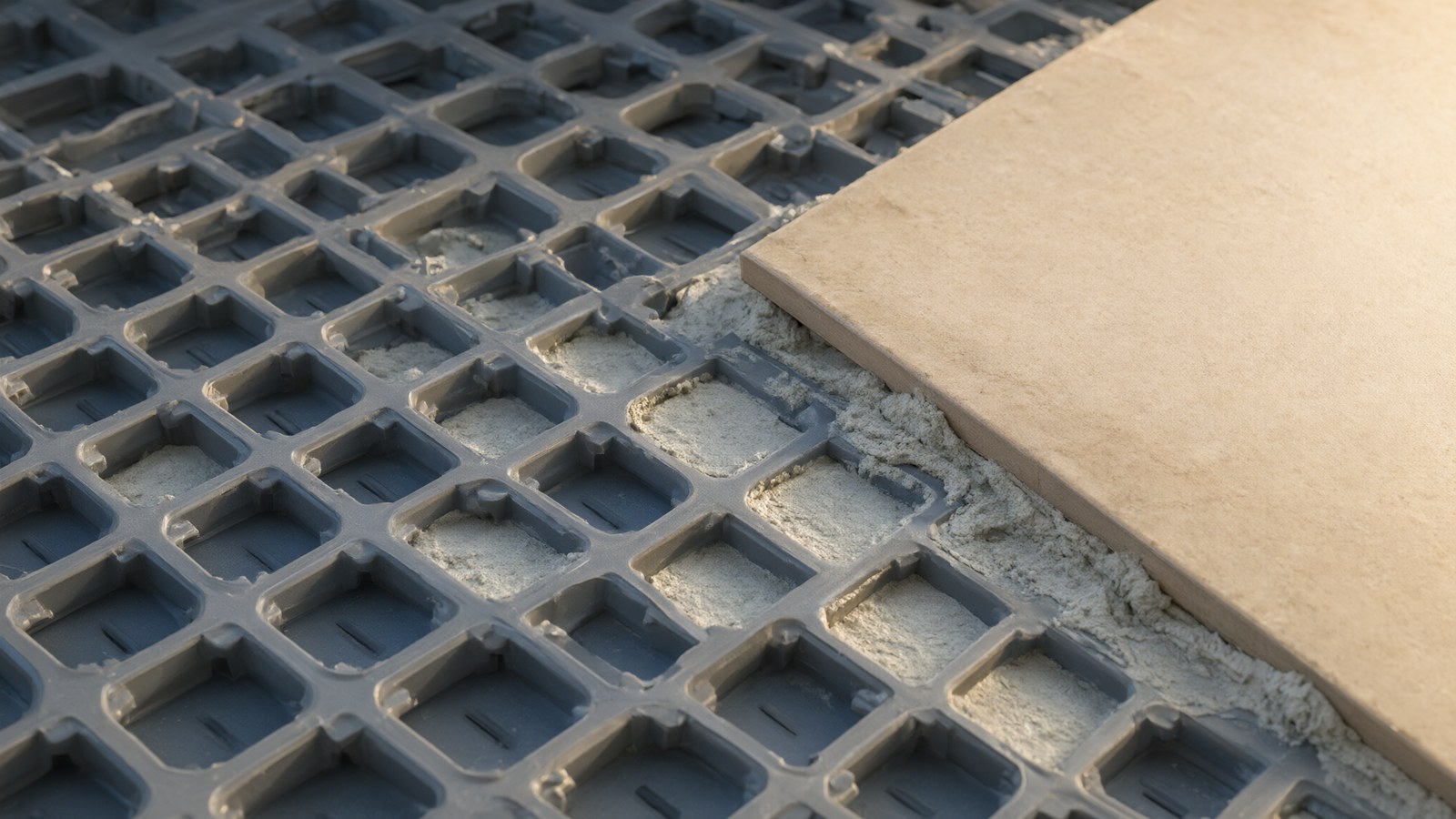
Manufacturers build this layer in different ways. Schluter, one of the best-known makers, describes its DITRA product as polyethylene matting with a grid of square, cut-back cavities and a fleece on the underside. The fleece is embedded in thin-set mortar on the floor. The tile is then set into mortar that fills the cavities, and Schluter says the open rib structure allows in-plane movement between the substrate and the tile. That is one example, not the only design.
Related products go by other names, including crack isolation and anti-fracture membranes, but the names are not interchangeable for every product. The Tile Council of North America (TCNA) explains that crack isolation membranes are either trowel-applied or sheet-applied. It adds that performance varies, so you should check the manufacturer's instructions and intended use for the exact product. Whether a given membrane suits a cracked slab depends on that exact product and the assembly around it.
When do installers use an uncoupling layer?
Installers consider one when the surface under the tile is likely to move or crack. The product and the floor decide whether it fits. Common situations include:
Concrete slabs with cracks. TCNA notes that even small shrinkage cracks can be dimensionally active, meaning continued curing can make them grow. Its two options are a mortar bed over a cleavage membrane, or a crack isolation membrane with a thin-set method. Whether an uncoupling membrane suits a cracked slab depends on the exact product and assembly, so ask the installer to show the manufacturer's documentation.
Wood subfloors. Schluter's page limits its products to certain setups. For ceramic tile, it lists single-layer plywood or OSB subfloors with joists spaced up to 19.2 inches on center for DITRA, and up to 24 inches for the thicker DITRA-XL. Always check the limits of the exact product.
Large-format tile and natural stone. Schluter says DITRA-XL suits installations that need more movement accommodation, such as natural stone and large-format tile. Our guide to tile over existing tile covers another common starting point.
Heated floors. Schluter lists radiant heated floors among the surfaces its matting installs over. Our post on radiant floor heating explains how heat changes the planning.
The subfloor type matters too. TCNA says the most current ANSI tile installation standards specifically exclude OSB, and that thin-set manufacturers do not recommend setting ceramic tile directly on it. That doesn't mean a floor can't be tiled. It means the right assembly depends on the subfloor and the manufacturer's rules.
100+ Five-Star Reviews
Get a Free Tile Quote
20+ years installing bathroom, kitchen, and custom tile across Chester, Delaware & Montgomery counties, PA.
No. An uncoupling layer isn't a repair for a floor that is too flexible or in poor shape. TCNA says the traditional minimum for floor rigidity before tile underlayment is L/360, meaning the floor shouldn't deflect more than the span divided by 360. TCNA also says tile has failed under some conditions even when the floor was stiffer than that. Its recommendations rest on methods proven over normal code construction rather than on deflection measurements alone.
Schluter's page makes a related point: substrates must be clean, even and load-bearing before its membrane goes down, and bond-inhibiting surfaces must be removed. If your floor bounces, has soft spots or has been damaged by moisture, the installer should sort that out first. Our post on subfloor preparation explains why that groundwork comes first.
Does a membrane replace movement joints?
No. TCNA calls it a frequent misconception that anti-fracture membranes let you eliminate expansion joints, and says there must always be soft joints in the tilework to allow for expansion and contraction. For interior floors, TCNA says movement joints are placed more often where moisture or direct sunlight is expected. It points to Detail EJ171 in the TCNA Handbook for guidelines, though exact placement depends on the site.
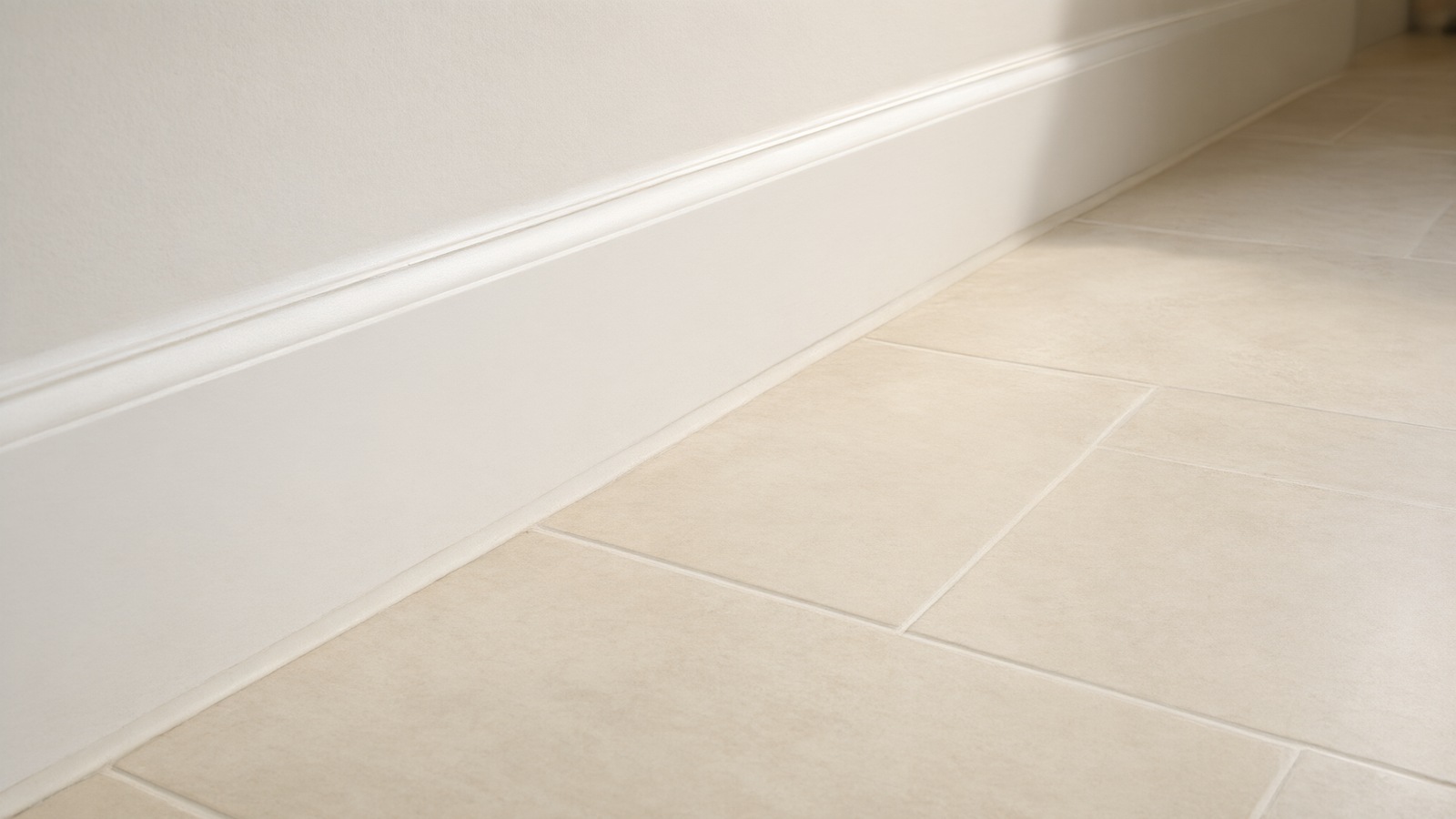
In a small room, TCNA says a gap at the room's perimeter, often hidden by baseboard or shoe molding, may be enough. Larger floors need visible joints in the field. Our guide to tile expansion joints goes deeper on where they belong.
How does an uncoupling layer go in?
The steps depend on the product, so the manufacturer's instructions rule. For Schluter's matting, the product page describes spreading thin-set mortar on the prepared substrate and pressing the matting in, fleece side down. The installer then lifts a corner to confirm the fleece has full contact with the mortar. If it doesn't, the page says to remove the matting and reapply.
The tile goes on after that. The cut-back cavities are filled with mortar, and more mortar is combed over the matting. The page says to check a tile periodically to confirm full coverage, and mentions back-buttering as a useful way to help get it. In other words, there are two bonded layers to get right, one below the membrane and one above it. Ask your installer how they verify coverage at each.
What should you ask your installer?
Bring the tile you've chosen to the estimate, and ask the installer to explain the layers they plan to use. Good questions:
Why does my floor need an uncoupling layer, and what problem is it solving?
Which product will you use, and what does the manufacturer say about my subfloor type, joist spacing and tile size?
How will you check the subfloor for flatness and stiffness before the membrane goes down?
Where will movement joints go, including the perimeter?
Which setting material does the manufacturer require for the membrane and the tile?
Does the manufacturer's documentation cover any other function you're counting on, such as moisture protection, in my room?
If your current tile has already cracked, the cause matters as much as the repair. Our tile repair and replacement page explains what we handle.
Frequently asked questions
What is an uncoupling membrane for tile?
It is a layer set between the subfloor and the tile that lets the two move slightly independently. That reduces how much movement in the floor is passed to the tile and grout. Products differ, so check the manufacturer's instructions for yours.
Is DITRA the same as an uncoupling membrane?
DITRA is the brand name of one uncoupling product from Schluter. Other makers sell similar membranes, and the details differ. Ask your installer which product they plan to use and why.
Do I need an uncoupling membrane over plywood?
It depends on the assembly. For ceramic tile, Schluter's product page lists DITRA over single-layer plywood subfloors with joists spaced up to 19.2 inches on center, and DITRA-XL up to 24 inches. Whether you need a membrane at all depends on the subfloor, joist spacing, tile and the manufacturer's rules, so ask which product and approved system the installer will follow.
Will an uncoupling membrane stop all cracks?
No installer or product can promise that. A membrane addresses movement between the floor and the tile. It doesn't correct a weak or bouncy floor, and it doesn't replace movement joints.
Can I skip movement joints if I use a membrane?
No. TCNA says there must always be soft joints in tilework to allow for expansion and contraction, even over an anti-fracture membrane.
Planning a tile floor in Chester County or the Main Line
If you're not sure what your floor needs under the tile, we can look at the subfloor and the tile you have in mind and talk through the options. Milford Mills Tile serves Chester County, Delaware County, Montgomery County, the Main Line and Northern Delaware. Request a quote or call (484) 883-9948. You can also read about our work in Chester County.