November 10, 2026Milford Mills Tile TeamKitchen Tile7 min read
Backsplash Behind Stove Basics
Share
Quick Summary
The wall behind a range can be exposed to heat, grease and cooking splatter, so it deserves its own plan.
Glazed porcelain or ceramic tile and a grout you can keep clean are the usual starting point; cement grout is porous and TCNA recommends sealing it, while TCNA says epoxy grout is virtually as stain proof as the tile.
Check whether your range has its own backsplash (GE: most free-standing models do, slide-ins don't), decide how high the tile runs, and plan outlets, hood and the counter joint first.
Clearances come from the range and hood instructions and local code, not from this post. Ask your installer to read them before layout.
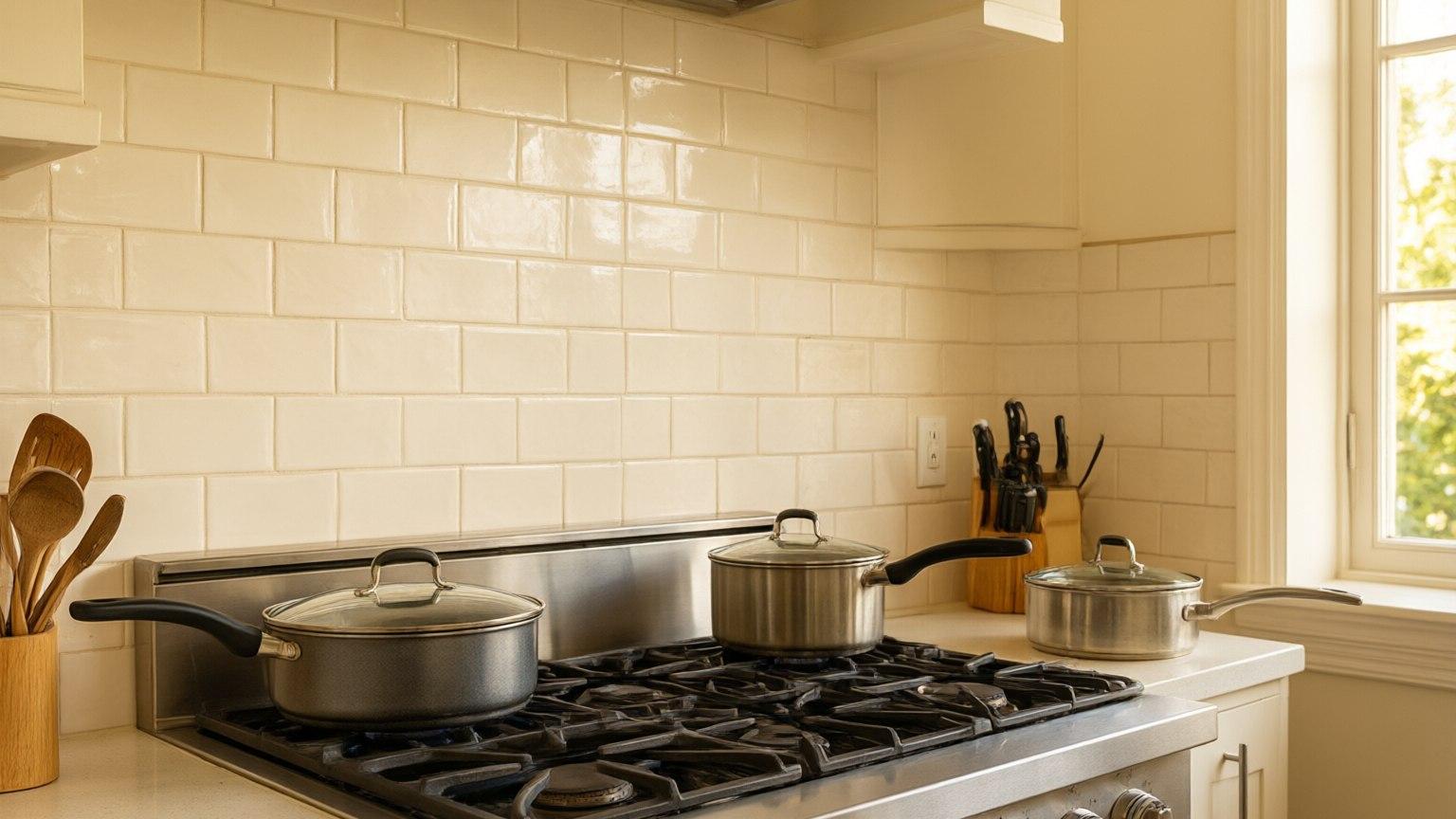
A backsplash behind stove burners can be exposed to heat, grease and cooking splatter. The tile, grout and layout you choose for that one wall decide how easy it is to live with. If you're planning a kitchen backsplash, here is what to weigh and what to ask.
Why does a backsplash behind stove burners need extra thought?
Cooking can send oil, steam and splatter toward the wall behind the range, so this wall can pick up grease and heat exposure that other walls may not. That is why the tile, grout and layout deserve extra thought.
Your range matters too. GE says most of its free-standing gas and electric ranges include a backsplash, and that its slide-in ranges have none. With a slide-in range, the wall behind it can be more exposed, depending on the actual model and how it is installed, so the tile may have to do the job a built-in back panel would otherwise do. Look at which type you have, or are about to buy, before you pick a tile height.
That's why this wall deserves its own plan instead of a copy of the tile layout used on the rest of the kitchen.
Which tile and grout hold up best near the cooktop?
Choose a glazed, easy-to-wipe tile and a grout you can keep clean. The grout is usually the weak spot, not the tile.
Tile. Our post on common backsplash installation mistakes notes that porcelain and ceramic handle heat and splatter well. It also warns that delicate glass tile can crack from heat exposure, and that some natural stones need extensive sealing and upkeep. Ask your installer how the specific tile you like behaves next to burners. Our backsplash design guide adds that larger glazed porcelain means fewer grout joints to clean.
Grout. The Tile Council of North America (TCNA) says cementitious grout is porous and can absorb a stain, and that sealer is a very good idea for it. TCNA also says epoxy grout is virtually as stain proof as the tile. One manufacturer example: CUSTOM Building Products lists an industrial-grade epoxy grout with "high chemical, temperature and stain resistance," made for harsh environments like commercial kitchens. That is one product's description, not a promise about every epoxy grout, and not a statement about which product we use.
A few simple choices help:
Pick a smooth, glazed surface over a heavily textured one if grease worries you.
Keep grout lines narrow where the tile allows it.
Ask whether the grout you're quoted is cement-based or epoxy, and what sealing or care it needs.
If you go with cement grout, our guide to sealing grout explains what that upkeep looks like.
Illustration.
100+ Five-Star Reviews
Get a Free Tile Quote
20+ years installing bathroom, kitchen, and custom tile across Chester, Delaware & Montgomery counties, PA.
There's no single right answer, so decide by how you cook and how the kitchen is built. Common options:
Behind the range only. A short run up to the bottom of the hood or wall cabinets protects the splatter zone and keeps the project small.
Full wall to the ceiling. Tile that runs up and past the hood gives a clean finish and no awkward stopping point near the range.
Wall to wall between the cabinets. The tile matches the rest of the backsplash, so the cooking wall doesn't read as a separate area.
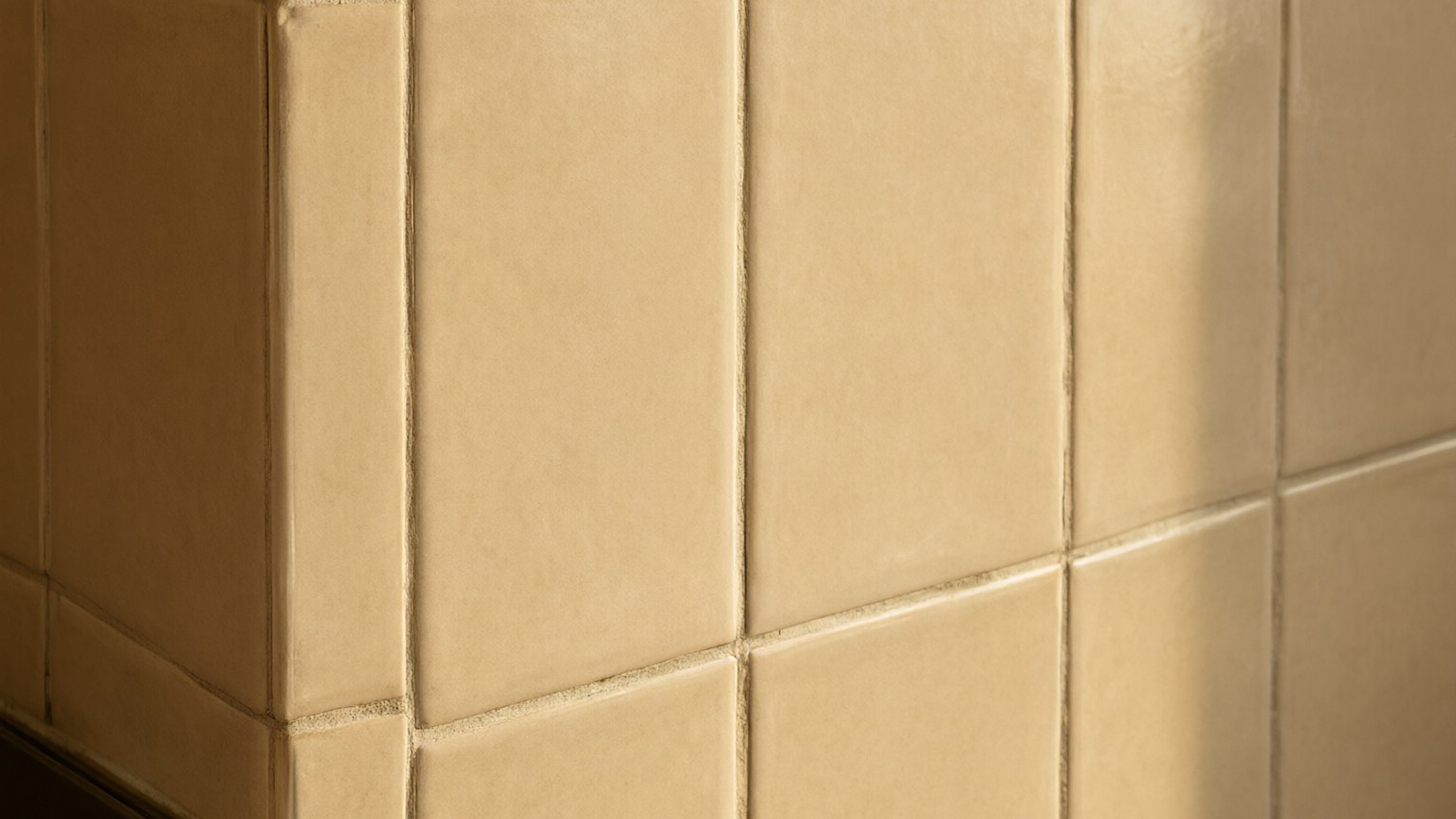
Whatever you choose, think about where the tile ends. A tile edge that just stops beside the range can look unfinished. Ask your installer where each edge will land and how it will be finished. If you want the cooking wall to match your countertops and cabinets, our post on matching kitchen tile to cabinets and countertops helps with that.
Illustration.
What about outlets, the hood and the range itself?
Sort out the details around the range before tile goes up, because they are hard to change afterward.
Range and hood instructions. Each range and hood comes with installation instructions for that model, and your installer should check them for clearances before the layout is set. We don't give clearance numbers here because they vary by model and by what is installed, and your local code and the appliance maker decide them.
Outlets and switches. Tile has to be cut cleanly around each box. If an outlet needs to move or be extended, plan that with an electrician before the tile goes on.
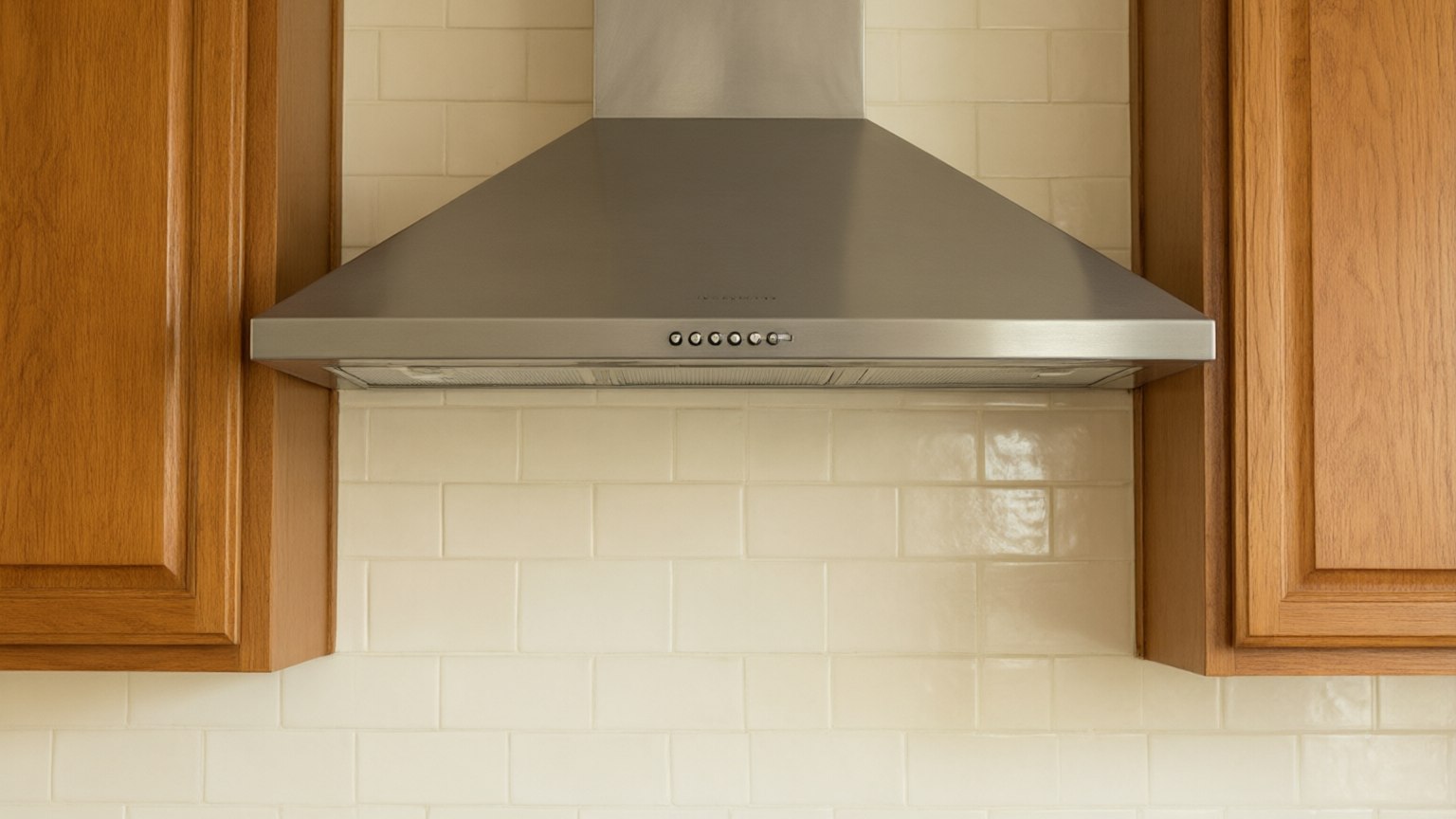
The hood and trim. Ask how the tile will meet the hood, cabinets and any trim, and whether those edges will sit tight or leave a small gap.
The counter joint. TCNA says caulk, not grout, is the technically preferred choice at a change of substrate, and gives floor-to-wall joints as its example. The joint where the countertop meets the backsplash is a similar change of plane, so ask your installer what they plan to use there. TCNA also notes that caulk needs to be maintained more often than grout.
How do you keep the tile clean?
Wipe splatter before it dries, and use a cleaner that suits your tile and grout. Check the tile maker's care instructions first, since they differ by material.
For grout, TCNA recommends an alkaline cleaner over an acid cleaner and warns against oil- or wax-based cleaners. It says the best way to clean grout is to apply the cleaner and then vacuum up the dirty water with a shop vacuum. On a kitchen wall, regular wipe-downs are easier than letting grease build up. If you have natural stone or glass, follow the maker's cleaning guidance rather than a general rule.
What should you ask your installer?
Bring the tile you like, and the range you own or plan to buy, to the estimate. Good questions:
Does my range have its own backsplash, or is the wall fully exposed?
How does this tile handle heat and splatter next to burners?
Will you use cement or epoxy grout, and what care does it need?
How high and wide will the tile run, and how will each edge be finished?
What do the range and hood instructions say about clearances, and how will you work around them?
How will outlets, the hood and the counter joint be handled?
If your current backsplash behind the stove has cracked or come loose, our tile repair and replacement page explains what we handle.
Frequently asked questions
What is the best backsplash behind stove burners?
A glazed porcelain or ceramic tile with a grout you can keep clean is a common choice, as our installation post notes. The best fit depends on your range, your cooking and the look you want, so ask your installer to compare options in your kitchen.
Can I use glass tile behind a stove?
It depends on the product and where it sits. Our installation post warns that delicate glass tile can crack from heat exposure. Ask the installer and the tile maker whether the specific glass tile you like is suited to the area next to burners.
Do I need to seal grout behind the stove?
If the grout is cement-based, TCNA says sealer is a very good idea. TCNA says epoxy grout is virtually as stain proof as the tile, and its sealer advice is for cementitious grout, not epoxy grout. Ask your installer which grout they plan to use and what the manufacturer says about care.
Do I still need to follow my range manual's clearances?
Yes. Your range and hood have installation instructions, and local code applies. The tile is planned around them. Ask your installer to read both before the layout is set.
How high should the tile go behind a stove?
There is no single rule. Some homeowners stop at the bottom of the hood or wall cabinets, and others run the tile to the ceiling. Choose based on the look you want, how you cook and how the edges will be finished.
Planning a kitchen backsplash in Chester County or the Main Line
If you're weighing tile for the cooking wall, we can look at your kitchen and range and talk through the options. Milford Mills Tile serves Chester County, Delaware County, Montgomery County, the Main Line and Northern Delaware. Request a quote or call (484) 883-9948. You can also read about our work in Delaware County.
Sources
Tile Council of North America, Cleaning Grout FAQ (read November 10, 2026)
Tile Council of North America, Grout FAQ (read November 10, 2026)